
Last updated September 20, 2026
Free on-site gate assessment - hinges, posts, and your LiftMaster or Nice gate operator checked before anything is quoted
The assessment is free and the quote is the invoice.

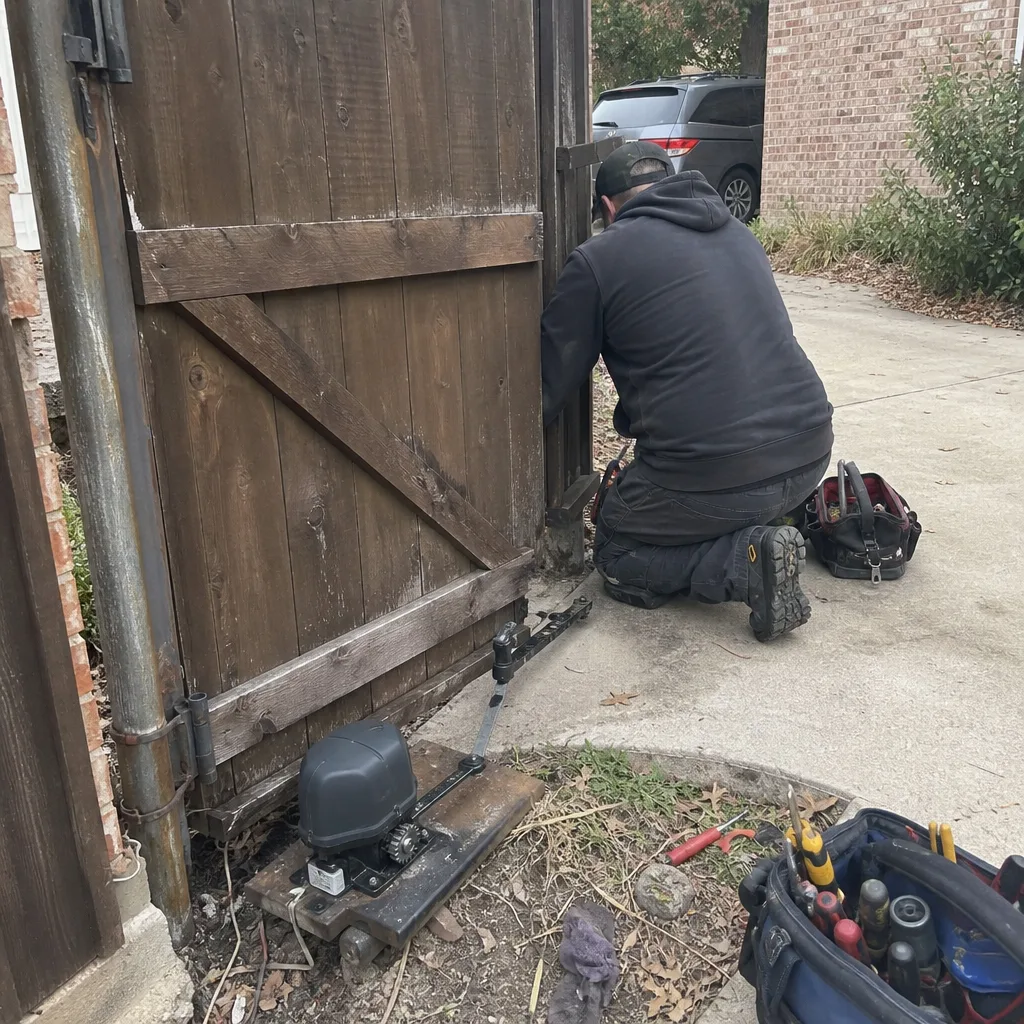 Before
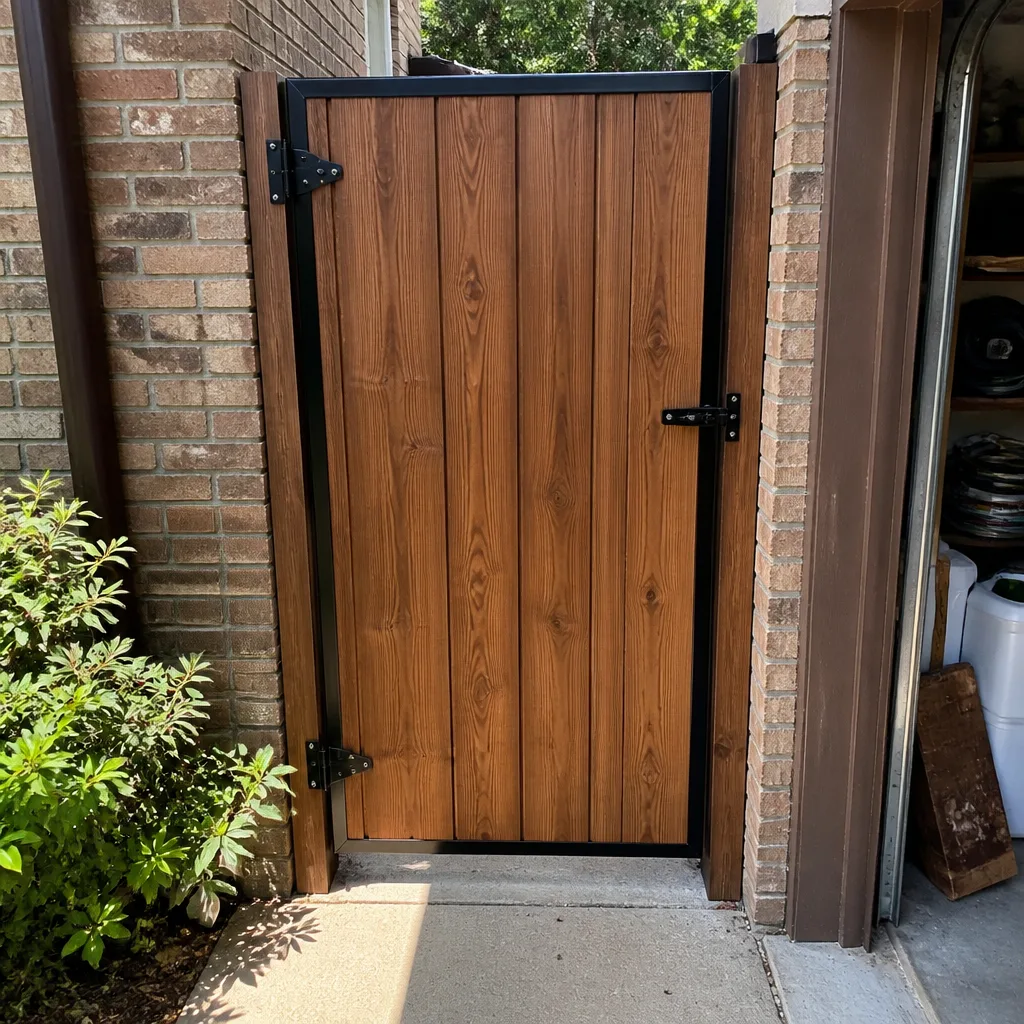 After
After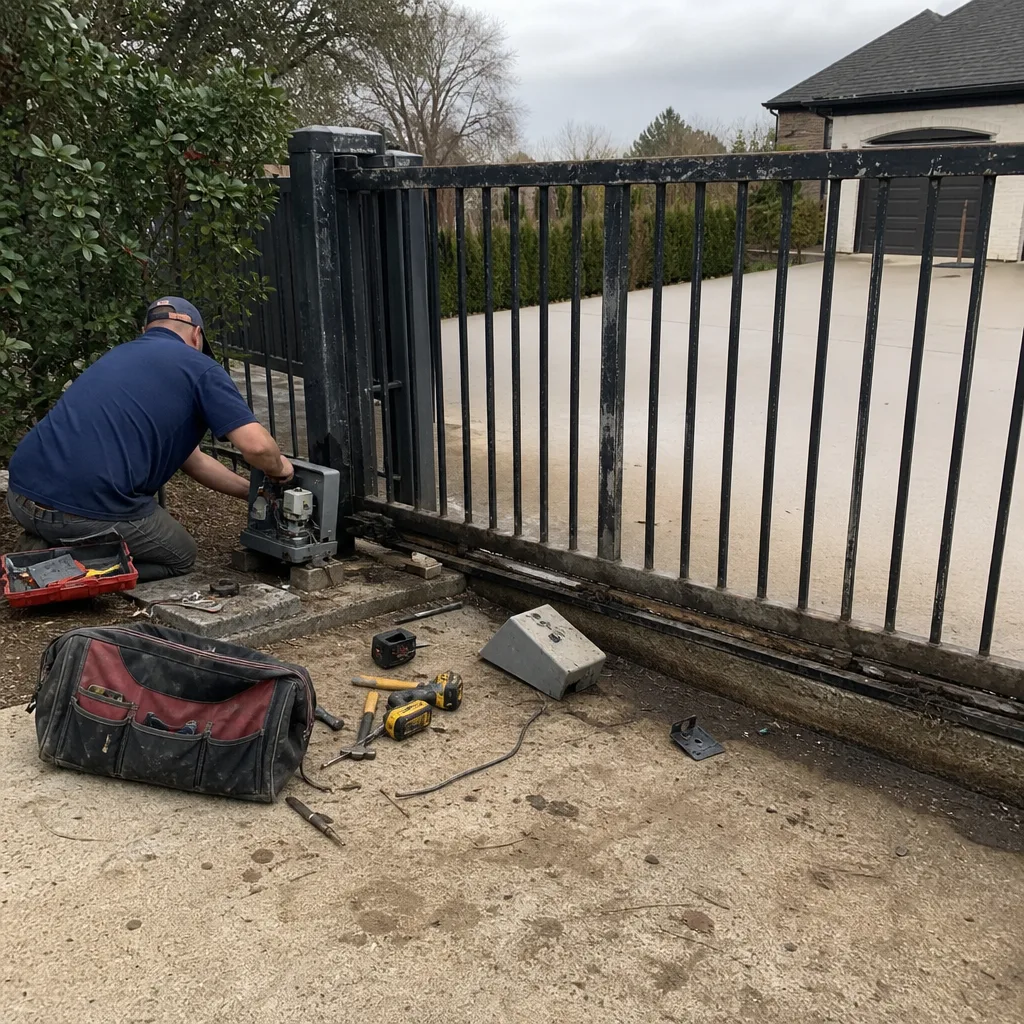 Before
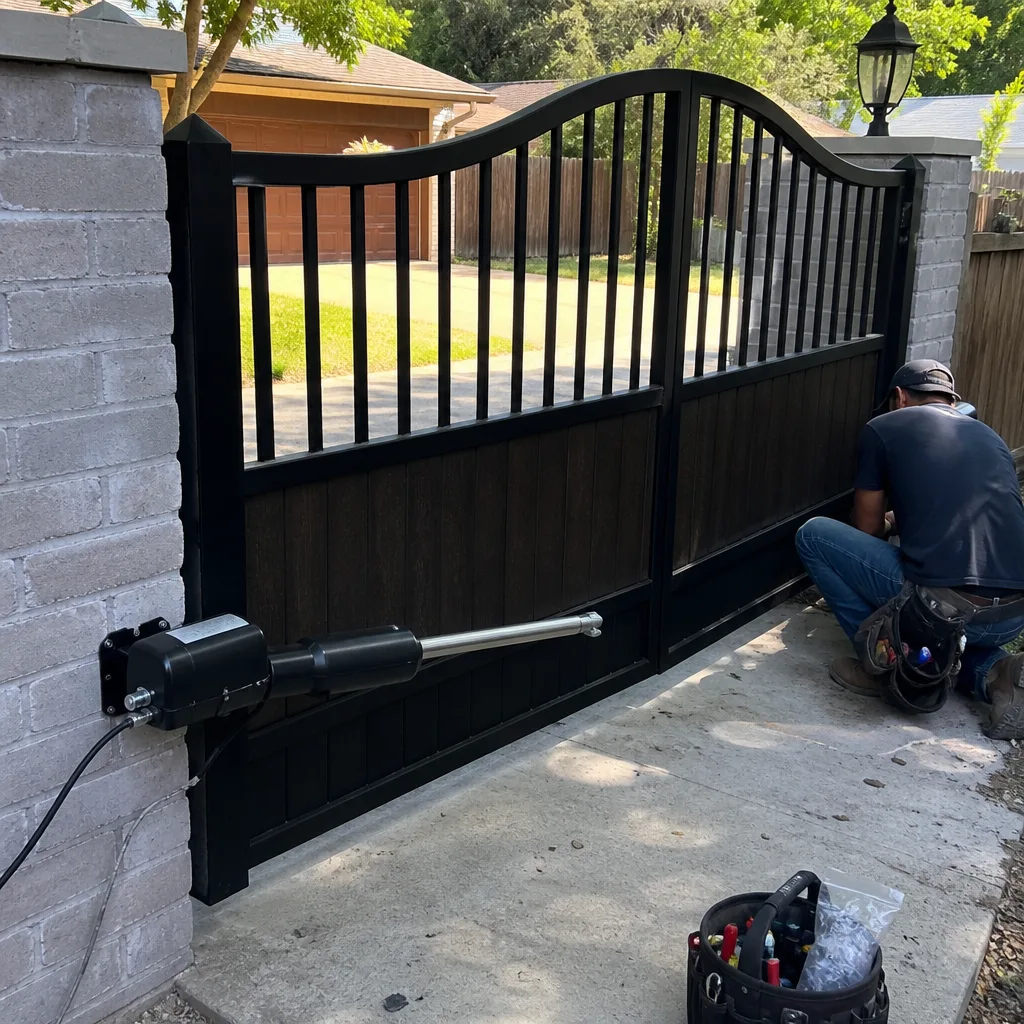 After
After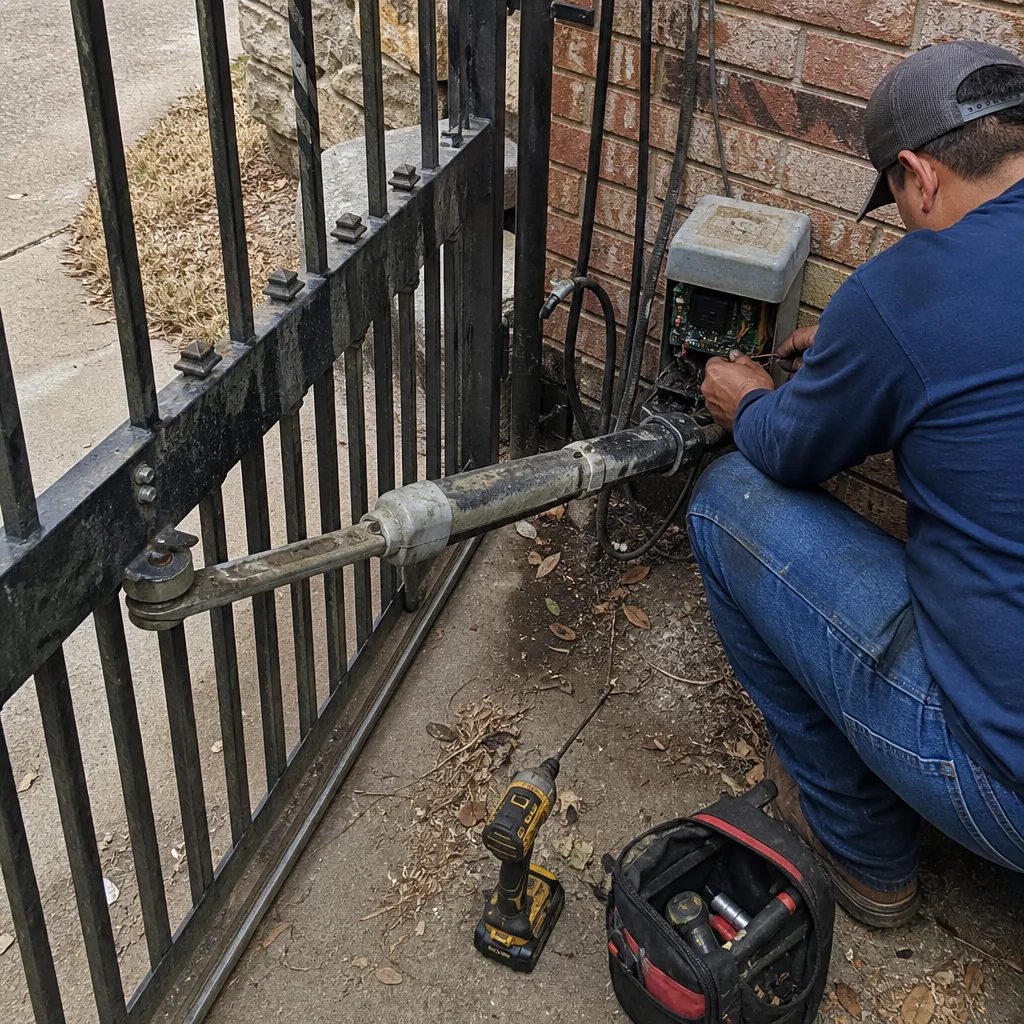 Before
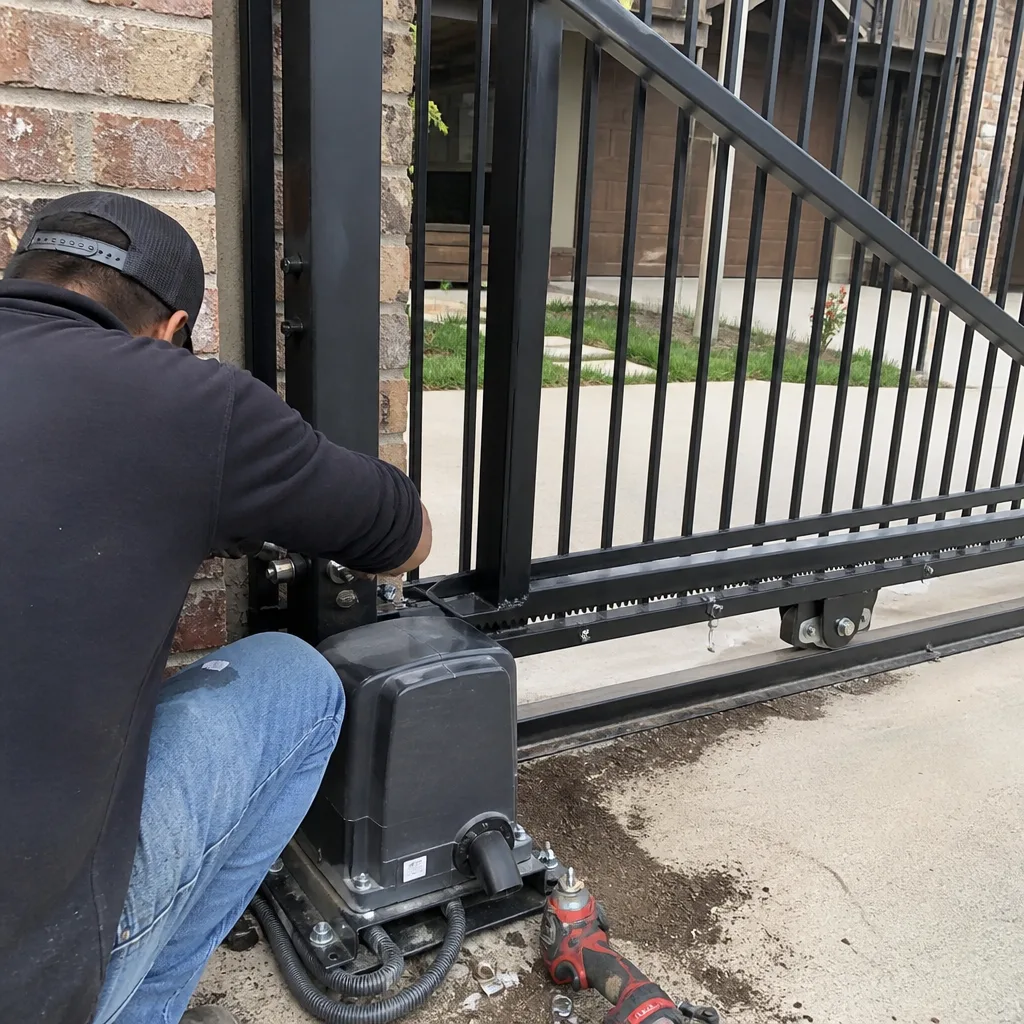 After
AfterGate Repair Permits, Codes & Inspections in TX: What You Need to Know
Replacing a gate operator in Coppell can require an electrical permit if the circuit is new or extended. That single fact surprises most homeowners, and some contractors quietly skip the permit to save time, leaving the liability with the property owner. This guide explains what actually requires a permit in Texas, what inspectors check on powered gates, how Coppell’s rules differ from neighboring cities, and what to do if your gate was installed without one. If you’re planning a Gate Repair, replacement, or automation project in Coppell, read this before anyone picks up a tool.
Quick Answer
Most mechanical gate repairs in Texas are classified as maintenance and don’t need a permit, but any electrical work on a powered gate operator, new circuit installation, or structural change to the gate or fence line typically does. In Coppell, the city requires permits for electrical modifications and any gate work that alters the fence footprint or height. Inspections focus on UL 325 safety compliance for powered operators, proper clearances, and setback requirements.
Table of Contents
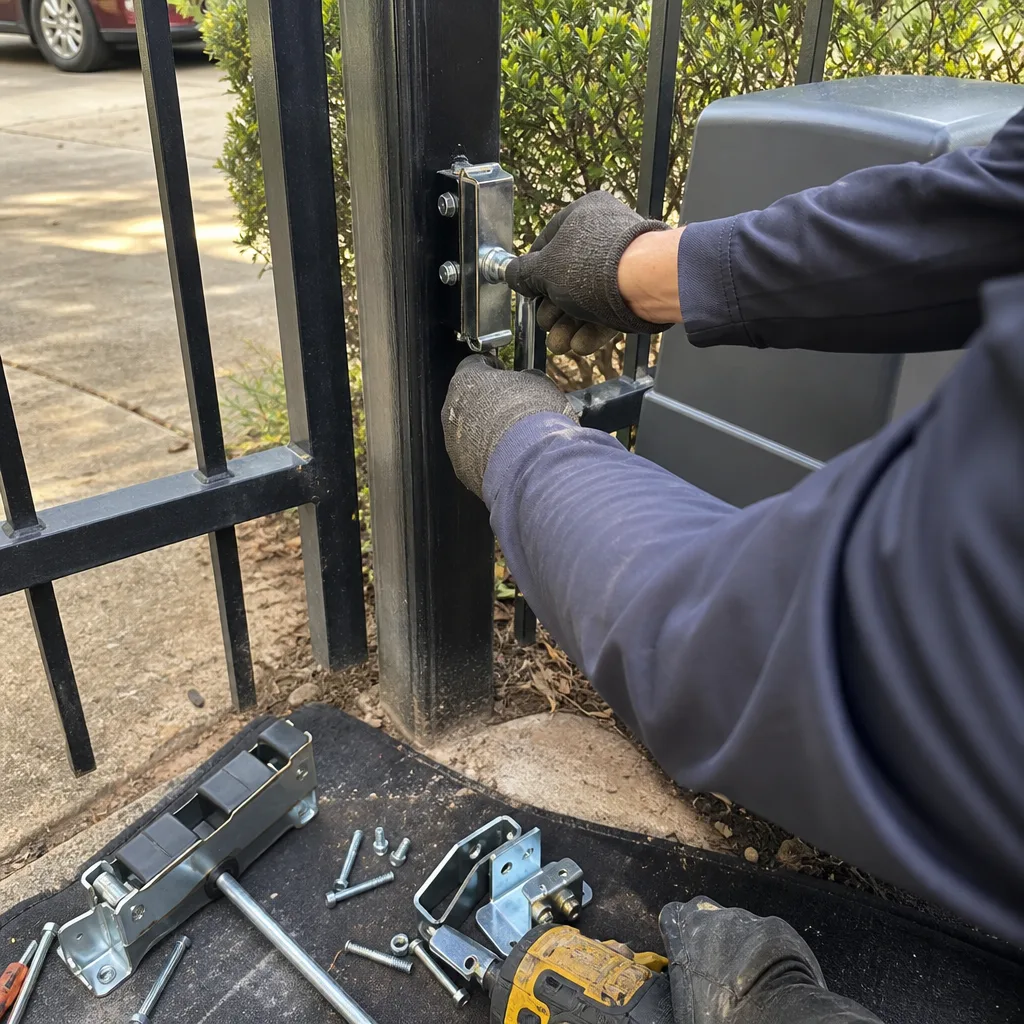
- When a Gate Repair Needs a Permit (and When It Doesn’t)
- Coppell Gate and Fence Ordinances by Zoning Type
- How HOA Architectural Review Intersects with City Permits
- UL 325 Compliance for Powered Gate Operators
- What Inspectors in Collin and Dallas County Actually Check
- The Permit Record at Resale: Why Underpermitted Work Shows Up
- Common Mistakes to Avoid
- When to Call a Professional
- Frequently Asked Questions
- The Bottom Line
 Before
 After
AfterWhen a Gate Repair Needs a Permit (and When It Doesn’t)
Texas building codes draw a line between maintenance and alteration, and that line determines whether you need a permit. Maintenance means restoring something to its original working condition without changing its design, size, or electrical load. Replacing a worn hinge, swapping a broken gate wheel, or installing a new battery in an existing operator all fall under maintenance. No permit needed.
Alteration means changing the structure, extending the electrical circuit, or replacing equipment in a way that modifies the original installation. Cutting a gate down to fit a new opening, moving a gate post, running a new electrical line to power an operator, or replacing a manual gate with a powered one are all alterations. These require permits in Coppell and most other Texas cities that have adopted the International Residential Code with local amendments.
Here’s the practical breakdown we use on job sites every week:
- Mechanical repairs to existing gates: No permit. Hinges, wheels, latches, track adjustments, welding cracks in existing steel frames.
- Operator repair on an existing permitted circuit: Usually no permit. Replacing a control board, limit switch, or receiver on a circuit that was already inspected.
- New electrical circuit or circuit extension: Permit required. Running power to a gate that was previously manual, or extending a circuit more than six feet.
- Gate replacement with same footprint and height: Check with the city. Coppell generally treats in-kind replacement as maintenance, but if the posts move or the gate height changes, it becomes alteration.
- New gate installation or footprint change: Permit required through the city’s fence and gate review process.
We’ve seen homeowners get stop-work orders in Coppell because a contractor started trenching for a new operator power line without pulling an electrical permit. The contractor’s argument was that it’s a small job. The city’s position was that the National Electrical Code doesn’t distinguish between small and large circuits. The permit protects you, not the contractor.
Coppell Gate and Fence Ordinances by Zoning Type
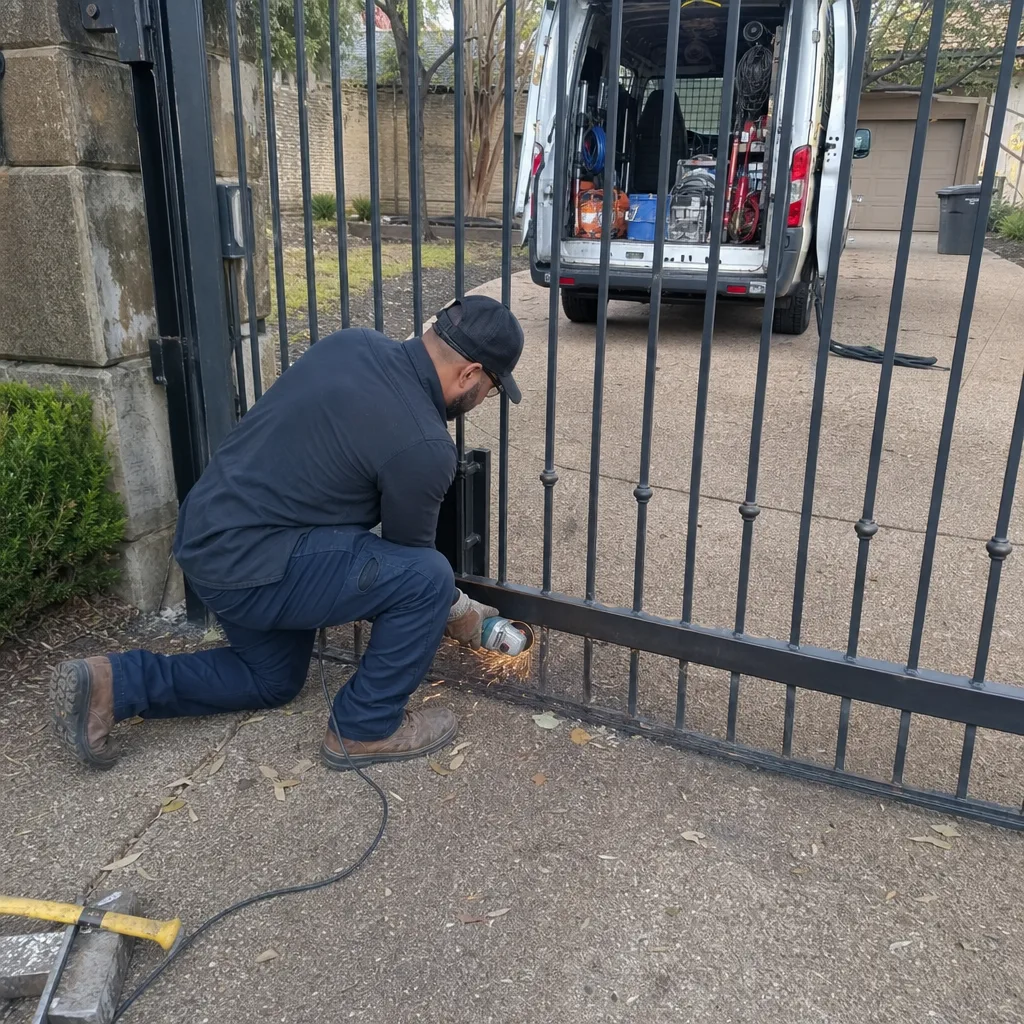
Coppell’s code of ordinances sets different fence and gate height limits depending on where the gate sits on your property. Front yard gates and fences are typically limited to four feet in height. Side and rear yard gates can go to eight feet, with some exceptions for corner lots and properties adjacent to arterial roads. If you’re replacing a gate in Coppell, the height of the existing installation matters less than what the current code allows for your zoning classification.
What catches most homeowners off guard is the corner-lot sight triangle rule. On a corner lot, any fence, gate, hedge, or structure within the sight triangle at the intersection must stay below 30 inches in height or be constructed with at least 50 percent open visibility. The sight triangle is measured from the curb line at the intersection, typically 25 feet back along each street. A six-foot privacy gate in that zone will fail inspection, no matter how well it’s built. We’ve had Coppell homeowners call us because a previous contractor installed a beautiful wrought-iron gate in the sight triangle and the city made them remove it.
Here’s a quick reference for typical Coppell residential zoning:
- Front yard gates: Maximum 4 feet high, must be at least 50 percent open if in a front setback.
- Side and rear yard gates: Maximum 8 feet high, solid or semi-solid construction permitted.
- Corner lot sight triangle: Maximum 30 inches, or 50 percent open construction, within 25 feet of the intersection.
- Gates across driveways: Must open inward or slide parallel to the property line. No outward-swinging gates across any public right-of-way.
These rules are specific to Coppell. Carrollton, which shares a border with Coppell along Sandy Lake Road, allows six-foot front yard fences in some residential districts. Grapevine requires a separate permit for any powered gate operator regardless of whether electrical work is involved. Contractors who work across DFW often apply the wrong city’s rules, which is why we tell every customer in Coppell to verify requirements with the city’s permitting office before starting a gate project; see our Gate Repair Warning Signs: A Coppell Homeowner’s Reference Guide for related red flags.
For a full breakdown of what a gate repair in Coppell involves, see our Gate Repair in Coppell page.
How HOA Architectural Review Intersects with City Permits
In Coppell, most residential neighborhoods fall under a homeowners association with an architectural review committee. That committee has its own approval process for gates and fences, and it operates independently of the city. Getting city approval without HOA approval doesn’t mean you can start building. Getting HOA approval without city permits doesn’t mean the work is legal. You need both.
The sequence matters. We tell our Coppell customers to get HOA architectural approval first, then pull the city permit. Here’s why: HOAs often have stricter aesthetic requirements than the city. If your HOA requires a specific gate material or color and the city approves a different design, you’ll have to resubmit to one of them. Doing the HOA first locks in the design. The city review then checks safety, setback, and electrical compliance against that approved design. If the city objects to something, you go back to the HOA with a specific reason rather than a vague one.
The double-revision cycle we see most often in Coppell happens when a homeowner replaces a wood gate with a steel one. The city doesn’t care about the material as long as it meets height and setback rules. The HOA may have a covenant requiring wood or composite. Homeowner gets city approval, buys the steel gate, and the HOA issues a violation. Now the gate has to come out, the HOA has to approve the replacement, and the city permit has to be amended. That’s two to three weeks of delay and thousands in extra cost.
The practical steps in order:
- Check your HOA’s covenants for gate and fence restrictions. Look for material requirements, height limits that may be stricter than the city’s, and any color palette rules.
- Submit architectural review to the HOA with drawings, photos, and specifications.
- Take the HOA approval letter to the City of Coppell when you apply for the permit. It answers the planning questions before they’re asked.
- Pull the permit. In Coppell, electrical work on a powered gate requires a separate electrical permit in addition to any fence permit.
- Keep both approvals on file. At resale, the HOA estoppel letter and the building file both matter.
If you’re planning a new gate installation in Coppell, our Gate Installation in Coppell page walks through the full process from permit to final inspection.
UL 325 Compliance for Powered Gate Operators
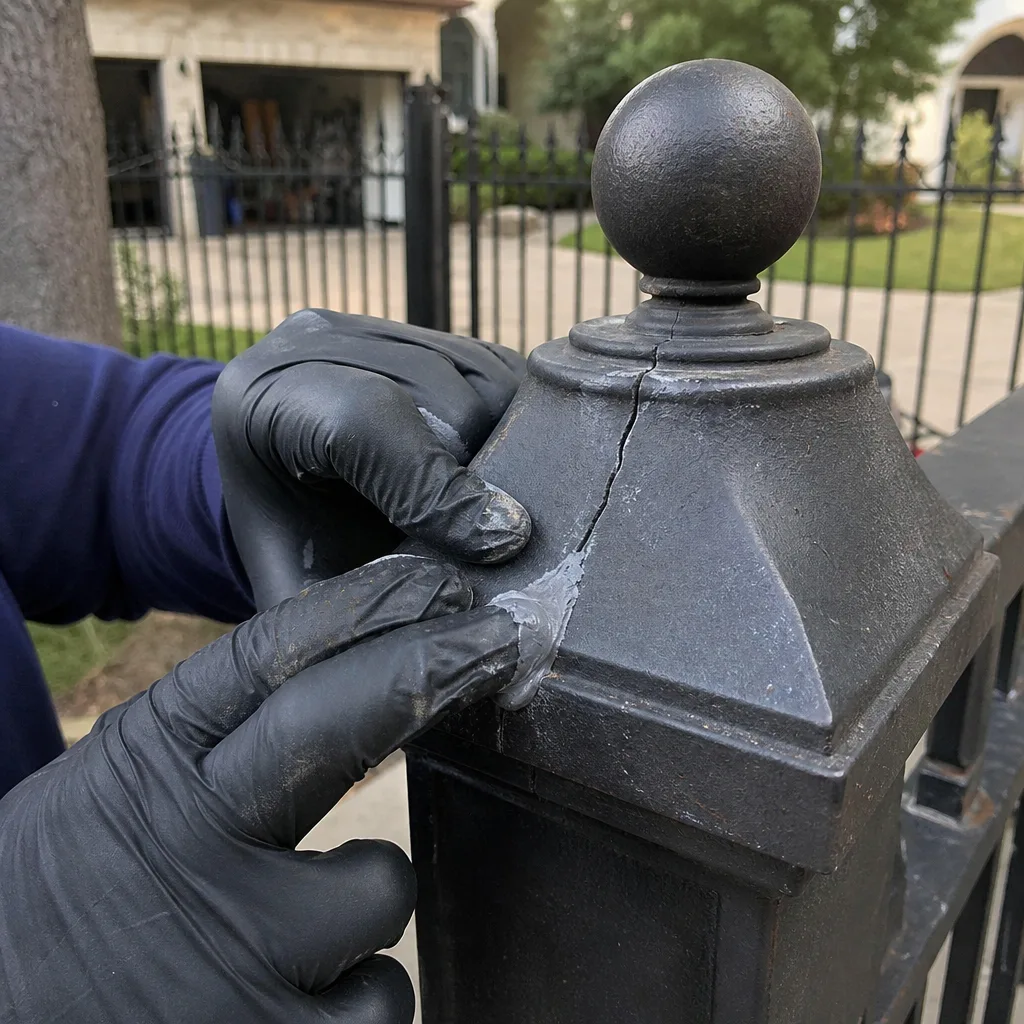
UL 325 is the safety standard that governs automatic gate operators in the United States. It has been adopted into the building codes of virtually every Texas city that issues permits for powered gates. In Coppell, any new gate operator installation must comply with UL 325, and inspectors are increasingly checking for it. If your operator is being replaced on an existing gate, the replacement operator also needs to meet the current UL 325 standard.
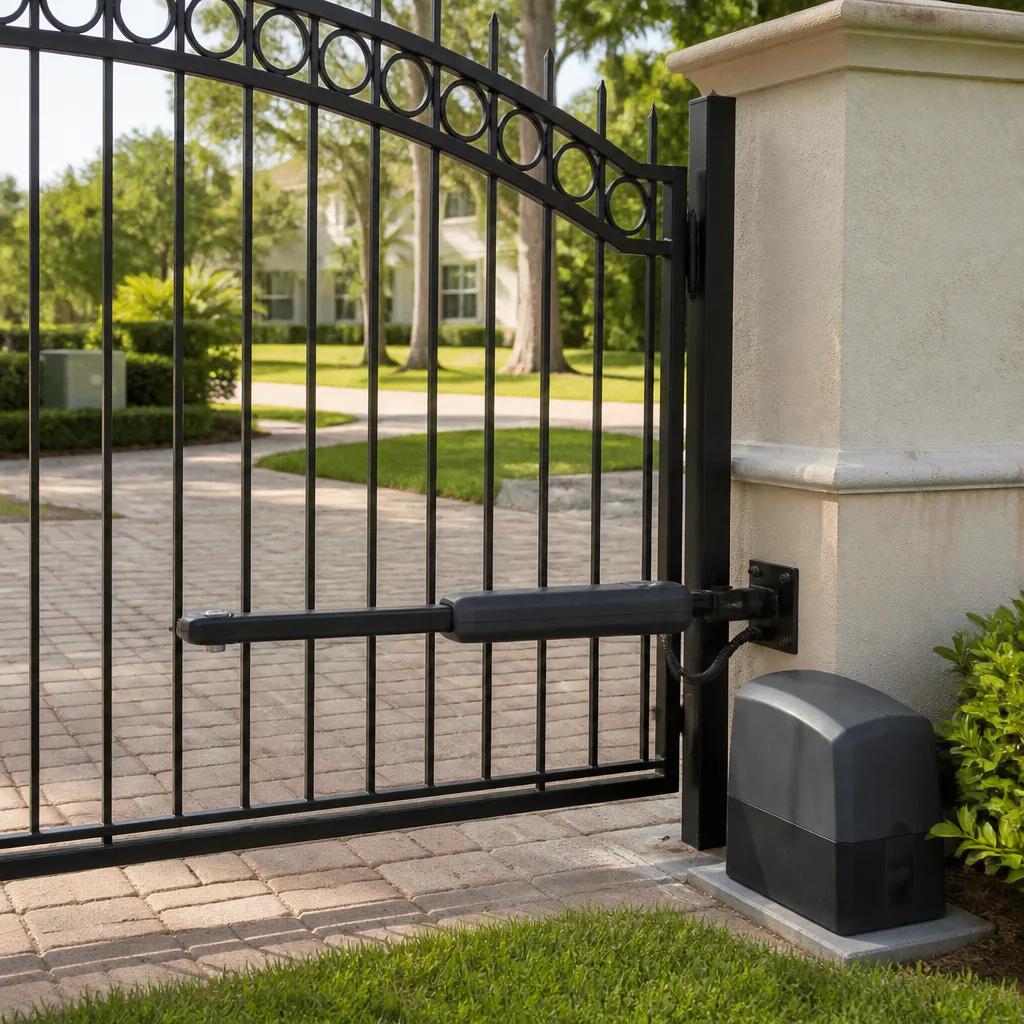
UL 325 requires two independent entrapment protection devices when a gate is automated, on top of the inherent force limitation built into the operator. The most common combination we install on Coppell residential gates is a pair of photo-eyes and a contact edge on the gate leaf. A photo-eye is the infrared beam that stops the gate if something crosses the path. A contact edge is the rubber strip on the leading edge of the gate that reverses the motor if it hits something. Some operators from Ghost Controls and Viking come with built-in force sensing that can substitute for one of the two required external devices, but that depends on the specific model and the gate application.
What inspectors in Collin and Dallas County actually check varies. In our experience, Collin County inspectors are more likely to verify the photo-eye placement and test the reverse function. Dallas County inspectors tend to focus on the wiring method, ground fault protection, and whether the operator is on a dedicated circuit. Neither is wrong. Both are enforcing the same code, but they emphasize different sections.
The UL 325 requirements that commonly fail inspection:
- Photo-eyes mounted too high: The beam must be mounted no more than 6 inches above grade at the gate opening.
- Missing contact edges on the gate bottom: If the gate can trap a child or pet under the leaf, a bottom contact edge is required.
- Operator not listed for the gate type: Operators are classified by usage class. A residential operator can’t be used on a commercial gate, and a linear arm operator can’t be used on a gate it wasn’t designed for.
- No manual disconnect: Every powered gate must have a way to manually open it in a power outage, and the disconnect must be accessible from outside the gate.
- Warning signs missing: UL 325 requires permanent warning signs on both sides of a powered gate, visible from the approach.
One more thing worth knowing about UL 325: if a powered gate causes an injury and the operator didn’t meet the standard at the time of installation, the liability falls on the property owner, not the contractor. This is one reason we document every operator installation with photos and a written record of the safety device placement. It protects our customers if an insurance company ever asks.
If your gate motor or opener needs work, our Gate Motor & Opener in Coppell page covers the brands we service and what a repair typically includes.
What Inspectors in Collin and Dallas County Actually Check
Coppell sits mostly in Dallas County, with a northern section that extends into Denton County. But the city issues its own permits and conducts its own inspections, which means the inspector you meet is a Coppell employee or contractor, not a county official. That said, the inspection practices we see in Coppell follow the patterns of Dallas and Collin County inspectors in neighboring cities, and the checklist is predictable.
Here’s what a typical final inspection for a powered gate installation in Coppell covers, in the order inspectors usually walk through it:
- Permit posting: The permit card must be visible at the job site. No card, no inspection.
- Setbacks: Gate posts must be within the property line, and the gate must not swing into the public right-of-way or across a sidewalk.
- Height compliance: The finished gate height must match the approved plan and comply with zoning limits for the yard where it sits.
- Electrical rough-in: Before covering any trench, the inspector checks conduit depth (18 inches minimum for PVC under a driveway), wire gauge, and bonding of the operator frame.
- Ground fault protection: The operator circuit must be GFCI protected, typically at the receptacle or panel serving the gate.
- Dedicated circuit: The gate operator must be on its own breaker, not shared with landscape lighting or pool equipment.
- UL 325 devices: Photo-eyes, contact edges, warning signs, and manual disconnect all get verified. The inspector will test the auto-reverse function.
- Final documentation: The inspector signs off, and the permit is closed. The homeowner receives a copy, and the work becomes part of the property record.
One detail that trips up homeowners: the inspector won’t test the operator’s travel limits or program the remote controls. That’s not their job. They check safety compliance and code conformance. If the gate doesn’t open all the way or the opener doesn’t pair with your phone, that’s a contractor warranty issue, not an inspection issue. Make sure your contractor tests everything and walks you through it before the inspector leaves. In our own work, we photograph the limit-switch settings and the final wiring so there’s a record of what was set when the job passed inspection.
The Permit Record at Resale: Why Underpermitted Work Shows Up
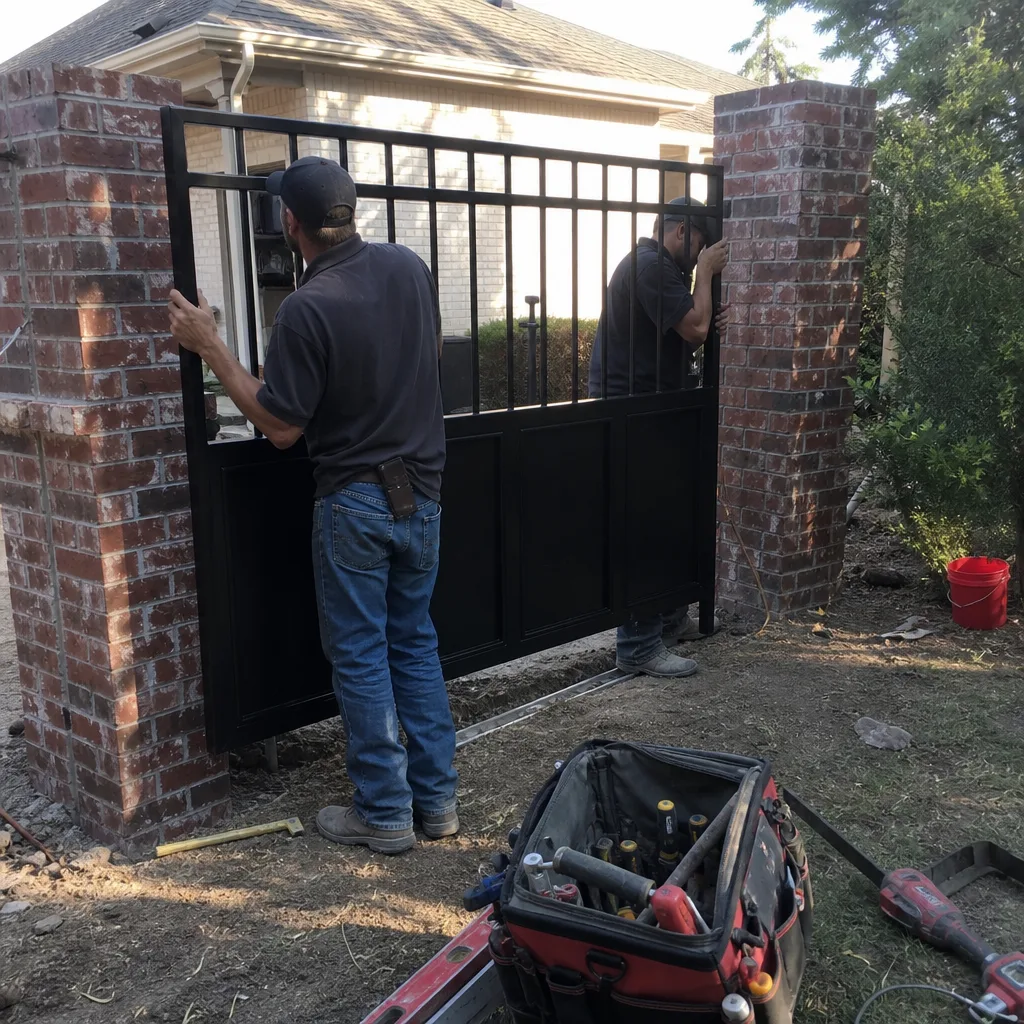
When you sell a house in Coppell, the title company runs a search on the property record. That search includes building permits, code enforcement cases, and any open violations. If a gate was installed or modified without a permit, it can surface. The most common scenario is a homeowner who replaced a manual gate with a powered one, hired a contractor who said a permit wasn’t needed, and then discovers at resale that the city has no record of the electrical work.
Here’s what happens next. The buyer’s lender or insurance company may ask for proof that the work was permitted and inspected. If you can’t produce it, the sale can stall while you pull a retrospective permit, which usually means opening up the work for inspection, paying fees, and sometimes bringing the installation up to current code. That’s before any negotiation on price. We’ve had Coppell homeowners call us in exactly this situation, where an underpermitted gate operator from a previous owner was flagged by the title company and needed to be permitted retroactively; our How to Hire a Gate Repair Contractor in Coppell: A Step-by-Step Guide can help you avoid this from the start.
The permit record is also an asset when the work was done right. A closed permit with a passing inspection demonstrates that the gate system was installed to code. It answers the buyer’s questions before they’re asked. It’s one less item on the inspection report to negotiate. And for a powered gate specifically, a UL 325 compliant installation with documentation is a meaningful safety disclosure.
The smart approach in Coppell is to treat the permit as part of the project cost. The fee for a fence permit and a basic electrical permit is typically a few hundred dollars in total. That’s a small line item against a gate project that can run from $2,000 for a basic repair to $15,000 or more for a full automated installation. The cost of retroactive permitting after the fact is usually higher, and the cost of a lost sale is higher still.
Common Mistakes to Avoid
- Assuming all gate work is maintenance. Replacing like for like is maintenance. Changing the gate style, moving posts, or adding an operator is alteration. In Coppell, the distinction determines whether you need a permit at all.
- Skipping HOA approval before pulling a city permit. The HOA and the city are separate processes. Getting one approval doesn’t cover the other, and doing them in the wrong order creates a double-revision cycle that adds weeks to the timeline.
- Letting a contractor tell you permits aren’t needed for electrical work. Any new circuit or circuit extension for a gate operator in Coppell requires an electrical permit. If the contractor won’t pull it, the liability is yours.
- Buying a gate operator online and having a handyman install it. UL 325 compliance requires proper placement of photo-eyes and contact edges, plus correct wiring. We’ve corrected too many installations where the safety devices were missing or misaligned.
- Ignoring the corner-lot sight triangle rule. A gate that obstructs the sight triangle at an intersection in Coppell will get a code enforcement letter and eventually a removal order.
- Not keeping the paperwork. The closed permit, the HOA approval letter, and the UL 325 documentation are all part of the property record at resale. Losing them creates friction when you sell.
- Choosing a gate height based on the old gate. Codes change. An eight-foot side gate that was approved 20 years ago may not be approvable today if the zoning classification or setback rules have been updated.
When to Call a Professional
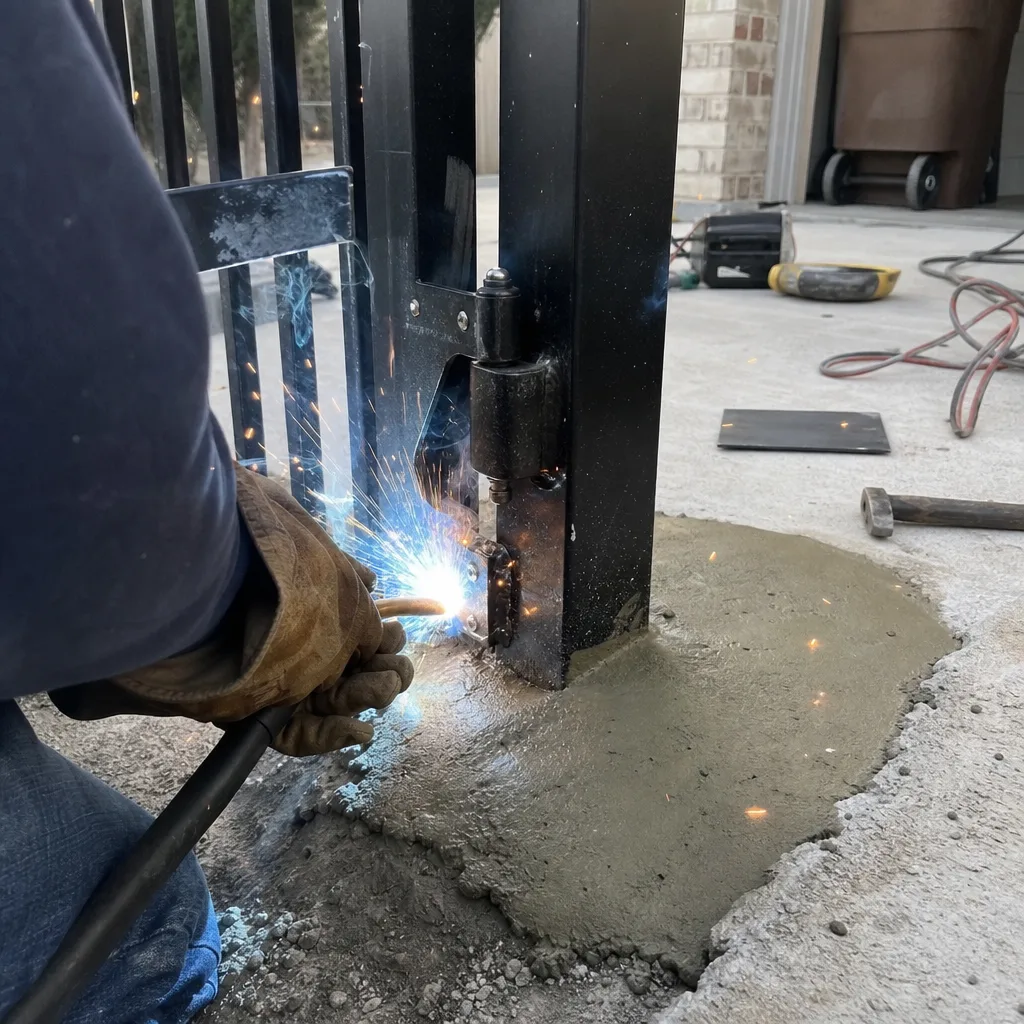
Any time a gate repair involves electricity, structural change, or a height or placement question in Coppell, it’s worth involving someone who has done the work under permit before. That means new operators, new circuits, gate replacements that move posts, or any installation on a corner lot. The cost of a professional consultation is small compared to the cost of a failed inspection or a stop-work order. A contractor who has pulled permits in Coppell will know which questions the city asks and will have answers ready.
Vance Gate Repair Coppell offers free estimates in Coppell; call (817) 674-6552. We’ll look at the gate, explain what needs a permit and what doesn’t, and put the price in writing before any work starts. See our Vance Gate Repair Coppell home page for more about how we work.
Frequently Asked Questions
Most mechanical gate repairs are considered maintenance and don’t require a permit. A new electrical circuit, an operator installation on a previously manual gate, or any change to the gate footprint or height typically does require one in Coppell and most other Texas cities with adopted building codes.
A basic fence permit in Coppell typically costs between $50 and $150 depending on the scope, and a residential electrical permit for a gate operator circuit typically runs $35 to $75. Total permitting cost for a standard powered gate installation is usually under $250. Call (817) 674-6552 and we can walk you through what your specific project is likely to need.
UL 325 applies to new installations and replacement operators. If you’re repairing an existing operator on an existing permitted installation, the operator must still meet the safety standard it was installed under, but the full UL 325 device set isn’t always required unless the gate is being substantially modified or the operator is being replaced with a different model.
The city can issue a code enforcement notice requiring you to pull a permit retroactively and bring the work into compliance. At resale, the underpermitted work can surface in a title search and delay the sale. The best path is to pull the permit now rather than waiting for either of those situations.
Yes, if your neighborhood is HOA-governed, you need both. The HOA reviews aesthetics and architectural consistency. The city reviews safety, setback, and electrical compliance. They are separate processes, and neither substitutes for the other.
All major gate operator brands sold in the U.S. are required to carry UL 325 listing, including Linear, Viking, Ghost Controls, and DoorKing. The listing applies to the operator model, not the brand. Compliant installation is the installer’s responsibility.
The Bottom Line
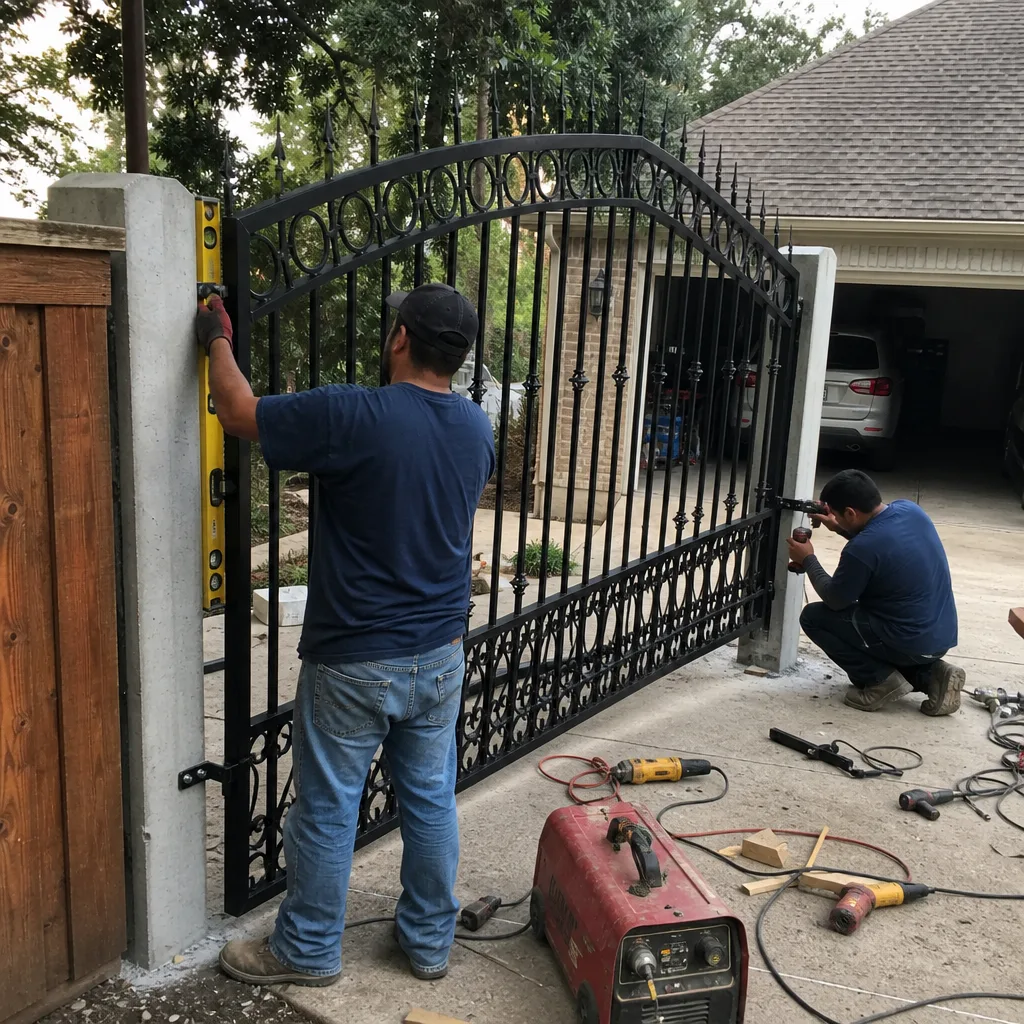
Gate repair permits in Texas hinge on one distinction: maintenance versus alteration. Fix a hinge, no permit. Add a circuit, pull a permit. In Coppell, the specific height, setback, and corner-lot rules add a layer that generic advice from other cities won’t cover. Get the HOA approval first, check UL 325 requirements on any powered operator, and keep the paperwork. The permit isn’t a tax on the work; it’s a record that protects the property owner. For more guides & resources, visit our blog. A documented, permitted installation passes inspection once and stays valuable for years, including at resale.
Written by Adrian Vance, Owner at Vance Gate Repair Coppell, serving Coppell since 2014.