
Last updated September 20, 2026
Free on-site gate assessment - hinges, posts, and your LiftMaster or Nice gate operator checked before anything is quoted
The assessment is free and the quote is the invoice.
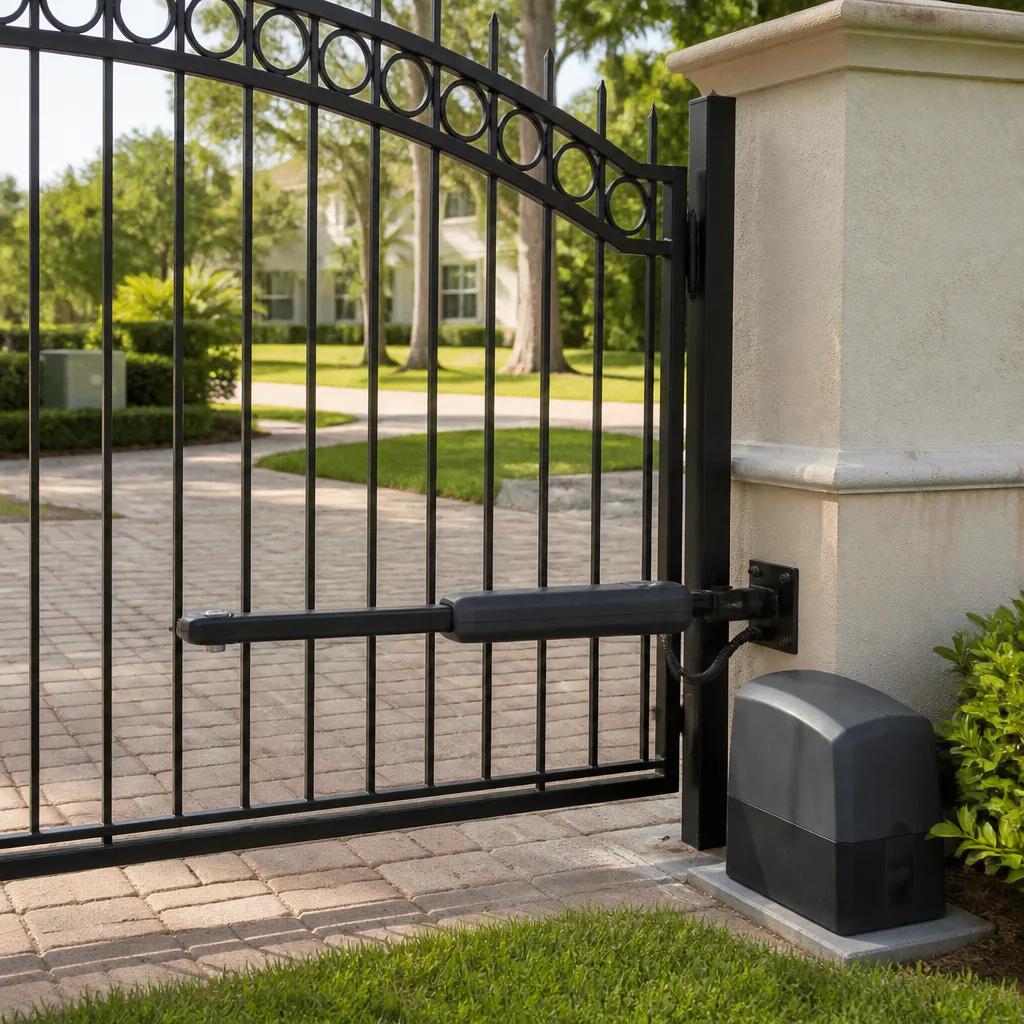
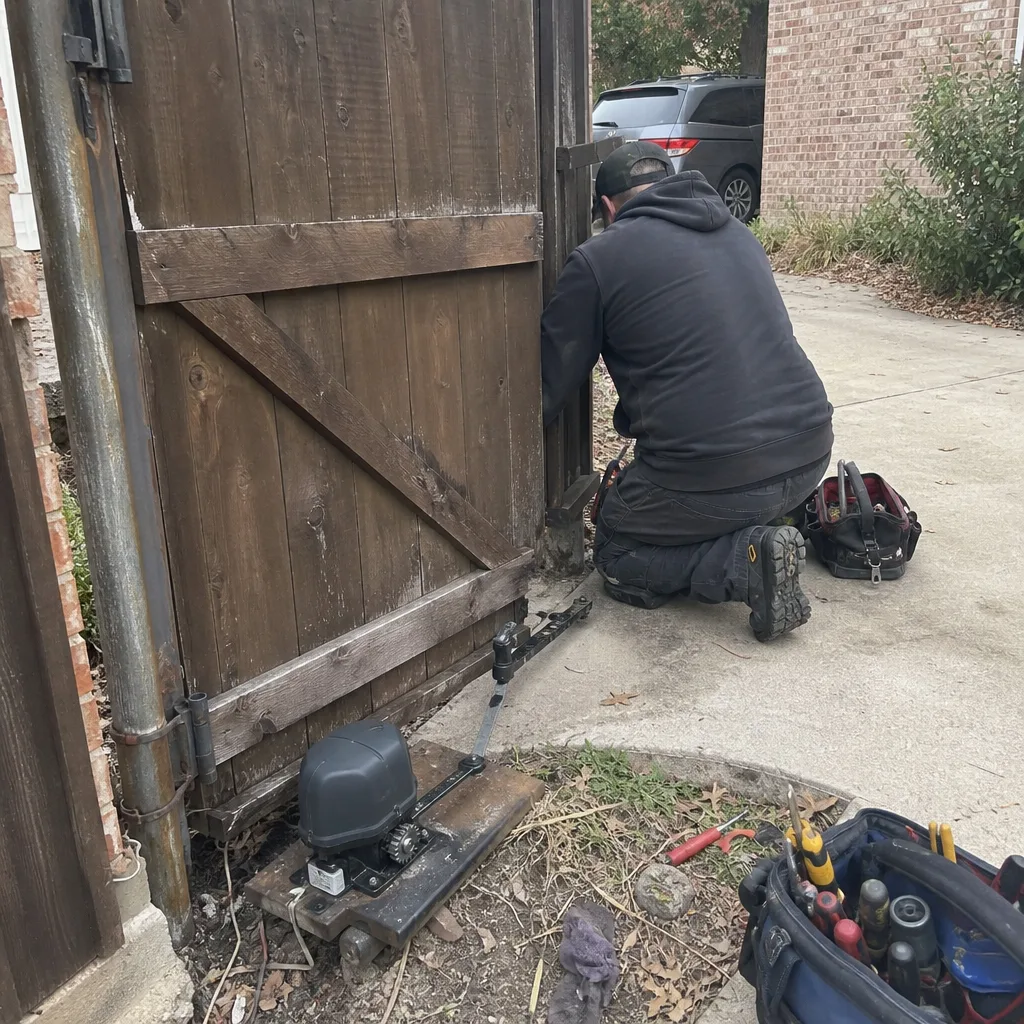 Before
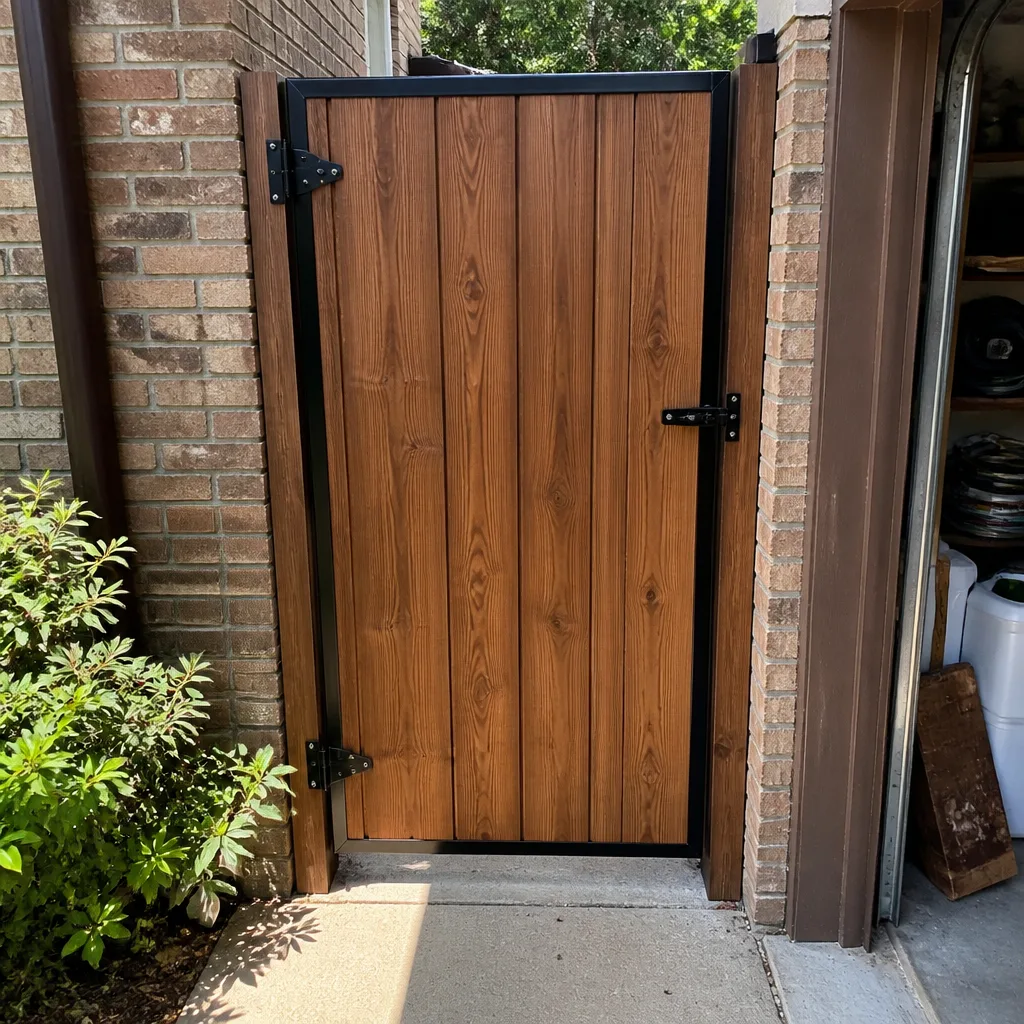 After
After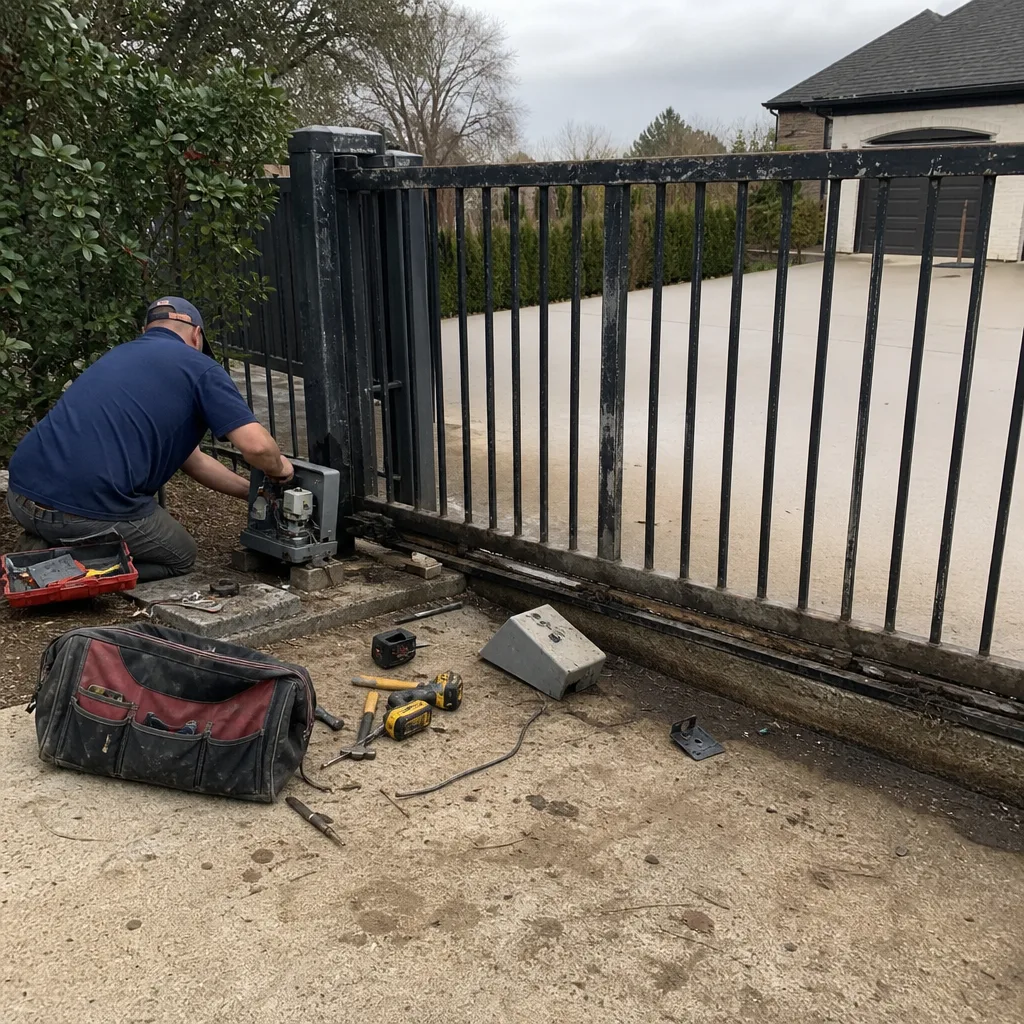 Before
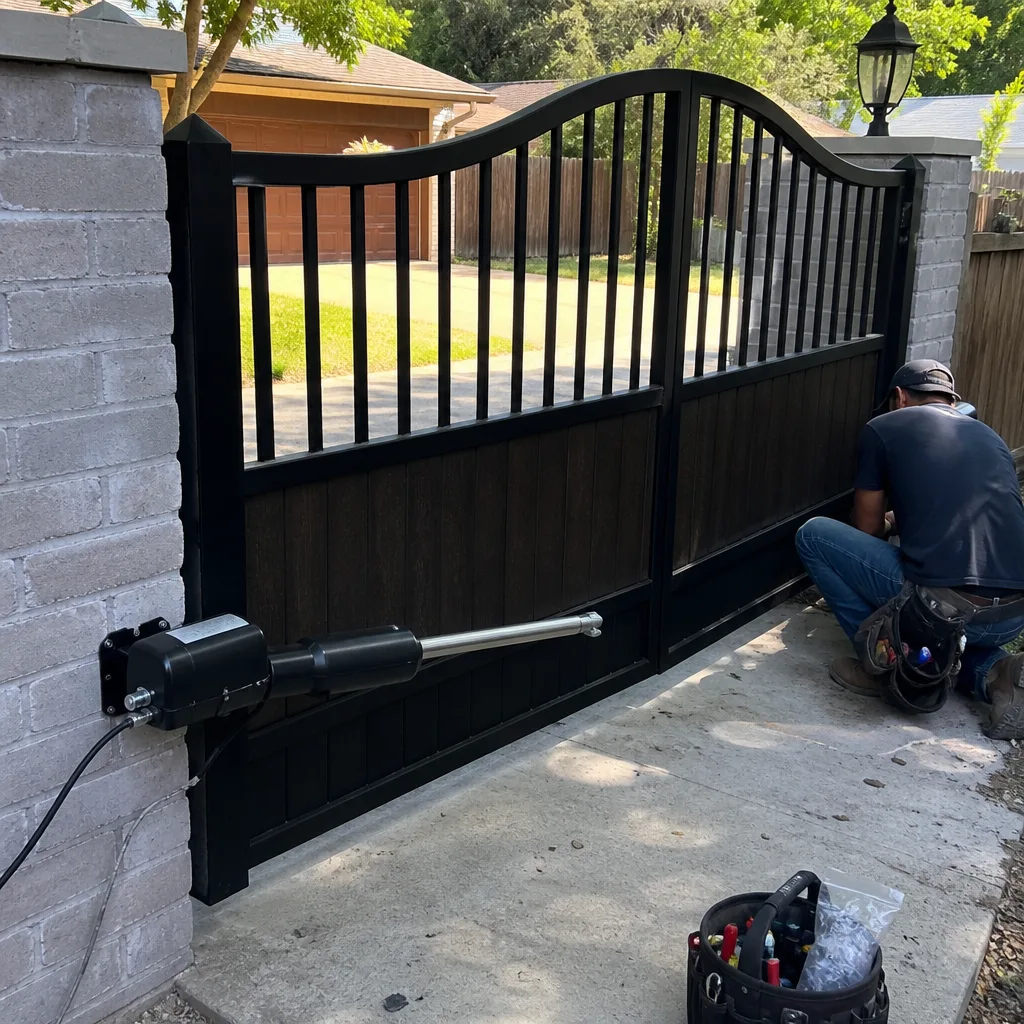 After
After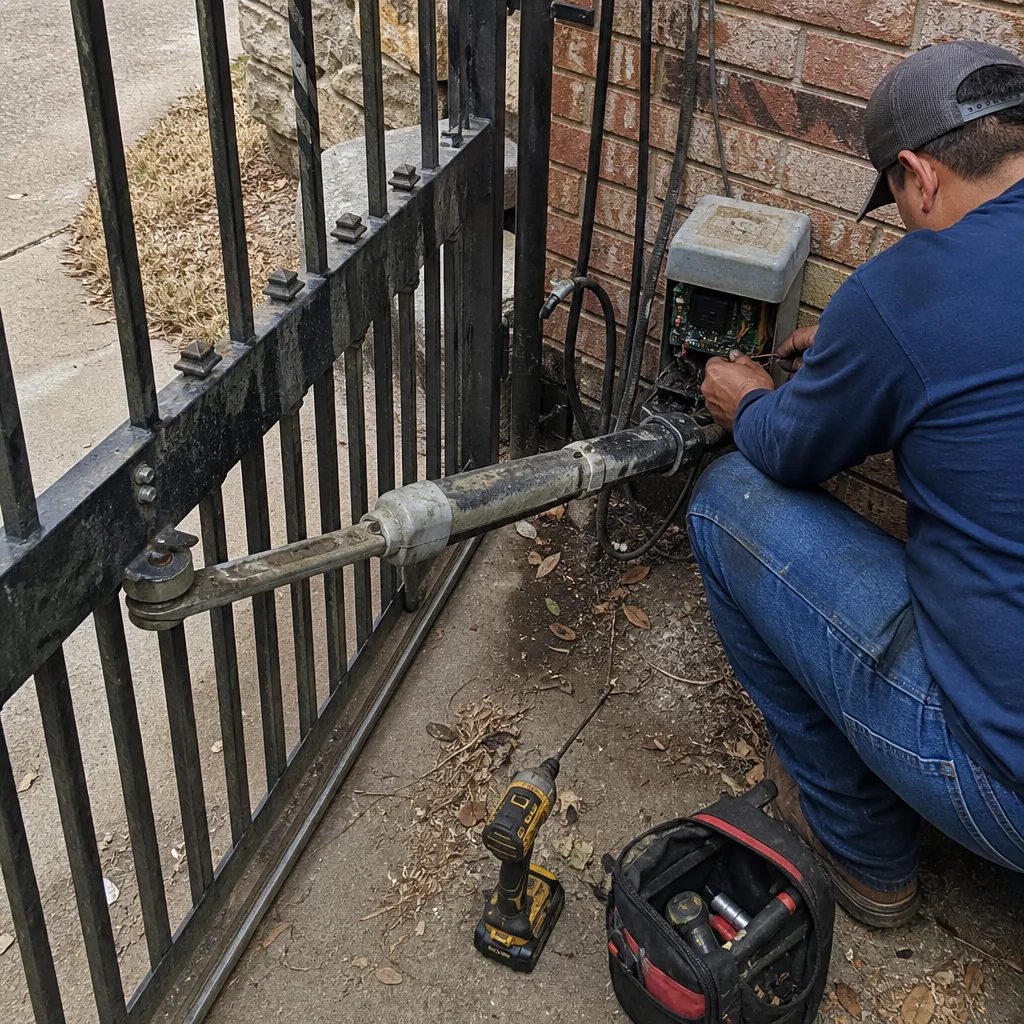 Before
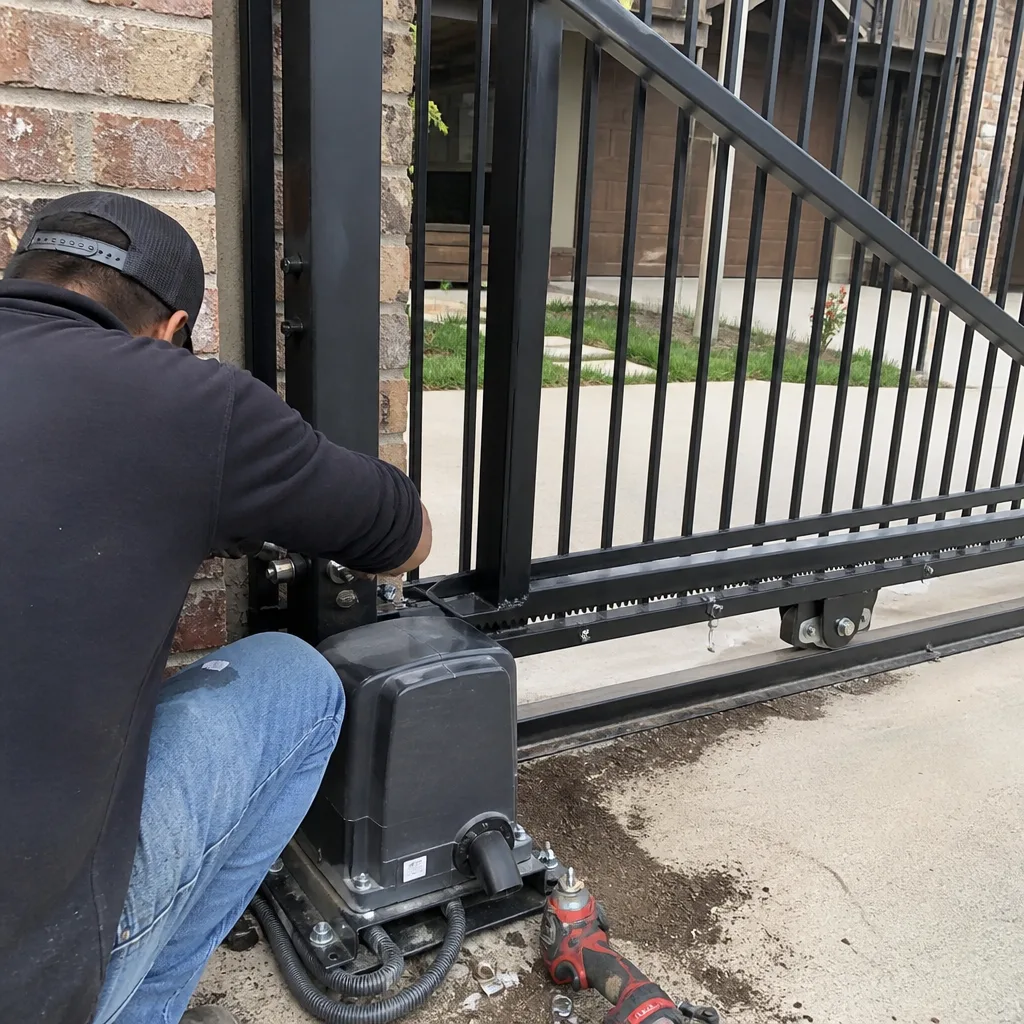 After
AfterThe Complete Guide to Gate Repair in Coppell
Here’s a pattern we run into on roughly half of all gate service calls in Coppell: the second technician charges more than the first one, not because the repair got harder, but because the first technician left nothing behind. No wiring diagram, no photo record, no note about which limit switch was set to what position. So the second technician starts from zero, spends an hour just figuring out what’s there, and the homeowner pays for that rediscovery. This guide maps every major gate failure category to its actual origin, mechanical, electrical, or missing baseline data, and explains what proper documentation looks like on a Coppell property.
Quick Answer
Gate repair in Coppell generally runs from $180 for a basic hinge adjustment or limit-switch reset up to $2,400 for a full operator replacement, with most jobs landing between $280 and $850. The single biggest cost driver isn’t the part, it’s whether a prior technician documented the original installation. When baseline records exist, repairs go faster and cost less; when they don’t, the clock starts over.
Table of Contents
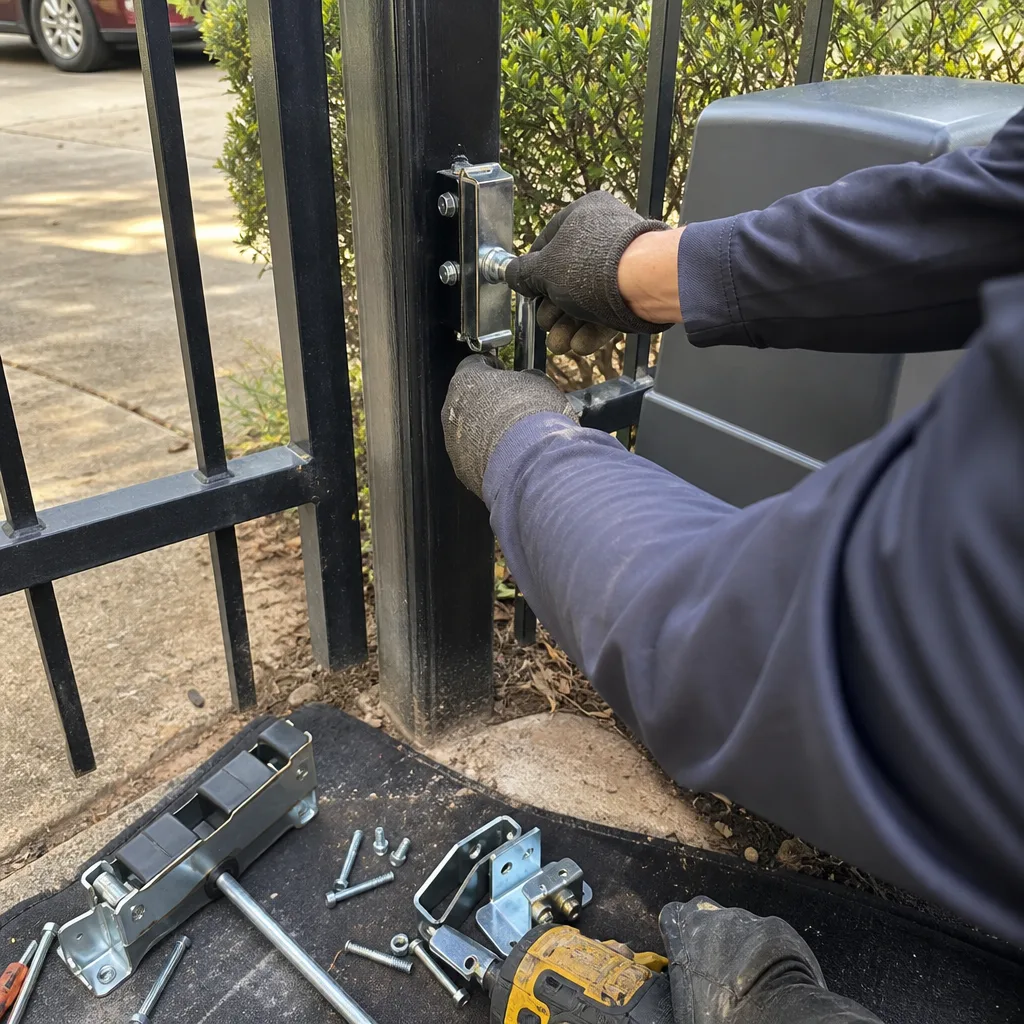
- Why Coppell Soil Changes Gate Failures
- How Coppell HOAs Affect Gate Repair
- Mechanical Failure vs. Control Board Failure
- The Baseline Documentation Package
- Component-by-Component Failure Map
- When Repair Beats Replacement
- Common Mistakes to Avoid
- When to Call a Professional
- Frequently Asked Questions
- The Bottom Line
 Before
 After
AfterWhy Coppell Soil Changes Gate Failures
Coppell sits on expansive clay soil, the same dark, gumbo-type earth that shifts driveways and cracks foundations across North Texas. That movement doesn’t stop at your front walk. Gate posts set in clay soil move through wet-dry cycles: the clay swells after spring rain, then shrinks during August drought. A post that was plumb in March can be leaning two degrees by July. That two degrees changes the entire gate geometry.
What this means in practical terms: a gate that scrapes the ground in summer may clear it fine in winter. A latch that aligns in spring may miss the post by half an inch in fall. The gate operator’s internal limits, the settings that tell the motor when to stop pushing, were set for one geometry. When the post shifts, the gate repair in Coppell isn’t just resetting a limit switch; it’s compensating for soil movement that will happen again. We see this most often on the west-facing side of properties where afternoon sun bakes the clay faster than the rest of the yard.
The fix for clay-affected posts is rarely just bolting on new hinges. A competent repair includes checking post-base depth (many Coppell gate posts sit at 30 to 36 inches, which is shallow for expansive soil), examining the concrete collar for cracks, and sometimes re-setting the post with deeper embedment or a larger diameter footing. In neighborhoods like Crestview and the older sections around Mockingbird Elementary, gates installed in the 1990s and early 2000s frequently have posts that were never wrapped against clay movement. Those posts will keep moving until someone addresses the base, not just the hinge.
We’ll also note this because it affects pricing: a gate post re-set in Coppell runs between $850 and $1,600 depending on post size, whether the bolt-hole pattern is salvageable, and whether the gate is a single swing or a double swing. The range exists because the concrete work and cure time add labor that a simple hinge replacement doesn’t.
How Coppell HOAs Affect Gate Repair
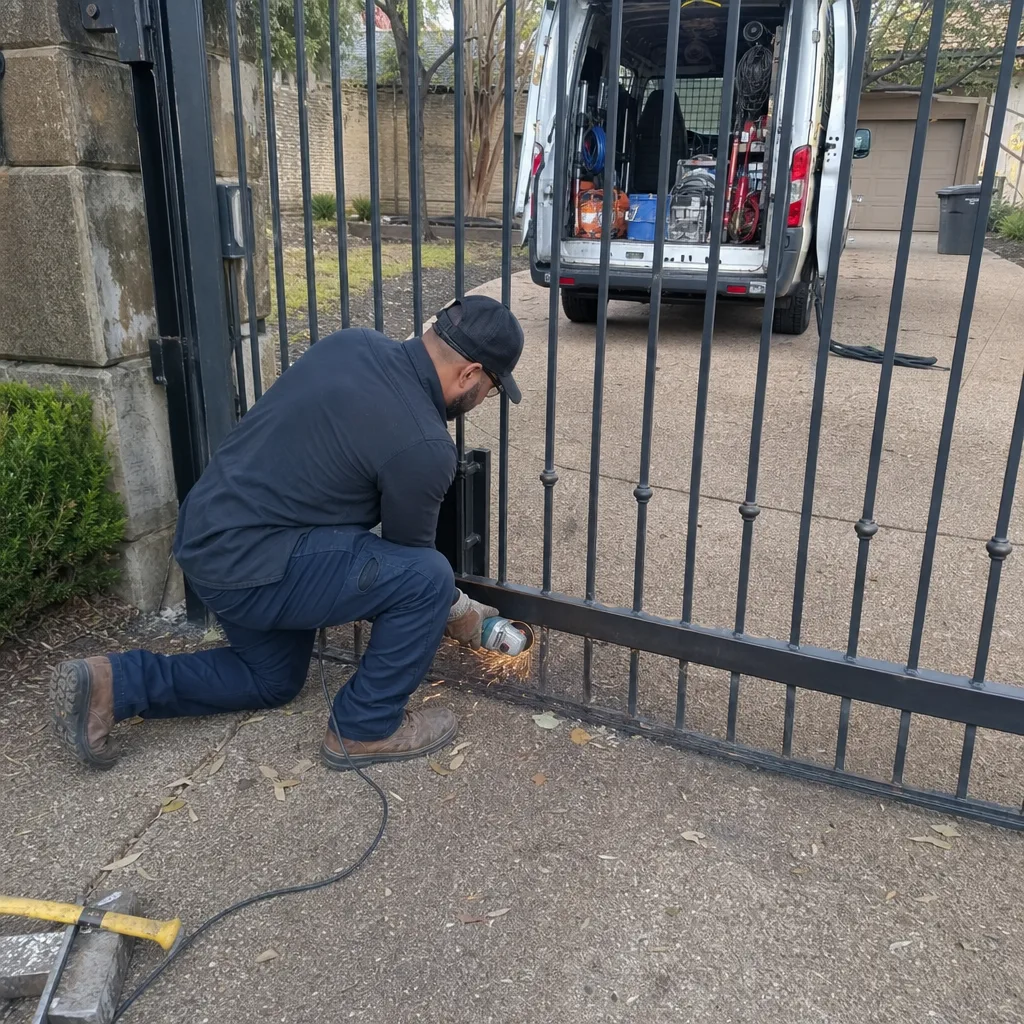
Coppell has one of the highest concentrations of HOA-governed properties in the Dallas-Fort Worth area. That’s not a side note, it’s a repair constraint. Many communities have architectural control committees with written standards for gate materials, finish colors, and even hinge styles. Before any visible gate work begins, the work may need committee approval. Skipping that step can mean a notice to remove the new hardware and redo it to spec.
The requirements vary by neighborhood. Some Coppell HOAs mandate that any replacement gate match the original material, whether that’s ornamental iron, a specific wood species, or a powder-coated aluminum. Others prohibit certain operator brands or require that any motor be hidden behind a brick column rather than surface-mounted. In the master-planned sections near North Lake, the standards are typically tighter than in older, unplatted pockets of the city.
When we document a gate for repair on an HOA property, the written record includes the specific hardware dimensions and finish codes being removed and installed. That documentation is what the homeowner takes to the architectural committee. Under Haven Standard Clause 1, that’s a written scope and price before any work starts. Under Clause 4, the photo record shows exactly what the gate looked like before and after, which most committees accept as evidence of like-for-like replacement.
Here’s the sequence we recommend for HOA-governed gate work in Coppell:
- Request the architectural standards or fence-and-gate spec sheet from your HOA office.
- Photograph the existing gate, hinges, operator, and post condition before any changes.
- Get a written repair scope from a technician that names materials by brand and finish code.
- Submit that written scope with the photos to the HOA committee for approval.
- Schedule the work only after written approval is in hand.
This sequence adds a few days, but it prevents the costlier version: doing a repair, getting a violation notice, and paying to redo the work in a different material. For a complete picture of what a full installation looks like when a gate has to be replaced, see gate installation in Coppell.
Mechanical Failure vs. Control Board Failure
There’s a $300 difference between these two failures, and it shows up in the quote. A gate that sags, scrapes, or binds is a mechanical failure: the weight distribution has changed, a hinge has worn, or a post has shifted. The operator is still fine. A gate that won’t respond, opens partially, or reverses for no reason is often an electrical or control-board failure: the motor still works mechanically, but the brain has either lost its configuration or a sensor input is corrupted.
Here’s the distinction that matters for your wallet. A mechanical repair in Coppell, hinge replacement, weld rework, post adjustment, typically runs between $280 and $700. A control board replacement for a LiftMaster or FAAC operator can run $500 to $1,200 by itself, before labor. If a technician quotes you $1,100 and another quotes $700, the difference is rarely greed. It’s usually that one technician diagnosed a board and the other diagnosed a hinge. Both may be honest. Only one is right.
Control boards fail in ways that look like mechanical problems. We’ve seen a BFT board lose its open-travel setting after a nearby lightning strike in the Denton Tap Road corridor, then repeatedly stall the gate halfway. We’ve seen a Mighty Mule board corrupt its force-sensitivity setting, causing the gate to reverse as if something was in the path when nothing was. A homeowner can’t see any of this. What they see is a gate that used to work and now doesn’t.
The fix for a control board is often not replacement. On many models, the board can be reflashed or reset to factory settings, then re-programmed with the correct travel limits and force values. That’s a sub-$300 job, but only if the technician knows that brand’s programming sequence. This is one reason Vance Gate Repair services nine automation brands rather than steering every customer toward a new motor. In our experience across thousands of gates, roughly 40% of “dead board” diagnoses are really a configuration loss that can be restored in one visit.
The Baseline Documentation Package
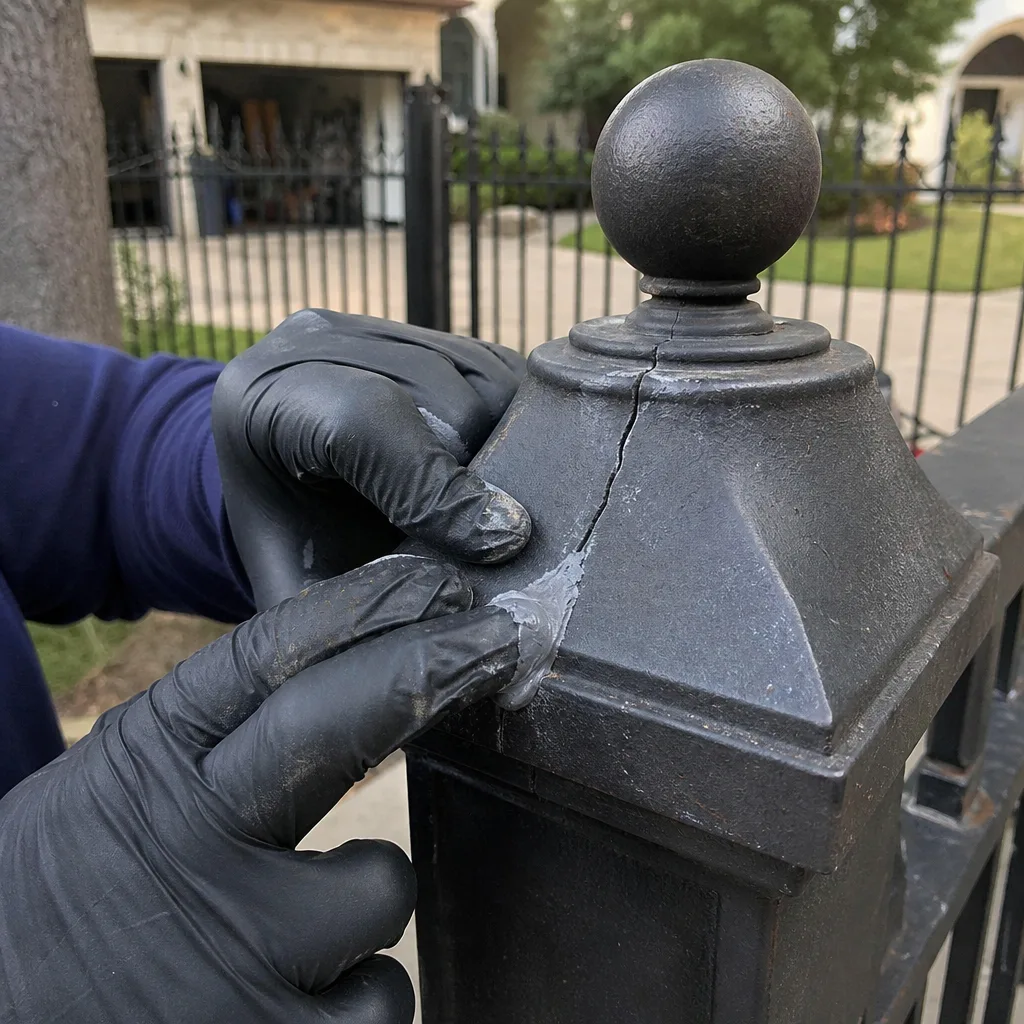
You can’t repair what you can’t identify. On a surprising number of Coppell properties, the installed operator has no visible model plate, the wiring from the previous technician is a bundle of unlabeled splices, and the hinge brand is anyone’s guess. Every repair then starts with discovery work, which the homeowner pays for on every single visit.
A baseline documentation package solves this permanently. It’s a simple record of what exists, so the next technician, whether it’s us or anyone else, starts from data instead of guessing. Here’s what it includes:
- A photograph set of both sides of the gate, the post bases, the hinge welds, and the operator mount.
- A wiring diagram, hand-drawn is fine, showing the conductor colors, the splice locations, and the control board terminals.
- Limit-switch readings: the exact open and closed travel positions, in degrees or in motor rotations, depending on the operator.
- The operator brand, model number, and any visible serial number.
- The hinge manufacturer and size, if identifiable.
- A written record of what was adjusted, what was replaced, and the part number installed.
On a residential gate, this package takes about 20 minutes to compile. On a light commercial property with an access-control system, it takes longer because the loop detectors and keypad wiring add a layer. But once it exists, it exists. Future repairs start from the record, not from re-discovery.
This is the documentation habit Adrian Vance carried into Vance Gate Repair Coppell home operations from commercial access-control work starting in 2014. On commercial sites, you can’t hand a new technician a gate with no documentation, the downtime costs too much. Residential gates deserve the same baseline.
Component-by-Component Failure Map
Every gate failure traces to one of a small number of components. Here’s the map, with what each component does and what repairing it costs in the Coppell market.
Operator Motor
The motor is what pushes or pulls the gate leaf. Motors fail from age, from being undersized for the gate’s weight, or from repeated thermal trips during Coppell’s 100-degree summers. A motor that runs but overheats and shuts off every 30 minutes is either overloaded or has failing windings. Repair range: $350 to $1,400 depending on brand, model, and whether the motor is replaceable separately from the control board. LiftMaster and FAAC typically allow motor-only replacement; some budget brands don’t.
Safety Loops
Safety loops are the wire coils buried in the driveway that detect a vehicle, though many homeowners only discover them when they stop working. When a loop detector fails, the gate won’t auto-close, or won’t open for a car sitting right on top of the loop. In Coppell’s clay soil, loop failures sometimes trace to a cracked conduit or a splice that’s pulled apart as the ground shifts. Loop repair runs $200 to $450 for detector replacement; excavation and loop re-installation runs $500 to $900.
Photo-Eye Sensors
A photo-eye is the infrared beam that stops the gate if something crosses the path. Misalignment by as little as two inches causes the gate to refuse to close. This is one of the most common and cheapest fixes: $80 to $180 for a realignment or sensor replacement, done in under an hour.
Hinge Welds
Steel gates exert constant shear on hinge welds, especially on heavy driveway swing gates. When a weld cracks, the gate sags a few millimeters at first, then a few centimeters. The operator’s limits get adjusted to compensate, which masks the problem until the gate starts dragging. A weld repair in Coppell runs $150 to $350 for reinforcement, more if the post must be re-aligned as part of the same job.
Gate Stops
Gate stops are the physical limits that catch the gate at open and closed travel. When they fail, the operator’s motor pushes until the gearbox stalls, which shortens motor life dramatically. Gate stop replacement or adjustment runs $80 to $200.
Intercom and Keypad Wiring
On gated entries with intercom or keypad access, the low-voltage wiring often runs through underground conduit from the house to the gate. Punctures from landscape work, rodent damage, or water intrusion in a splice can interrupt the signal. Diagnosis runs $120 to $300 depending on whether the wire path is accessible and whether a tone probe can trace the break.
For anything involving the operator logic, see gate motor & opener in Coppell for a deeper breakdown of brand-specific service.
When Repair Beats Replacement
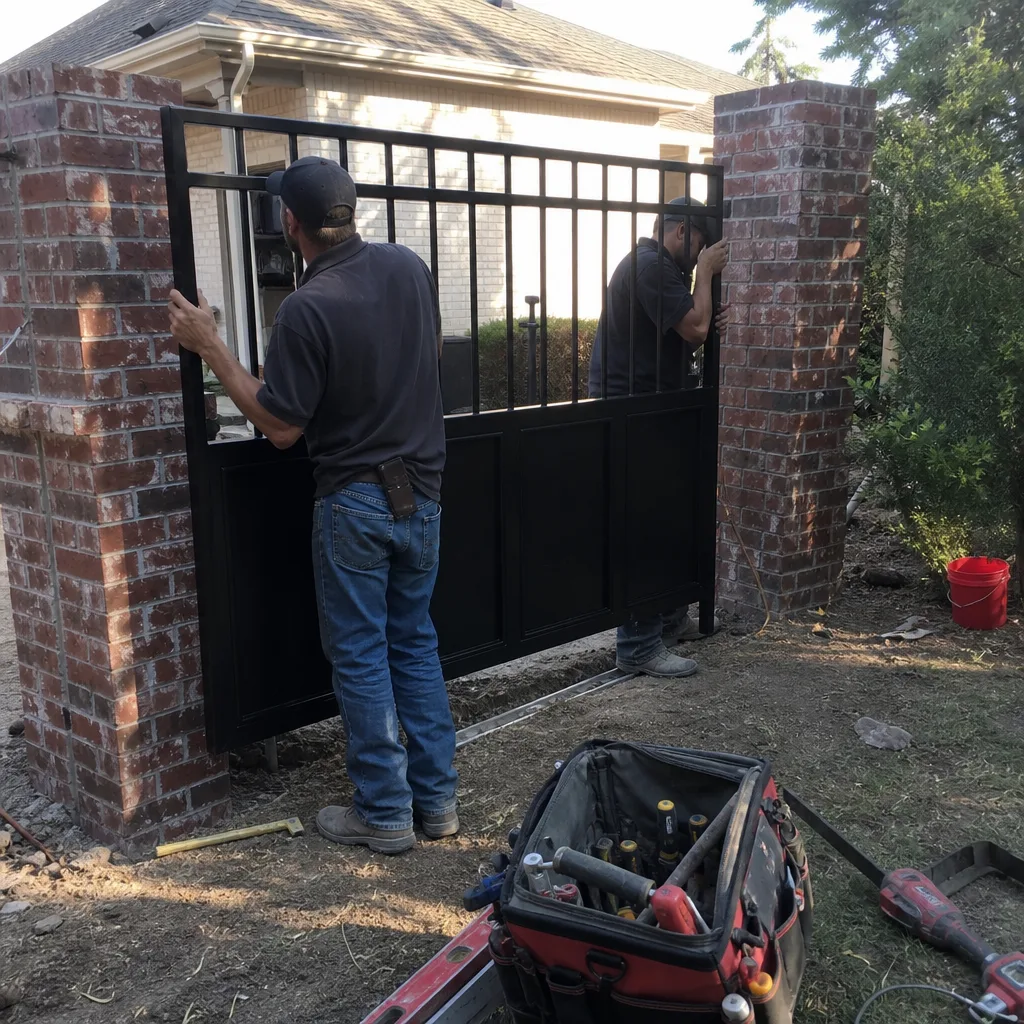
There’s an industry habit that pushes replacement when repair would do. It’s not always bad faith, replacement is simpler to quote, easier to schedule, and the new equipment carries a manufacturer’s warranty. But it’s not always the homeowner’s best interest.
Here’s our working rule: if the gate leaf itself is structurally sound, and the operator is less than 10 years old and from a serviceable brand, repair is usually the better call. A hinge reinforcement and a limit-reset on a seven-year-old LiftMaster operator might cost $500 total and buy another five years. A full replacement of both gate and operator runs $5,000 to $9,000 in Coppell, before HOA material review.
The exceptions where replacement makes sense:
- The gate leaf has rust-through or cracking at the hinge plates that welding won’t fix.
- The operator brand is discontinued and boards are no longer available.
- The gate has been re-welded twice already and the metal fatigue is spreading.
- The operator was undersized from day one and has been thermally tripping for years.
We do not steer toward replacement unless the evidence supports it. The gate motor and opener service we run is built on repairing existing hardware when it’s serviceable, not on converting every service call into a new sale.
Common Mistakes to Avoid
- Re-tightening a hinge without inspecting the post base. In Coppell’s clay, a sagging gate is often a moving post, not a loose hinge. Tightening the bolts makes the symptom quieter, not gone. The gate will sag again, and the next adjustment will be harder because the metal has now deformed around the bolt holes.
- Adjusting limits without measuring travel. When a gate reverses mid-close, technicians sometimes just tweak the force setting and call it done. If the underlying issue is a binding hinge or a degraded capacitor, the adjustment masks the failure for weeks, then it returns worse.
- Skipping HOA review. Coppell HOAs regularly check gate work during resale inspections. If your replacement hardware doesn’t match the architectural standard, the violation hits the closing table years later. The committee review costs time, not money, and it protects the sale.
- Installing a new operator on old wiring. Low-voltage wiring from a 2003 installation may be corroded inside the conduit, even if it tests fine at the ends. Running a new motor on failing conductors produces intermittent weirdness that no board replacement will fix.
- Accepting a verbal quote. If the price isn’t written before work starts, the number can change at the end. Every job should come with a written scope and a written price. That’s the entire point.
- Buying the cheapest operator online and self-installing. Some budget operators aren’t rated for the weight of a solid-iron Coppell driveway gate. The first full-speed close into the gate stop will strip the gearbox. The savings vanish in the warranty claim.
- Ignoring the photo-eye. A photo-eye that’s been zip-tied out of the way, which we see often, means the gate will close on a vehicle or a person. It’s a genuine safety hazard, and it’s the first thing a good tech will restore.
When to Call a Professional
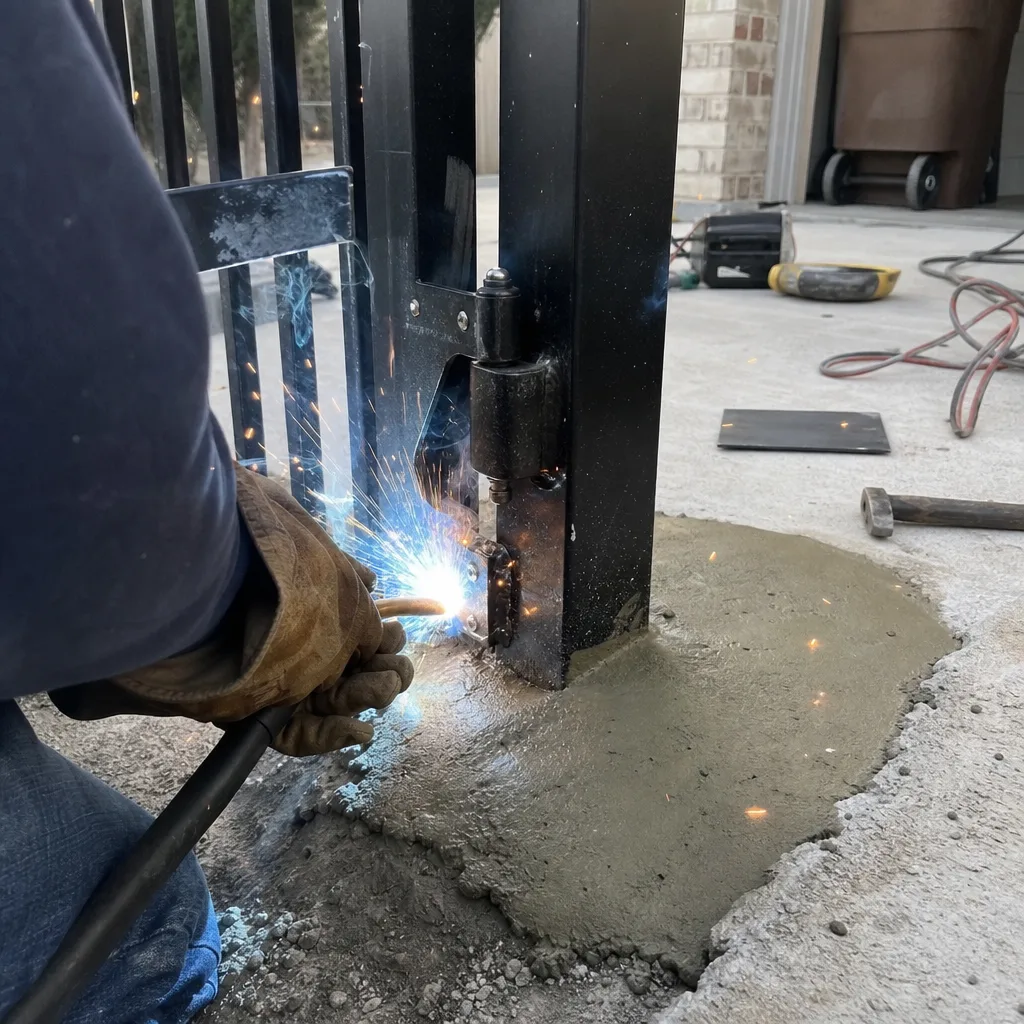
Call a gate technician when the gate sags visibly, scrapes the ground, stalls mid-travel, reverses unpredictably, makes a grinding noise from the motor housing, or refuses to respond to the keypad, remote, or intercom. Also call if you buy a Coppell property with an existing gate and have no records for it: the baseline documentation package should be compiled before anything fails. Don’t attempt to tension gate springs or weld load-bearing hinges yourself. Both carry real injury risk when done wrong. Vance Gate Repair Coppell offers free estimates in Coppell, call (817) 674-6552.
Frequently Asked Questions
Gate repair in Coppell runs from $180 for a photo-eye alignment or limit-switch reset to $2,400 for a full operator replacement, with most jobs between $280 and $850. The written price is provided before any work begins. Call (817) 674-6552 for an exact quote on your specific gate.
Yes, a live person answers the phone 24/7 at (817) 674-6552 and emergency repair calls in Coppell can typically be scheduled the same day. No voicemail loop, no callback queue.
In Coppell, gate sagging is usually caused by post movement in expansive clay soil, a cracked hinge weld, or worn hinge pins. The fix depends on which one it is, and the documentation we leave includes a photo record of what we found and what we set.
If your Coppell property is governed by an HOA with architectural standards, visible gate changes like new hardware, a new operator, or a material change usually require committee approval. Ask your HOA office for the fence-and-gate spec sheet before any visible work. We provide the written scope and photo record the committee will ask for.
We service LiftMaster, FAAC, BFT, Mighty Mule, and several other automation brands already on the property, so you’re not forced into a replacement just because your current motor isn’t the brand we happen to sell. See the gate motor & opener in Coppell page for brand-specific details.
Yes, every job comes with a written scope and a written price before any tool is picked up, under Haven Standard Clause 1. The invoice at the end matches the paper in your hand at the start. Call (817) 674-6552 and ask for a free estimate.
The Bottom Line
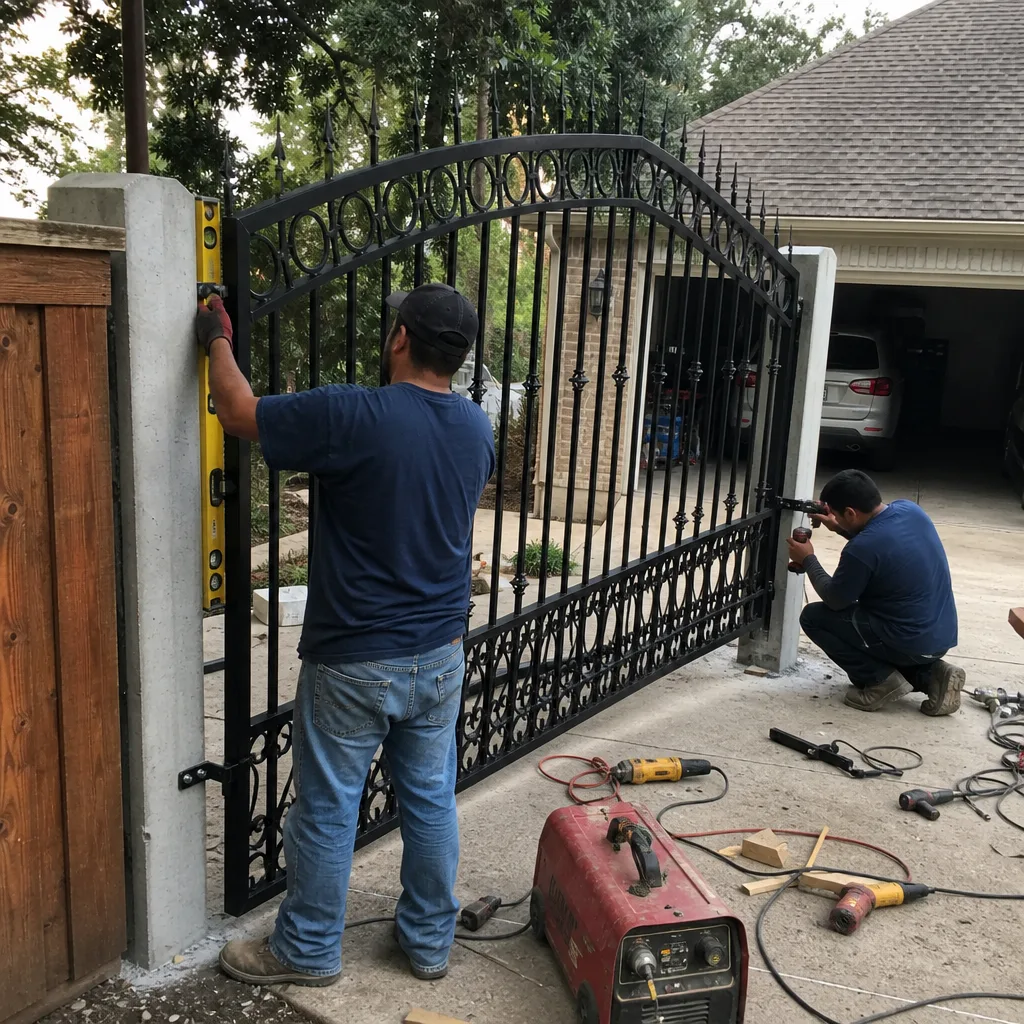
Gate repair in Coppell is priced by the hour for diagnosis and by the part for replacement, but the underlying variable is documentation. When a gate’s prior service left no record, the next repair costs more because the technician has to rebuild knowledge from scratch. When proper records exist, wiring diagram, photo set, limit readings, most repairs land quickly and predictably. The sensible order of operations is: identify what you have, document it, get a written price, and only then approve the work. That sequence saves money on this repair and every future one.
Written by Adrian Vance, Owner at Vance Gate Repair Coppell, serving Coppell since 2014.