
Last updated September 20, 2026
Free on-site gate assessment - hinges, posts, and your LiftMaster or Nice gate operator checked before anything is quoted
The assessment is free and the quote is the invoice.

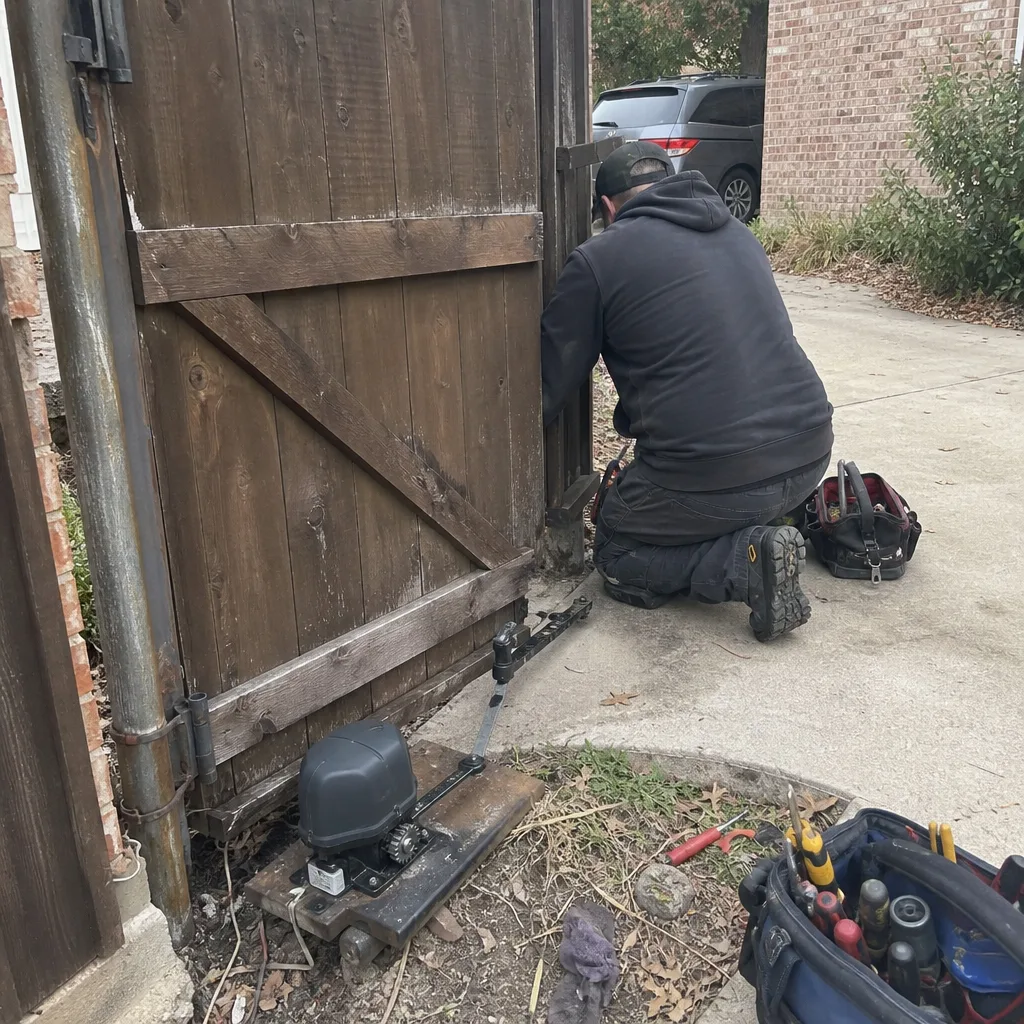 Before
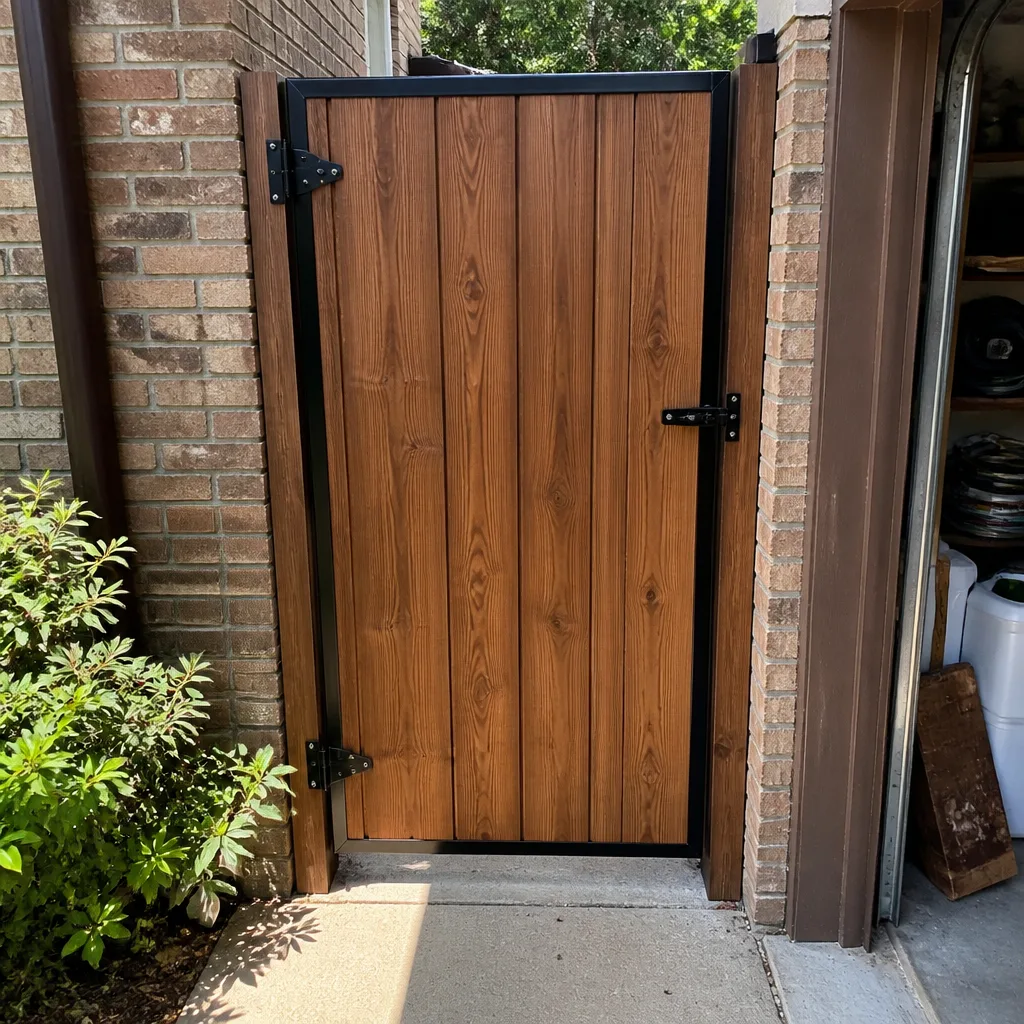 After
After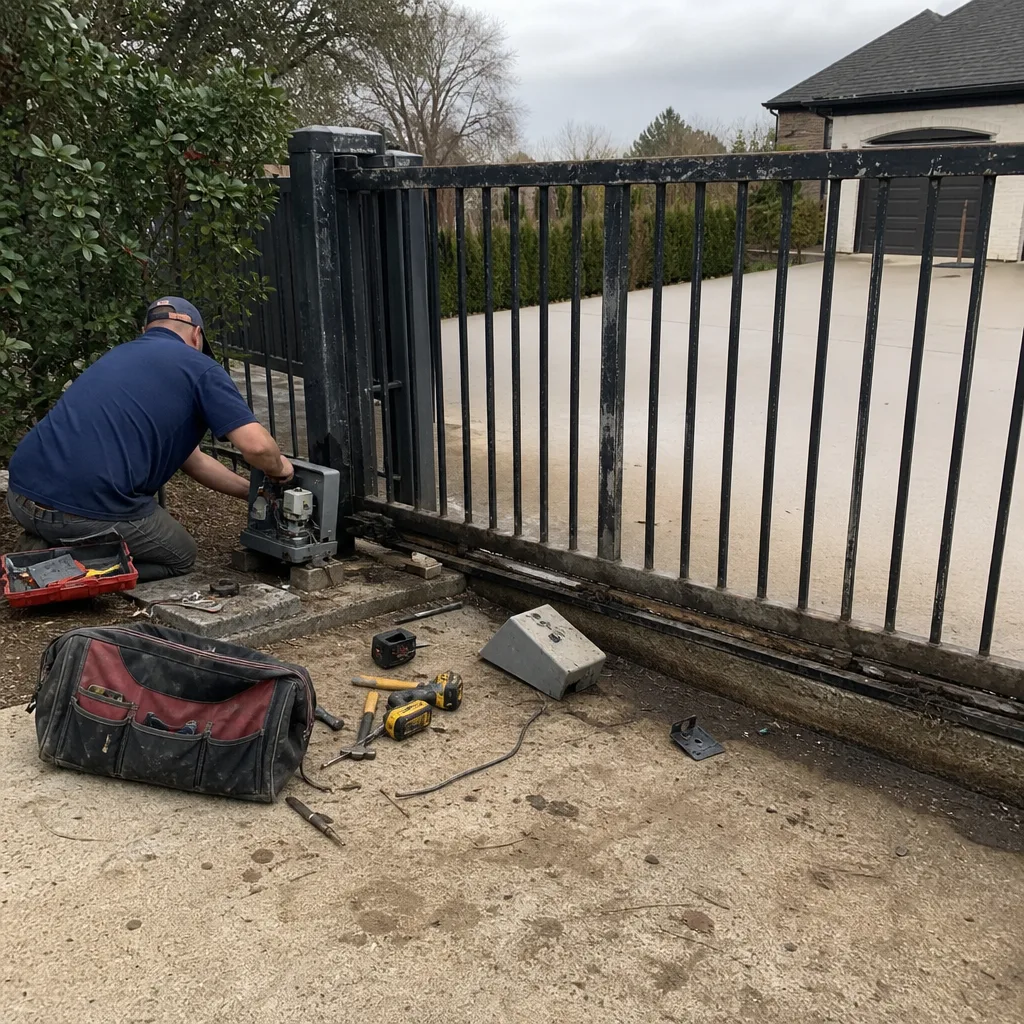 Before
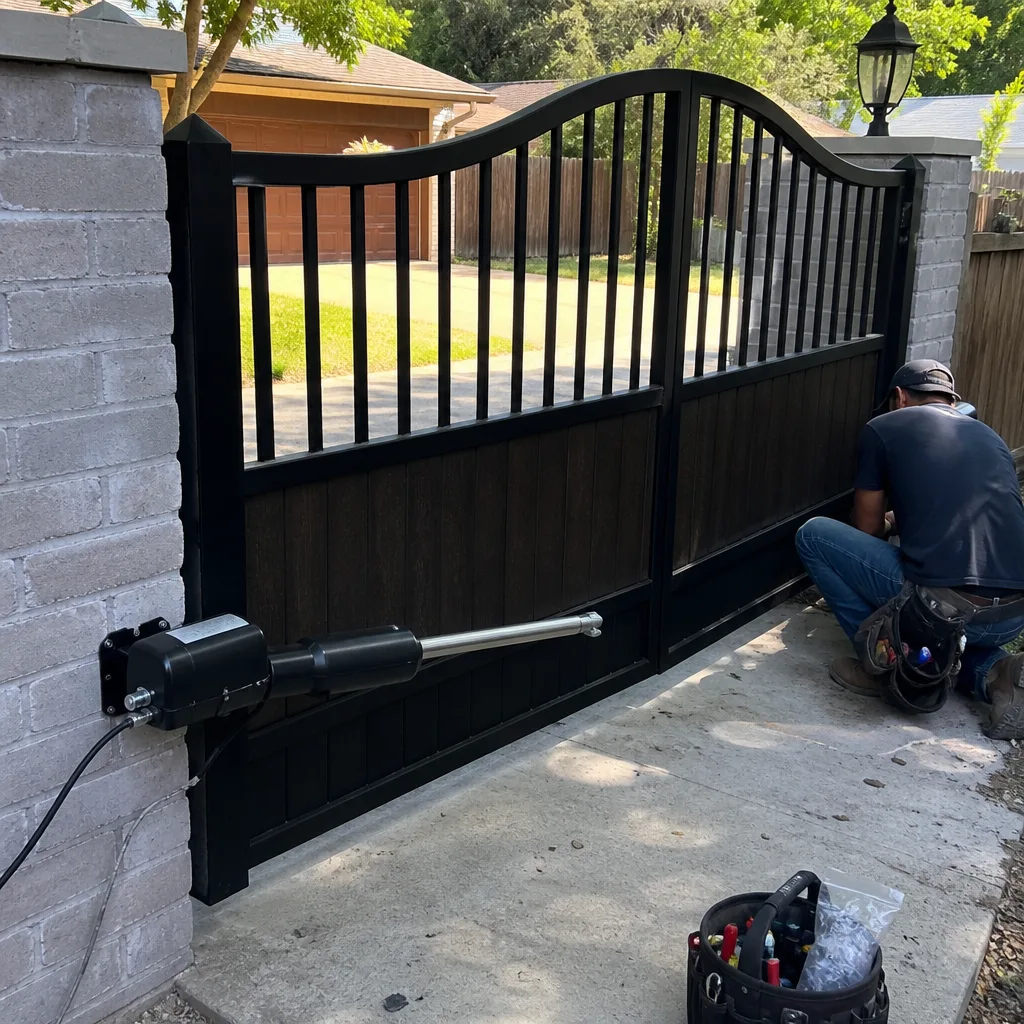 After
After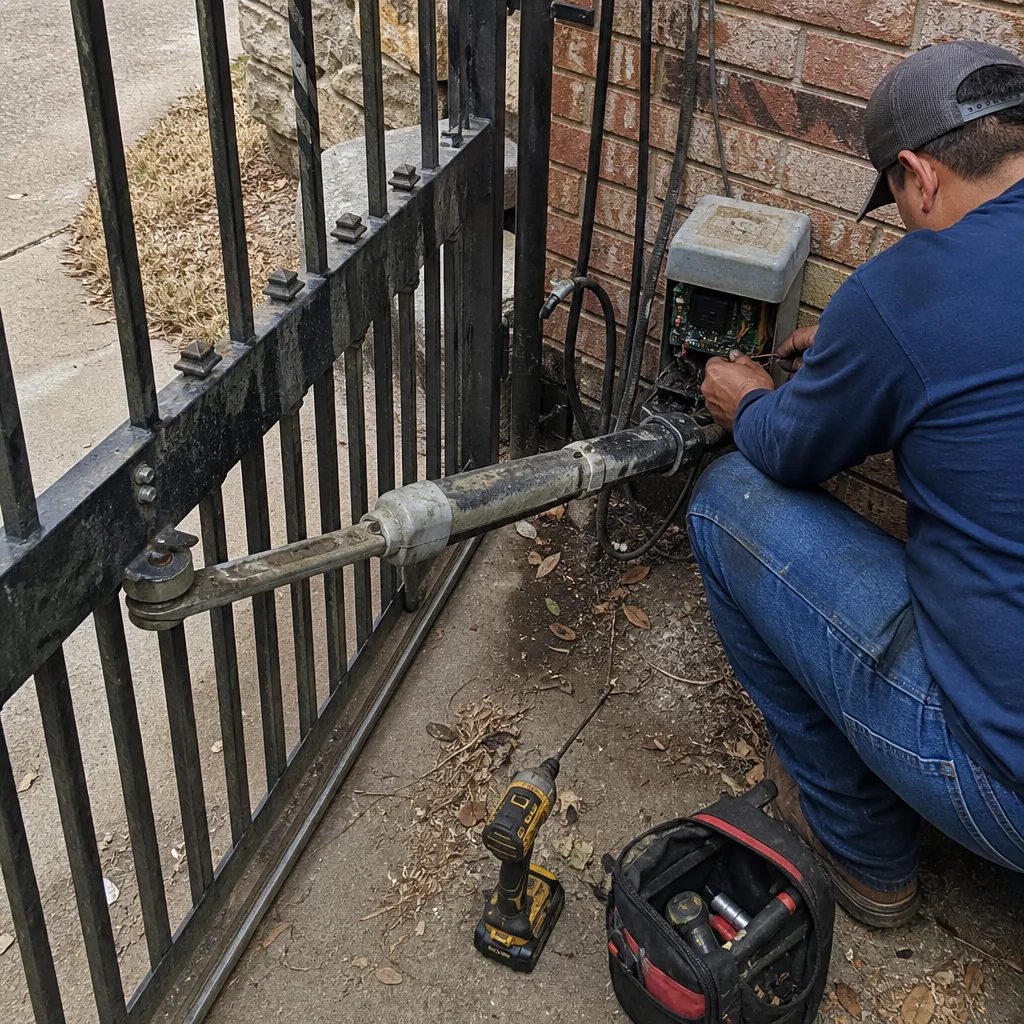 Before
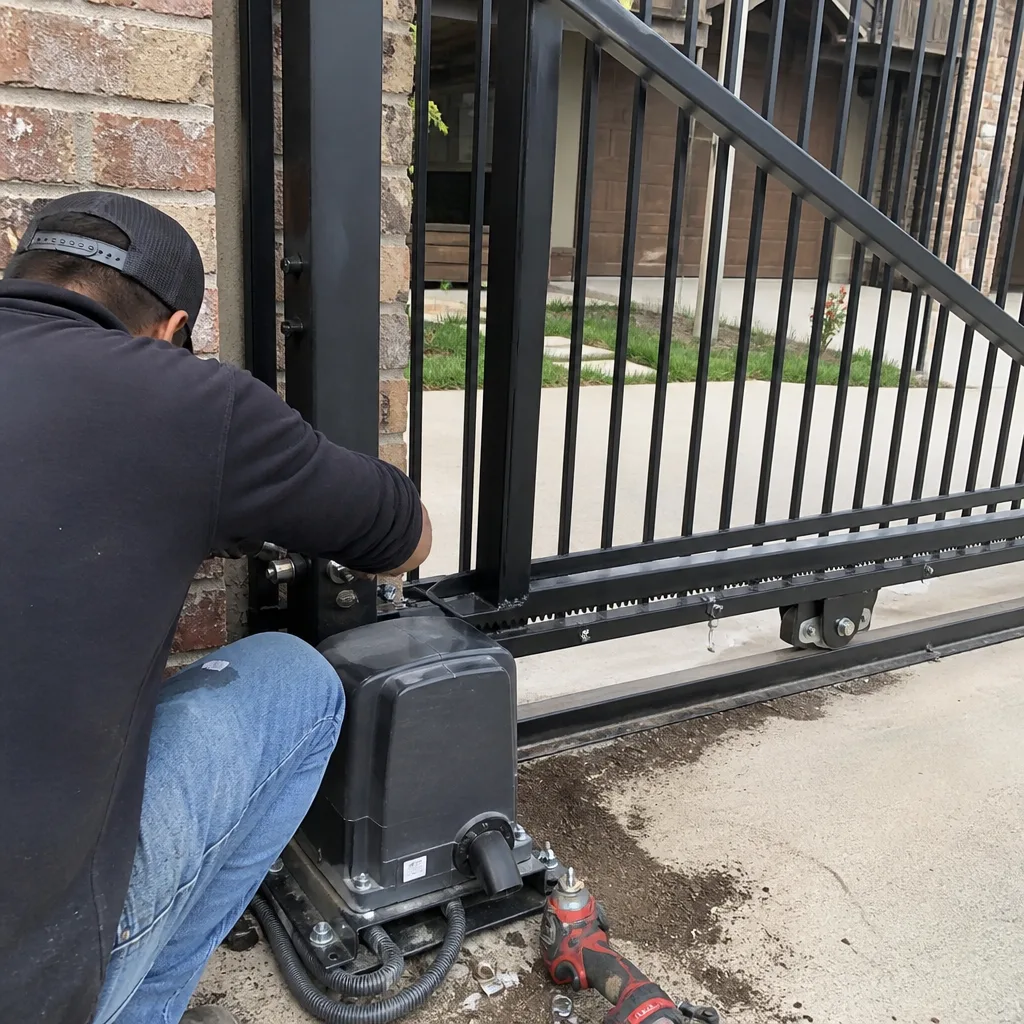 After
AfterDIY vs Professional Gate Repair: The Coppell Homeowner’s Decision Guide
A homeowner in Coppell replaces a gate operator themselves, skips the permit, and six months later a delivery truck gets hit when the gate swings closed on its own. The insurance claim for the truck gets complicated fast when the adjuster asks who installed the operator and whether the city inspected it. Most DIY gate advice focuses on whether you can do the work. This guide focuses on whether you should, and the answer turns on liability and documentation far more than it turns on skill. By the time you finish reading, you’ll know exactly which repairs are safe to take on in Coppell, which ones carry legal exposure, and how to do a weekend fix without leaving the next technician guessing.
Quick Answer
Most Coppell homeowners can safely handle hinge lubrication, remote reprogramming, and safety-edge cleaning on their own. But any repair that touches the gate operator’s electrical circuit, UL 325 safety devices, or the gate’s structural posts crosses a line where the real risk is not a botched job: it’s legal and insurance exposure down the road. The sensible rule: mechanical maintenance is DIY territory; anything involving power, code compliance, or a post that has shifted in clay soil belongs with a professional who leaves a written record.
Table of Contents
- What a Coppell Homeowner Can Safely Repair
- Where DIY Crosses Into Liability Territory
- What DIY Costs in Documentation Terms
- How to Do a DIY Repair and Still Leave Useful Records
- The Coppell Scenario Where DIY Is the Wrong Call
- DIY vs Professional: A Side-by-Side Look
- Common Mistakes to Avoid
- When to Call a Professional
- Frequently Asked Questions
 Before
 After
AfterWhat a Coppell Homeowner Can Safely Repair
The line between a safe Saturday project and a liability problem is not hard to find once you know what to look for. A safe DIY gate repair is one where nothing you touch can hurt anyone if you get it wrong, and where no code inspector would care that you did it yourself.
Hinge lubrication
This is the single most neglected maintenance item on residential gates in Coppell, where summer heat bakes grease out of hinge pins faster than homeowners expect. A dry hinge forces the operator to work harder, which shortens motor life and can cause the gate to bind mid-cycle. The fix is simple: clean the pin with a rag, apply a lithium-based grease or a dry lubricant with PTFE, and cycle the gate three or four times to work it in. Do this twice a year, once before summer and once after the first hard rain, and you’ll prevent a meaningful share of the operator failures we get called for. The worst possible outcome is a stain on your shirt. No code issue, no safety device involved, no liability concern.
Remote reprogramming
If your gate remote stopped working but the keypad and the wall button still function, the problem is usually the remote itself, not the operator board. Reprogramming a LiftMaster or Linear remote, to name two of the common brands on Coppell properties, is typically a matter of pressing a Learn button on the operator and then pressing a button on the remote within a 30-second window. The exact sequence varies by model, and the instruction label is usually printed on the operator cover or available from the manufacturer’s website. This is safe DIY work. You’re not modifying the operator, you’re telling it to recognize a transmitter. If you get it wrong, the worst case is a remote that still doesn’t work.
Minor weld rust treatment
Wrought iron and steel gates in Coppell develop surface rust, especially near the bottom rail where sprinkler overspray keeps the metal damp. Surface rust is not structural, and treating it early is straightforward: wire brush the loose oxidation, apply a rust converter to any stubborn residue, prime, and topcoat with a direct-to-metal enamel. What you’re doing is slowing decomposition, not changing the structural integrity of the gate. Leave structural weld repair alone. A cracked weld at a hinge mount or a broken picket is load-bearing, and a re-weld that’s too shallow can fail without warning while the gate is in motion.
Safety-edge cleaning
The safety edge is the pressure-sensitive strip mounted on the leading edge of the gate that tells the operator to stop and reverse if it contacts anything while closing. Dust, pollen, and insect debris accumulate under the edge over time and can cause false triggers, where the gate reverses for no visible reason. Cleaning it is simple: wipe the edge down with a damp cloth, check for debris wedged in the channel, and gently press the edge at several points to confirm it flexes and rebounds. If the edge is cracked, brittle, or fails to bounce back, that’s a replacement job, not a cleaning job. A failed safety edge that you clean but don’t replace is a UL 325 violation, and that’s a different category entirely.
For a broader look at which repairs fall into which category, our Gate Repair in Coppell page walks through the most common failure points on residential gates in this area.
Where DIY Crosses Into Liability Territory
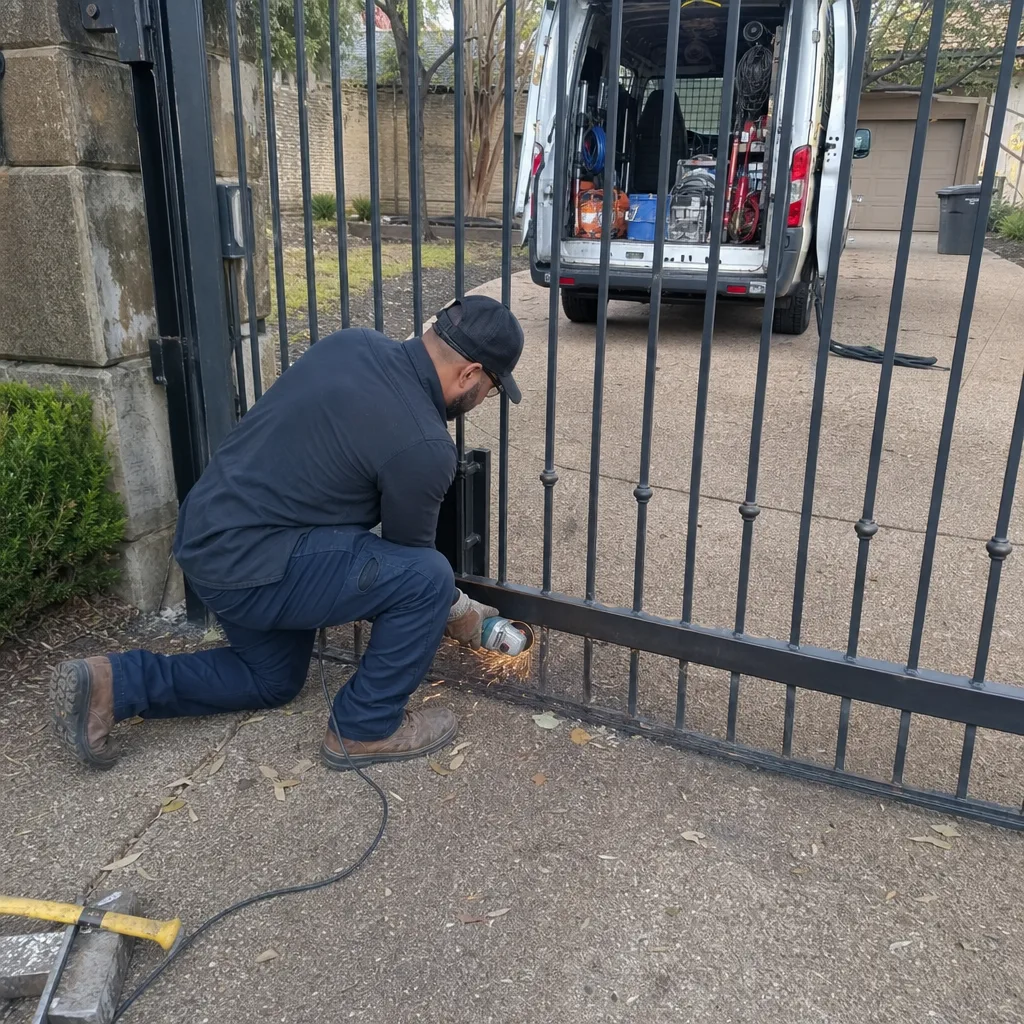
Skill is not the deciding factor here. Some Coppell homeowners are perfectly capable of wiring a new operator and setting limit switches correctly. The problem is what happens after the work is done, when something fails and someone asks a lawyer-shaped question: who installed this, and is there a record?
Loop wire replacement
A loop detector is the system that tells the gate to open when a vehicle sits on the driveway. The loop is a coil of wire embedded in the driveway surface, connected to a detector that sends a signal to the operator. Loop wire deteriorates over time, especially in Coppell’s clay soil, which expands and contracts through wet-dry cycles and can eventually sever the wire. Replacing a loop means cutting a channel in the concrete, laying new wire, sealing the channel, and connecting to the detector. This is code-governed work. A poorly sealed loop channel lets water reach the wire and short it out, but more importantly, a loop installed without the correct depth or configuration can fail to detect a vehicle, and a gate that doesn’t know a car is present is a gate that can close on one. If that vehicle is damaged because the loop you installed didn’t register it, you’ve got a documentation problem, not a fix-it problem.
Operator installation on a permitted circuit
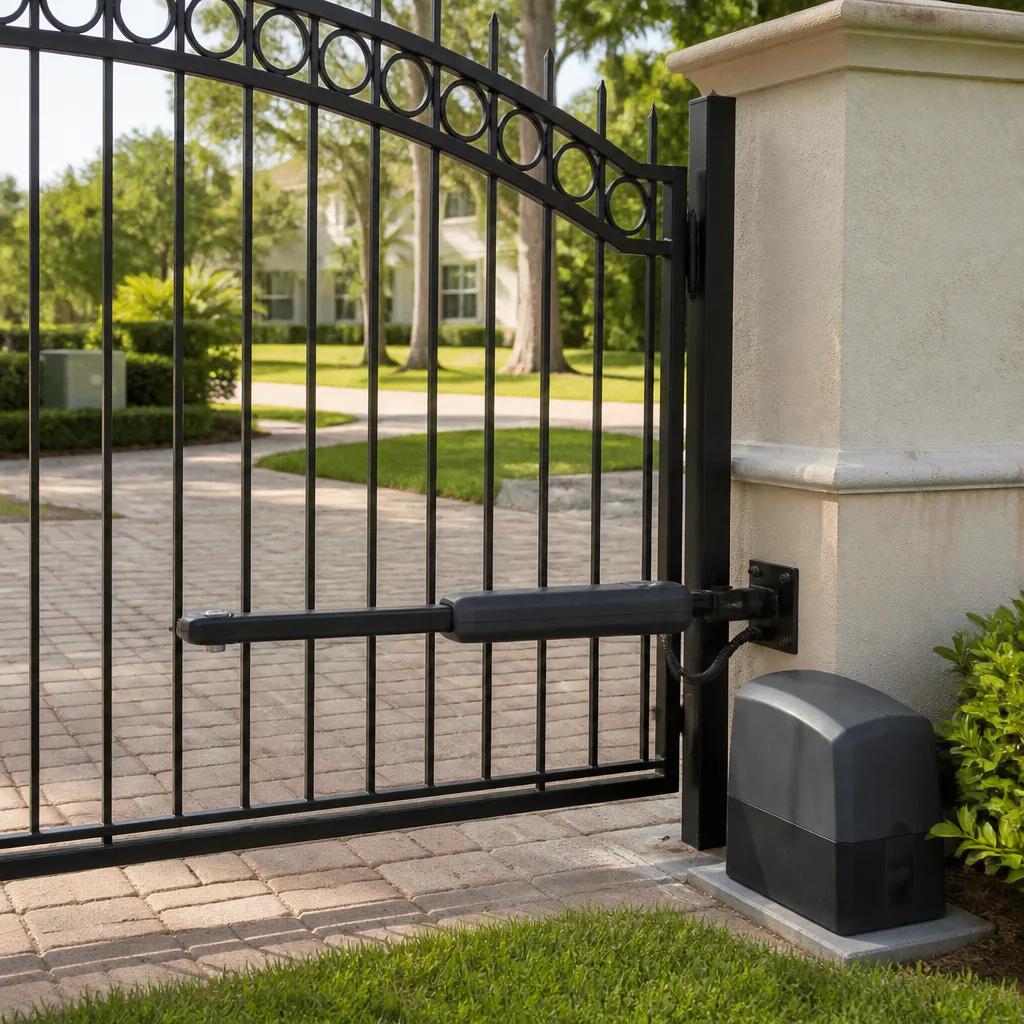
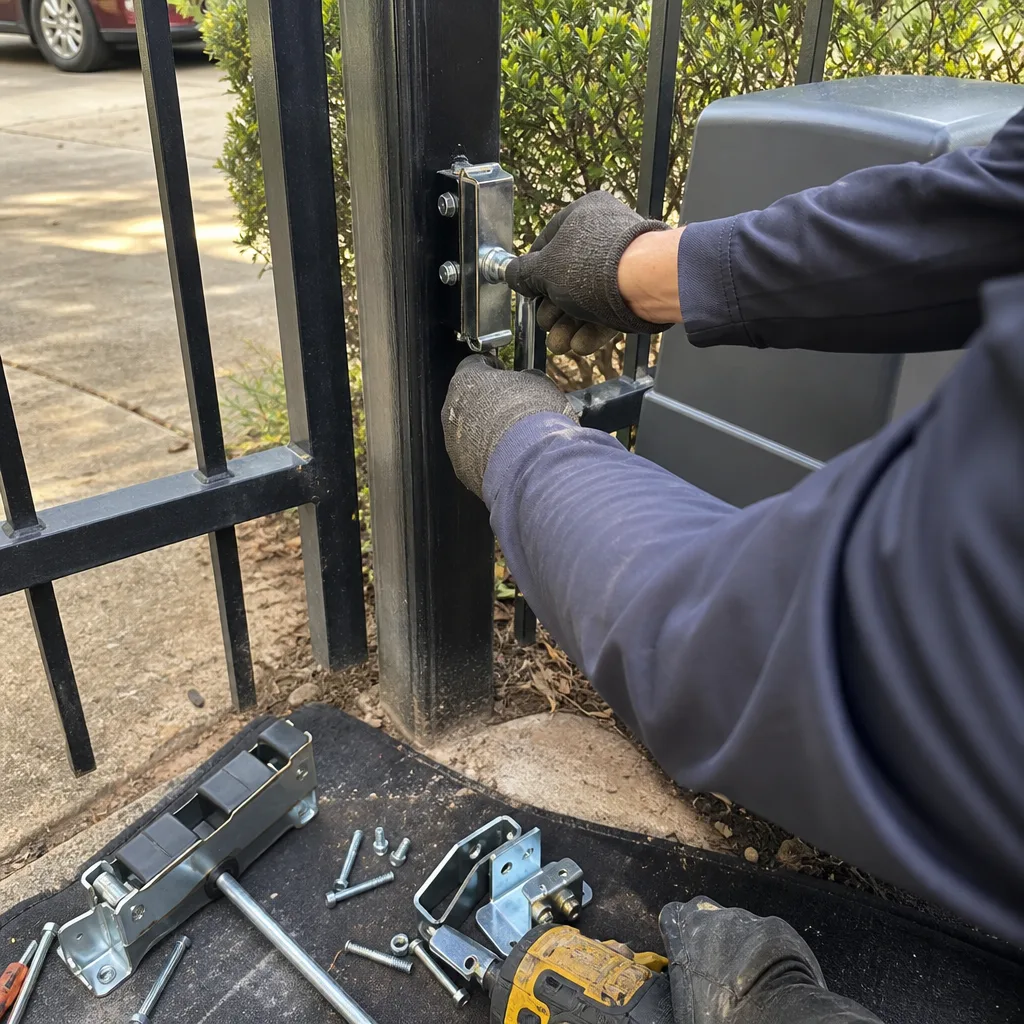
Most residential gate operators in Coppell draw power from a dedicated circuit that was permitted and inspected when the house was built or when the gate was originally installed. Replacing the operator on that circuit, especially if the new operator has a different draw or requires a different breaker, can trigger a permit requirement under the city’s current electrical code. Here’s the specific scenario that matters: you install the operator yourself, it works fine for months, then the gate malfunctions and a vehicle gets damaged. The vehicle owner or their insurance company asks for records. You don’t have any. They ask whether the installation was permitted. It wasn’t. At that point, your homeowner’s insurance carrier may take the position that an unpermitted electrical modification contributed to the damage and dispute the claim. That is not a hypothetical we invented. It’s the reason we won’t install an operator on a circuit without confirming the permit status first.
Any repair affecting UL 325 safety devices
UL 325 is the national standard for gate operator safety. It requires that operators have two independent means of protection against entrapment: typically photo-eyes (the infrared beam that stops the gate if anything crosses the path) and a safety edge or similar contact sensor. Any DIY work that involves repositioning, disconnecting, or replacing one of these devices changes the safety profile of the gate. Even something as simple as remounting a photo-eye that got knocked out of alignment matters, because the beam has to be at a specific height and angle to detect a child or a pet. If you remount it six inches too high, the gate now has one fewer functioning safety device, which is a UL 325 violation, which is exactly the kind of fact that insurance investigators and attorneys look for after an incident. The repair itself might be simple. The stakes are not.
Most of the operator-related failures we see in Coppell trace back to a safety device that was misadjusted or bypassed. Our Gate Motor & Opener in Coppell page explains what the common failure modes look like and what a proper repair involves.
What DIY Costs in Documentation Terms
Every professional gate repair in Coppell produces two things the homeowner can see: the repaired gate and the record of what was done. Most DIY repairs produce only the first. The absence of the second is not free. It gets billed later, often invisibly.
Here’s what that cost looks like in practice. Suppose you replace a capacitor in your operator two years ago and it worked fine, but now the operator is acting up again and you call a technician. The technician arrives and finds a capacitor of a different rating than what the operator’s board specifies. Was it the wrong part from the start? Did someone change the board? Has the voltage been drifting? The technician now has to spend extra time diagnosing the history of the machine instead of fixing the current problem, and that time is billable. Worse, the technician might replace a part that didn’t need replacing because the existing modification made the normal diagnostic path ambiguous. You paid for the DIY repair up front. You’re paying for it again now.
The cost compounds at resale. A Coppell homeowner who has kept a folder with every gate repair invoice, every part number, and every adjustment record can hand that to a buyer as evidence that the gate has been maintained properly. A homeowner who has done several DIY fixes over the years has nothing to show except a gate that works, and a buyer who has had a bad gate experience will discount the offer for that uncertainty. The documentation is the asset, not the repair.
How to Do a DIY Repair and Still Leave Useful Records
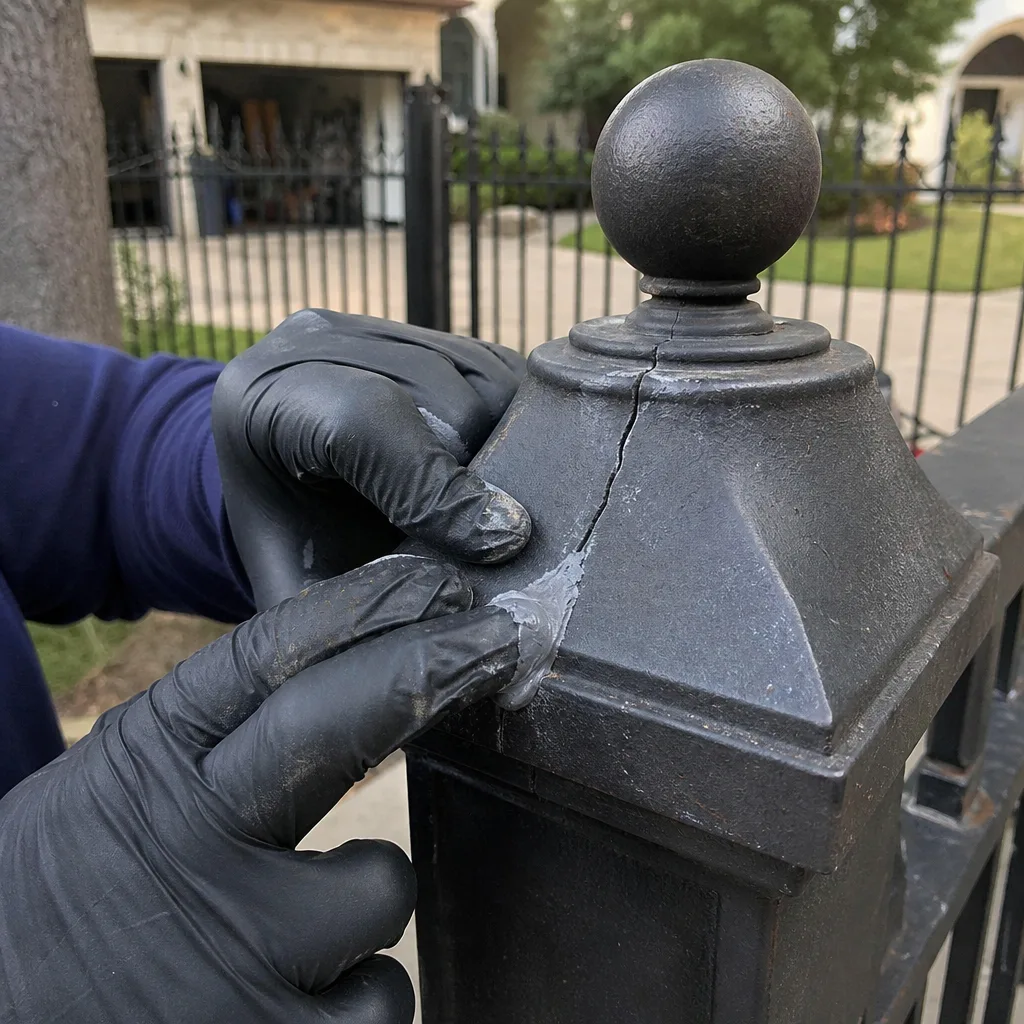
If you’re going to do a safe DIY repair in Coppell, spend an extra ten minutes and leave a record that a future technician can actually use. The minimum useful set looks like this:
- Photograph the area before you touch anything. Get a wide shot of the gate in its fully open and fully closed positions, and a close shot of whatever part you’re about to work on. These photos establish the baseline. If the gate was sagging slightly before your work, the photo proves it.
- Photograph the part number and any visible markings on the component you’re replacing. If you’re swapping a capacitor, a limit switch, or a remote receiver, the old part’s label tells a future technician exactly what was in there, which narrows diagnostics dramatically.
- Write down what you did in plain English. Not “replaced part.” Something like “replaced Run capacitor on LiftMaster LA400 operator, old part read 35μF 370V, new part is 35μF 440V from Grainger.” That sentence saves a future technician twenty minutes.
- Photograph the area after the work is complete. Same angles as the before shots. This shows what you changed and what you left alone.
- Note any observations that seemed off but weren’t the problem you were fixing. “Noticed the gate drags slightly on the last two feet of open travel” is useful information even if you didn’t address it.
- Store everything in one folder. Physical or digital, it doesn’t matter. What matters is that the records exist and that someone buying your house or working on your gate in three years can find them.
This is the same documentation habit that Vance Gate Repair applies on every professional visit, adapted down to a weekend scale. Under the Haven Standard, every job leaves a photographed record of what was found, what was set, and what was installed. You can approximate that on your own for fifteen minutes of effort, and a future technician will bill you less because of it.
The Coppell Scenario Where DIY Is the Wrong Call
Coppell sits on expansive clay soil, and expansive clay soil moves. It swells when it rains and shrinks when it dries, and the cycle repeats every year. Gate posts set in this soil can drift over time, and a post that has drifted changes the geometry of the entire gate. Hinges bind, the latch misses the receiver, the operator strains against a load it was never meant to carry.
Here’s the specific Coppell scenario where DIY is the wrong call not because you lack skill, but because you lack a baseline measurement. Suppose your gate has started dragging on the last foot of travel, and you assume the problem is a worn bearing or a misadjusted operator. You replace the bearing or reset the limit switch, and the gate works again, sort of. But the real problem is that the post has shifted two inches out of plumb, and the hinge geometry is compromised. Your fix masked the symptom. In six months, the gate drags again, and now the post has shifted further. By the time a professional gets involved, the post has moved enough that the gate needs to be re-hung or the post re-set, and that’s a different project than the one you thought you were doing.
This is the distinction that determines whether a permit is required in Coppell. A repair that restores a gate to its original condition is generally maintenance. A reinstallation, where a post is pulled and reset or the gate is re-hung with new geometry, crosses into structural work that the city may require to be permitted. If you’ve been masking a post movement problem with operator adjustments for two years, you’ve been doing repair on paper but creating reinstallation in reality, and the legal status of the work has shifted underneath you. A professional who takes a level to the post on the first visit would have caught the drift and told you the truth: this gate is being reinstalled, not repaired, and here’s what that means for permits and price.
Our Gate Installation in Coppell page covers what a proper reinstallation involves in this soil, including how we set posts so they stay set through the wet-dry cycle.
DIY vs Professional: A Side-by-Side Look
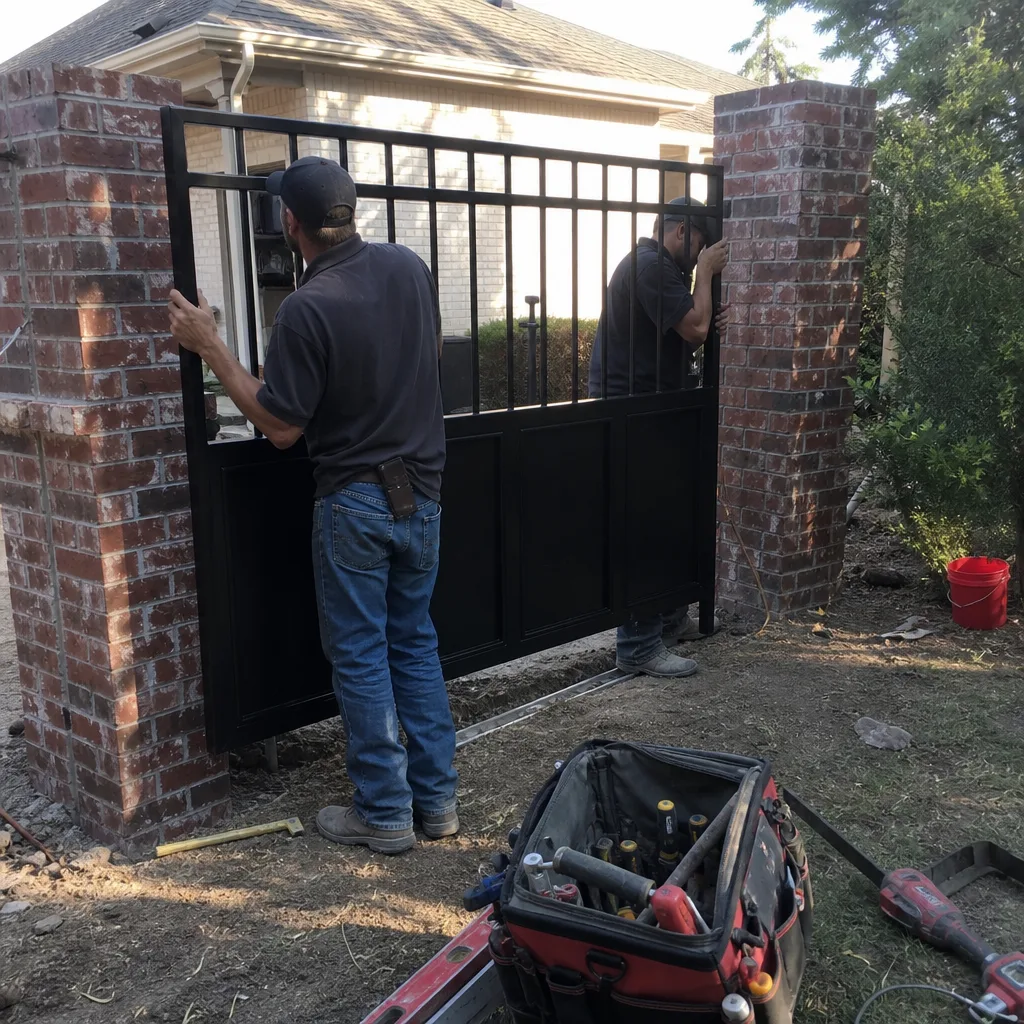
When you line up the categories, the decision gets easier. Here’s how the major gate repair types in Coppell split out:
- Hinge lubrication: DIY is appropriate. No code, no safety, no liability. Cost: ten minutes and a tube of grease.
- Remote reprogramming: DIY is appropriate. Worst case, a remote that still doesn’t work. Cost: five minutes and reading a label.
- Surface rust treatment: DIY is appropriate if the rust is surface-level. Cost: an afternoon and $30 of materials. If the rust has compromised the metal, that’s a professional repair.
- Safety-edge cleaning: DIY is appropriate for cleaning. If the edge needs replacement, that’s a UL 325 safety device, and the work should leave a record. Cost of the DIY version: nothing but time.
- Loop wire replacement: Professional. Code-governed, concrete work, and a detection failure creates real liability. A typical Coppell loop replacement runs $400 to $700 depending on the driveway length and whether the old channel can be reused.
- Operator replacement on a permitted circuit: Professional. The permit question alone should be answered by someone who knows how to answer it. Most residential operator replacements in Coppell run $800 to $1,500 depending on the brand (FAAC and BFT operators tend toward the higher end) and whether the arm bracket is intact.
- Photo-eye realignment or replacement: Professional. The height and angle matter, and a misaligned beam is a UL 325 violation in waiting.
- Post drift in clay soil: Professional, full stop. The baseline measurement determines whether this is a repair or a reinstall, and that distinction determines permits and liability.
The pattern is visible: the safe DIY list is mechanical and low-stakes, while the professional list is anything that carries code, safety, or structural implications. The gate operator brands common on Coppell properties, including LiftMaster, Linear, and BFT, all share a characteristic that matters here: their safety systems are engineered as integrated circuits, not bolt-on accessories, which means a mistake on one component can disable protections on another without your realizing it.
Common Mistakes to Avoid
- Bypassing a photo-eye to stop a false reversal. When a gate reverses for no obvious reason, the temptation is to disconnect or angle the photo-eye so it stops seeing whatever it’s seeing. That disables a required safety device. The reversal is usually caused by a dirty lens or a misalignment, not a faulty beam, and the correct fix is cleaning or realigning.
- Assuming a sagging gate is always a hinge problem. In Coppell’s clay soil, sag is more often a post-drift problem. Replacing a hinge or shimming a bracket masks the symptom while the post keeps moving. By the time the sag is undeniable, the project has grown from a repair to a reinstallation.
- Using the wrong capacitor because it physically fits. Capacitors with different microfarad ratings can look identical on the outside. A mismatched capacitor can overheat the motor windings and shorten the operator’s life. Match the rating on the old part, not the shape of the can.
- Welding a cracked hinge without removing the gate weight. A load-bearing weld made while the gate hangs under tension will crack again, often quickly. Structural weld repair requires the weight off the weld point, which usually means removing the gate leaf, which is not a solo Saturday job.
- Replacing a safety edge with a generic part. Not all safety edges are compatible with all operators. The edge has to match the operator’s sensitivity range, or it may fail to trigger when it should. A generic edge that doesn’t communicate with the board is decoration, not protection.
- Adjusting limit switches without recording the original positions. A limit switch that has been moved without documentation creates a diagnostic puzzle for the next technician. Write down the original settings before you touch anything, and photograph the switch in place.
When to Call a Professional
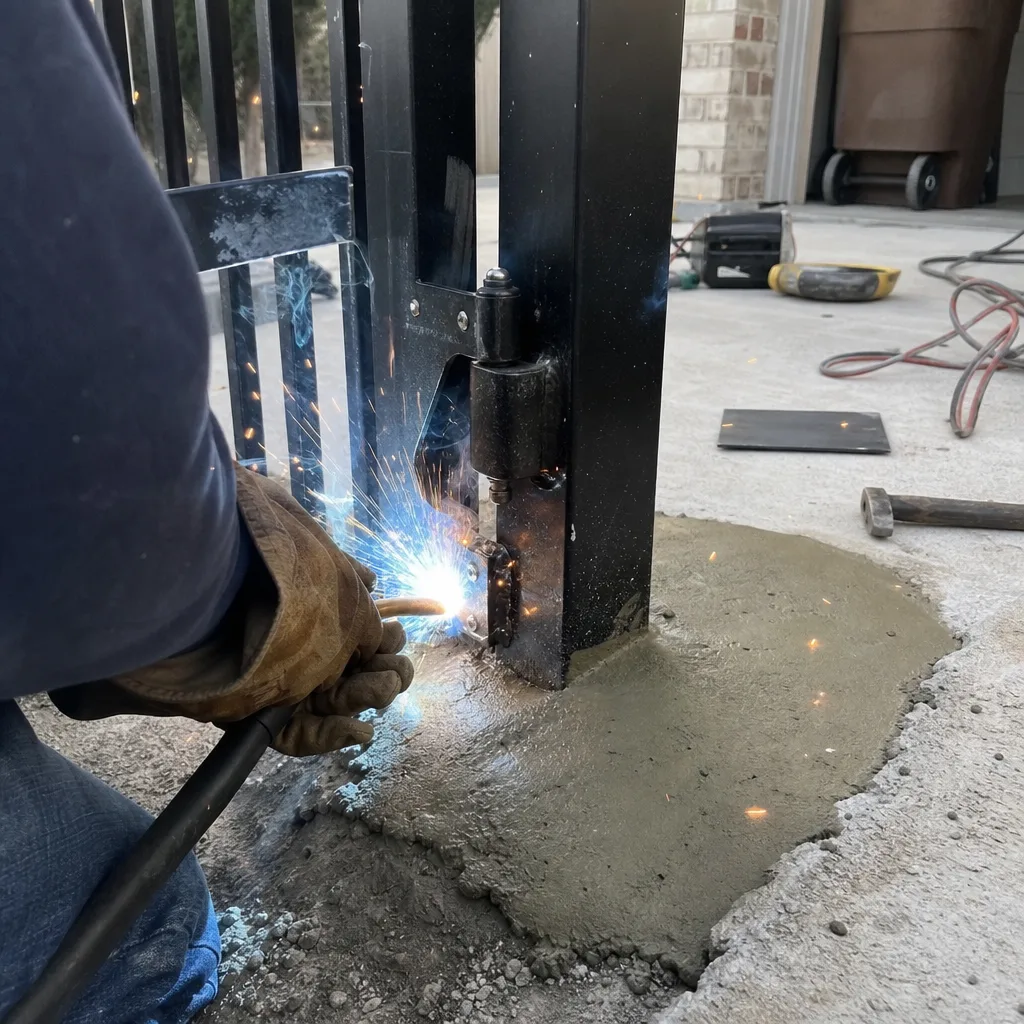
Call a professional when the repair touches a safety device, an electrical circuit, or a structural post. In practice, that’s most gate operator work, all loop and photo-eye work, and any gate that has started to sag or bind in a way it didn’t a year ago. The photo-eye misalignment that costs $150 to correct today becomes a $900 operator replacement if the misalignment caused the gate to close on a vehicle and the operator was damaged in the event. The hour of diagnosis you’re paying for includes the technician’s judgment about what’s urgent and what can wait, and that judgment is part of what you’re buying. Vance Gate Repair Coppell offers free estimates in Coppell, call (817) 674-6552.
We work on all nine major gate automation brands, so the operator you already have is the operator we’ll repair. No one will steer you toward a replacement when a repair makes sense. The written price is handed to you before any work starts, and the photo record is left with you when the work is done. That applies whether the job is a simple hinge replacement or a full operator swap on a permitted circuit.
Start here: Vance Gate Repair Coppell home.
Frequently Asked Questions
Most gate repairs in Coppell run between $150 and $700 depending on the component. A hinge replacement or photo-eye realignment is usually $150 to $250. A loop wire replacement runs $400 to $700. An operator replacement is typically $800 to $1,500 depending on the brand and whether the arm bracket is intact. Prices are always quoted in writing before work starts at Vance Gate Repair Coppell, so the number you see is the number you pay. Call (817) 674-6552 for an exact quote, estimates are free.
You can physically install one, but doing so on a permitted circuit without pulling the correct permit creates insurance exposure that will surface at exactly the wrong time: after an incident, not before it. A gate operator is a UL 325 governed device, and the safety systems have to be configured correctly or the gate is not compliant. Most Coppell homeowners are better served by a professional installation that produces a permit record and a documented safety setup.
The repair itself is usually cheaper up front. The hidden costs show up later: a misdiagnosed problem, a mismatched part, a missing record that makes the next professional visit more expensive, and the resale uncertainty that comes from an undocumented repair history. What looks like a $40 savings on a capacitor can become a $300 diagnostic bill two years later.
Clay soil movement is the most common structural issue, and capacitor or limit switch failure from summer heat is the most common operator issue. The heat-loading pattern matters: the operator’s board and capacitor sit in a metal housing that absorbs direct sun, and the internal temperature can exceed the ambient reading by forty degrees in July. That heat stress is why a capacitor that’s rated to work in a mild climate fails sooner here. It’s also why a post that was set level in March can be out of plumb by September.
It depends on the circuit and the scope. Replacing an operator with a like-for-like unit on an existing permitted circuit may not require a new permit. Replacing an operator with a different draw, adding a new circuit, or redoing the electrical in the pedestal can trigger a permit requirement. The safest approach is to have the permit status confirmed before the work starts, in writing. That’s part of the pre-work scope at Vance Gate Repair Coppell.
Photograph the area before and after the work, photograph the part number on any component you replace, write down what you did in plain English, and store everything in one folder. Even a one-sentence note, such as “replaced 35μF capacitor on LiftMaster LA400 with same-rating part,” will save a future technician real diagnostic time. The absence of that sentence will eventually cost you money. Call (817) 674-6552 if you want our team to review your gate’s current condition and set a documentation baseline, estimates are free. For a complete schedule of what to check and when, see our Gate Repair Maintenance Checklist for Coppell Homeowners.
The Bottom Line
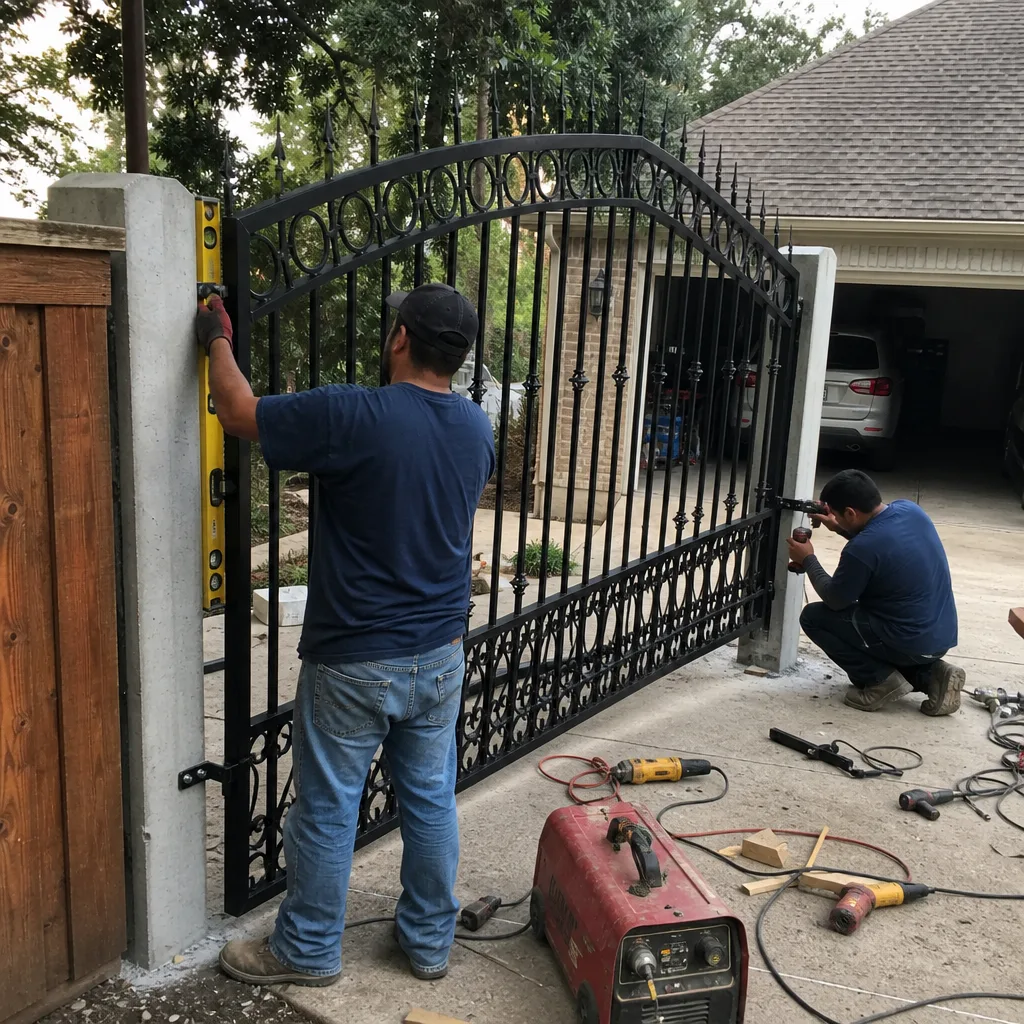
The DIY-versus-professional gate repair question in Coppell is not about skill. It’s about which side of a line the work falls on. Mechanical maintenance, hinge lubrication, remote reprogramming, and surface rust treatment are reasonable DIY territory. Anything that touches the operator’s electrical circuit, a UL 325 safety device, or a post that may have moved in clay soil belongs with a professional who leaves a written price before starting and a photo record when leaving. The documentation is not a courtesy. It’s the difference between a gate that simply works today and a gate whose history is legible to a future buyer, a future technician, and an insurance adjuster if it ever comes to that. In Coppell, where the soil moves and the summer heat taxes every electrical component, that distinction matters more than most homeowners realize.
Written by Adrian Vance, Owner at Vance Gate Repair Coppell, serving Coppell since 2014.