
Last updated September 20, 2026
Free on-site gate assessment - hinges, posts, and your LiftMaster or Nice gate operator checked before anything is quoted
The assessment is free and the quote is the invoice.

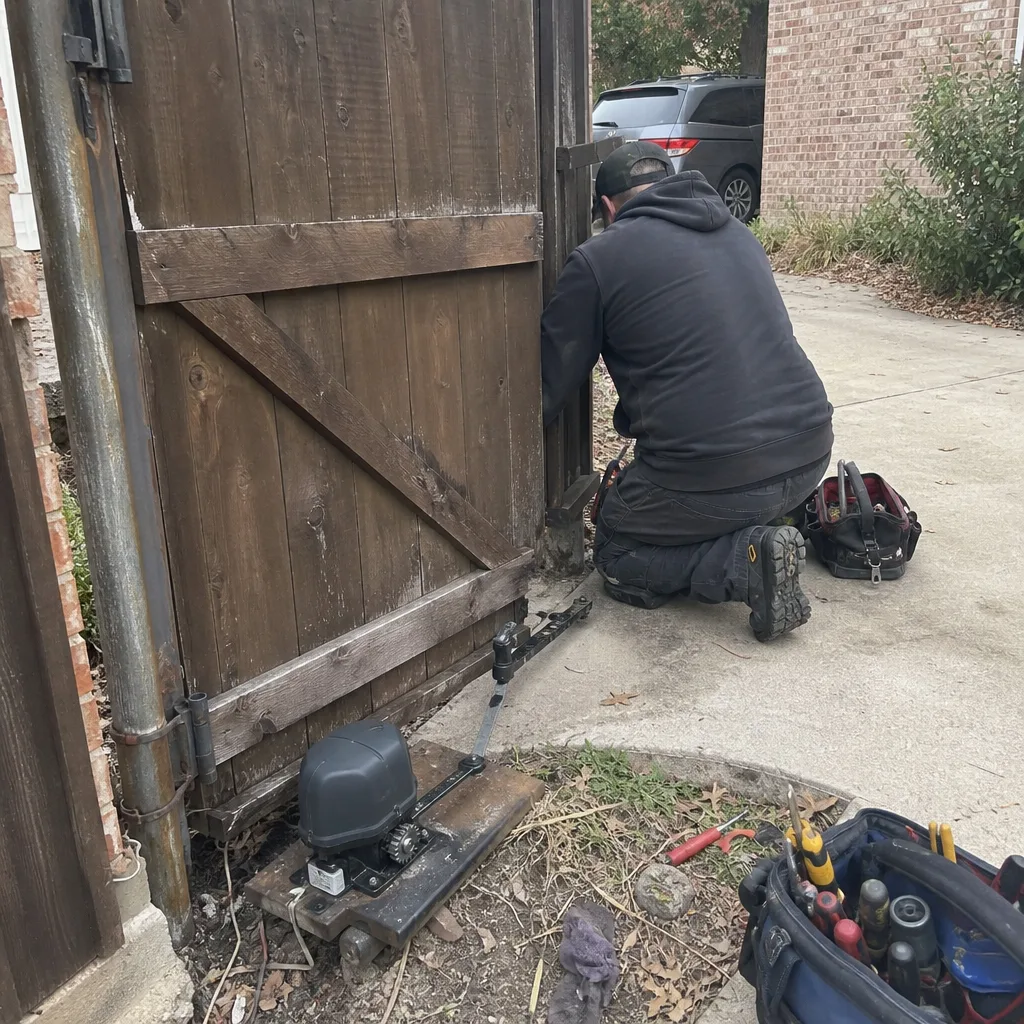 Before
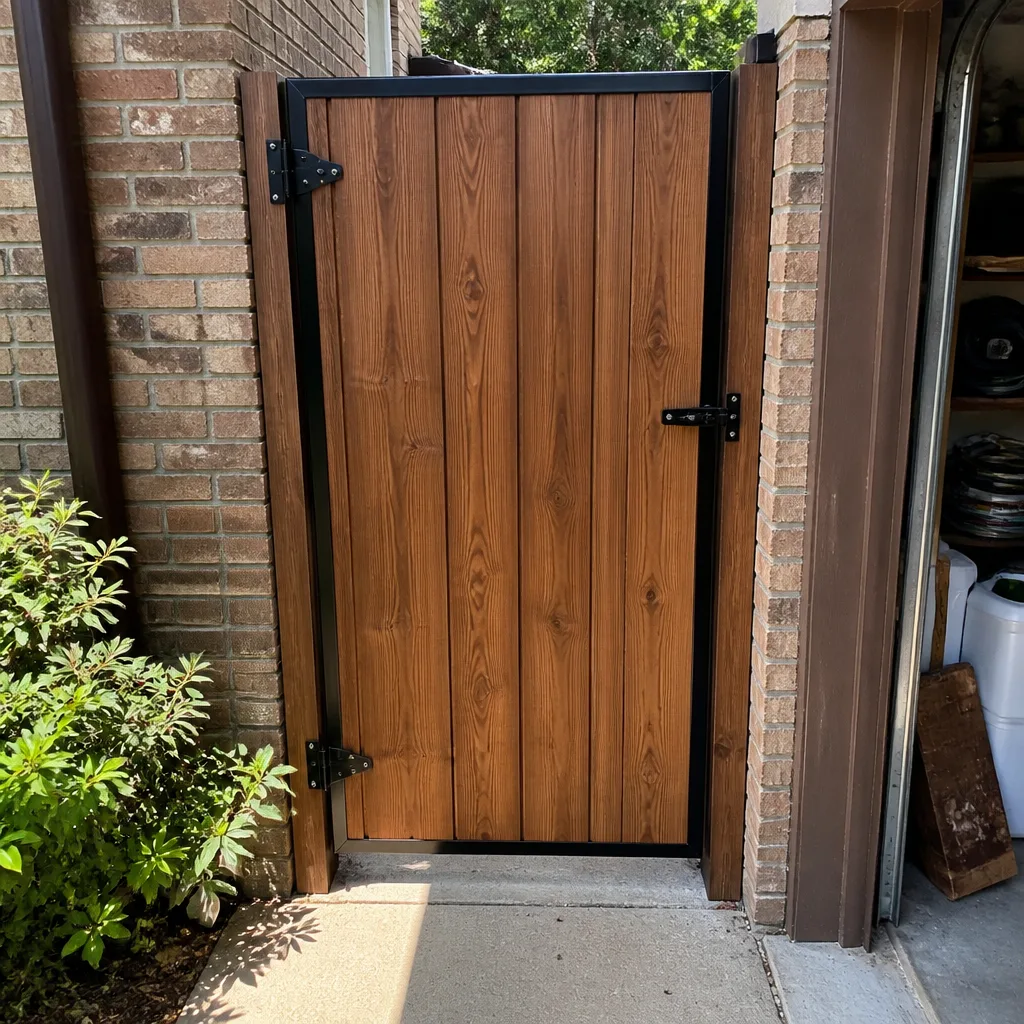 After
After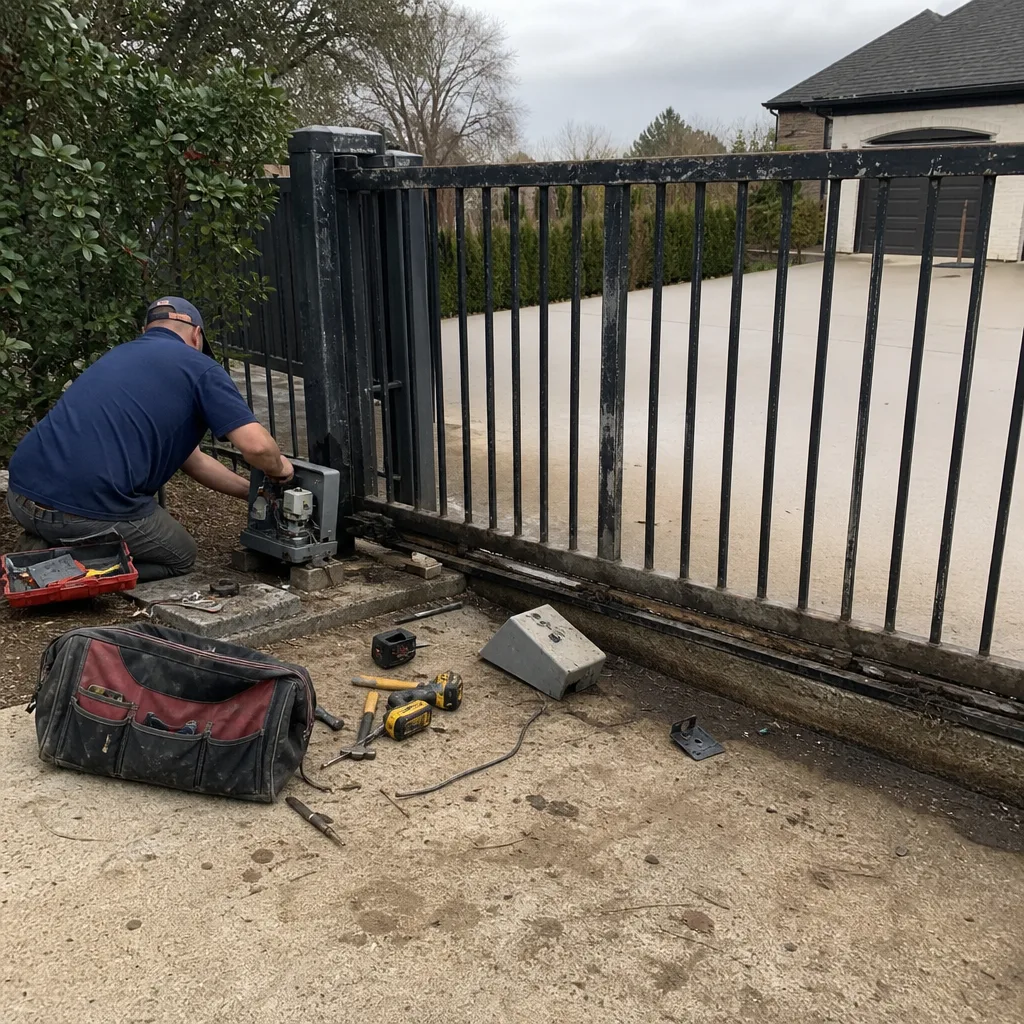 Before
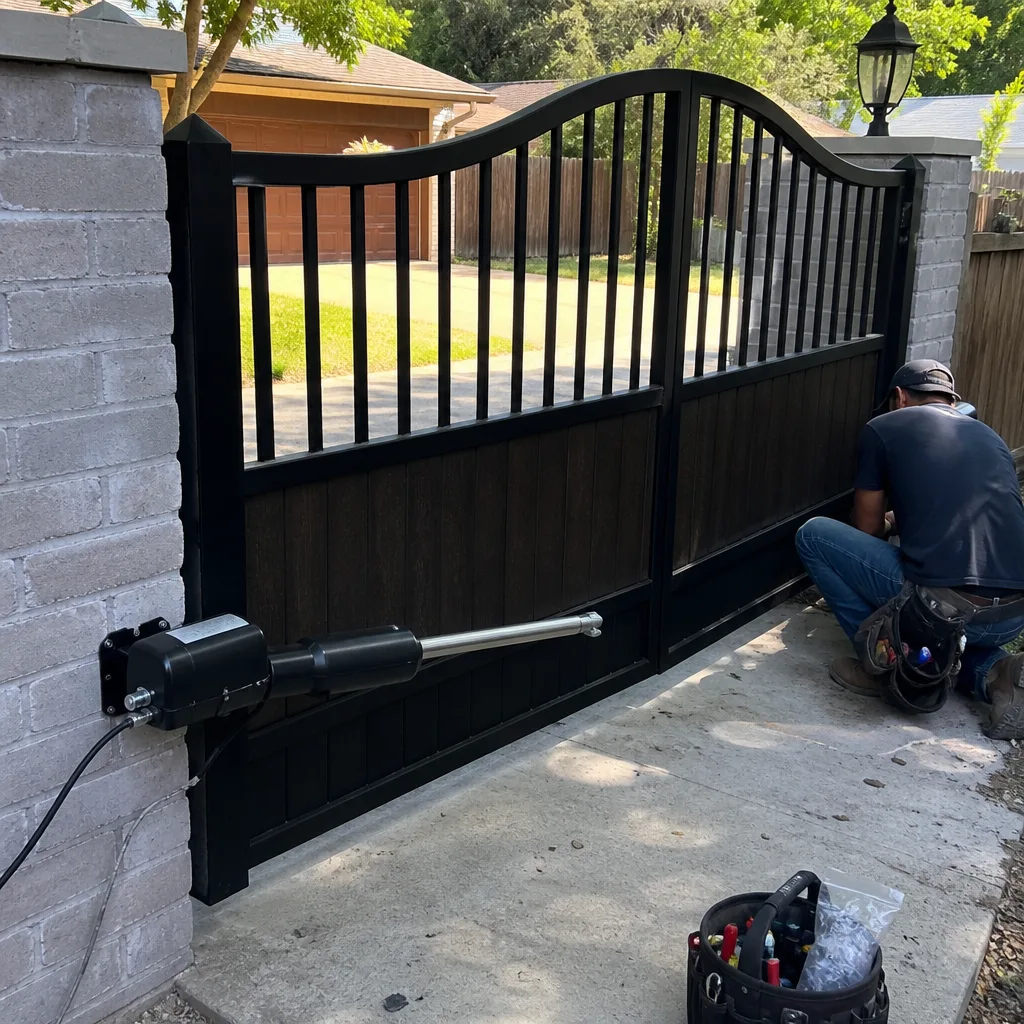 After
After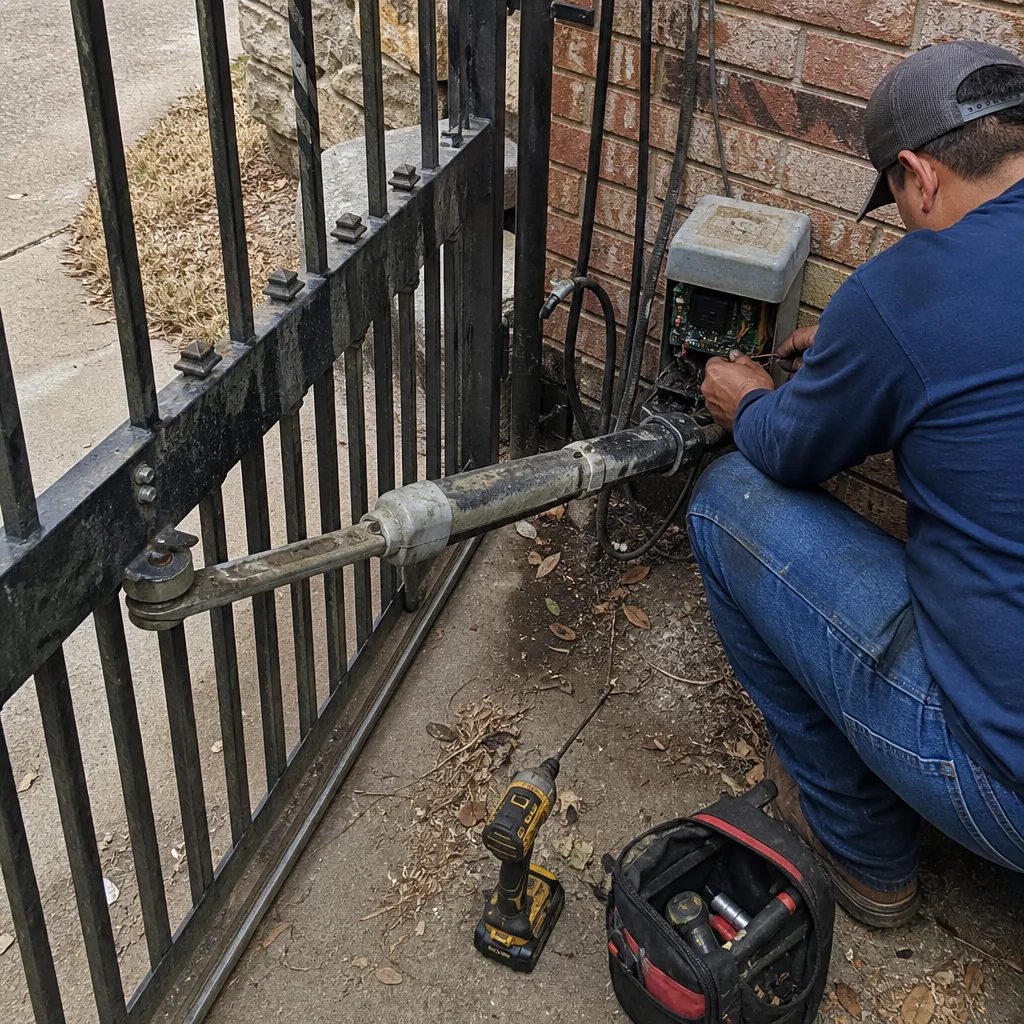 Before
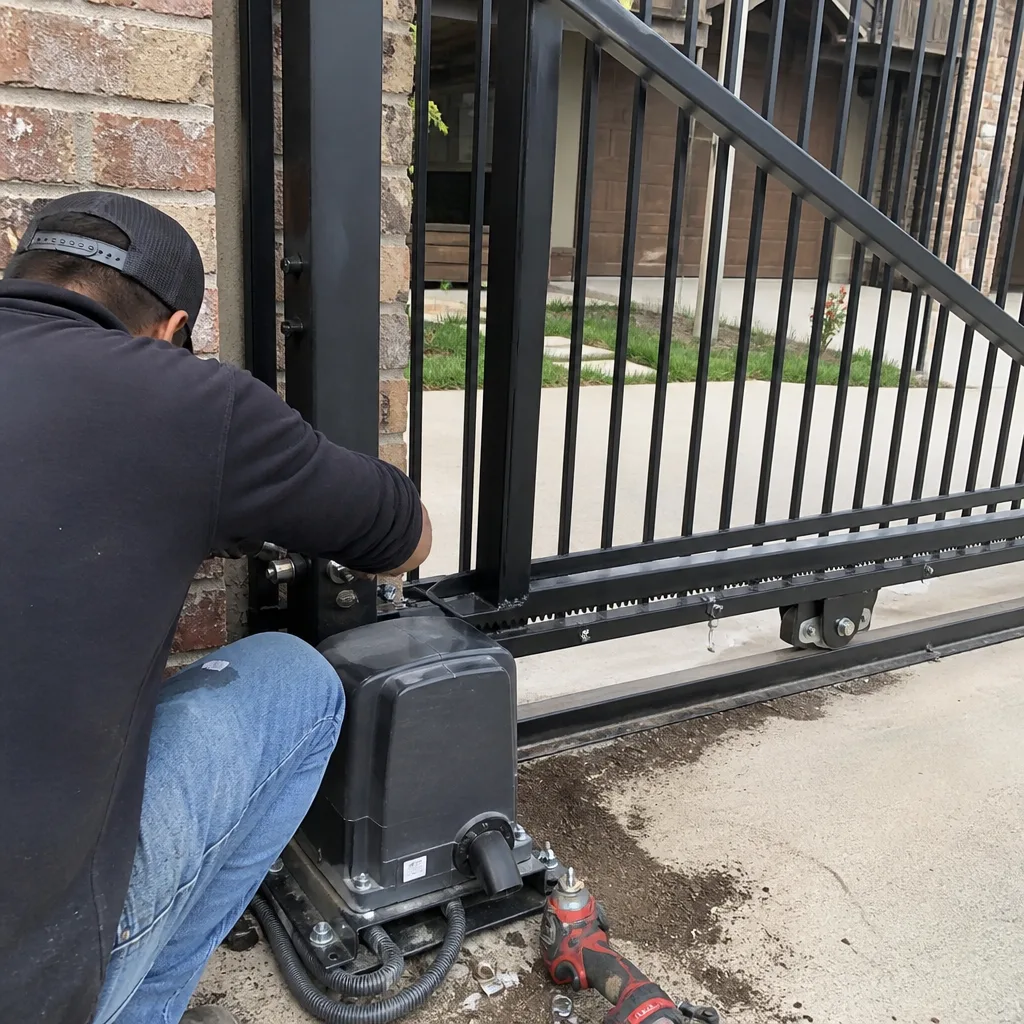 After
AfterSeasonal Gate Repair Care for Coppell: Year-Round Homeowner’s Guide
The gate failures we see in Coppell every February aren’t caused by cold. North Texas rarely gets hard freezes. They’re caused by the soil expansion from January rain that shifted a post-base and added lateral load to the hinge weld no one checked in fall. This guide-along with The Complete Guide to Gate Repair in Coppell-will teach you to organize gate maintenance around four weather-driven stress events specific to Coppell’s clay soil and summer heat, not around calendar months. You’ll learn what to check, when to check it, and what each problem costs before it becomes a $1,400 motor replacement instead of a $90 bracket adjustment.
Quick Answer
Seasonal gate repair and care in Coppell means checking four things at the right time: post alignment after spring rain, operator duty cycle before summer heat, track clearance during fall dry spells, and salt-free ice management after winter sleet. A homeowner who tracks these four events with a simple log can catch most gate failures at the adjustment stage, when repairs cost $85 to $250, rather than the replacement stage, when they cost $600 to $2,400.
Table of Contents
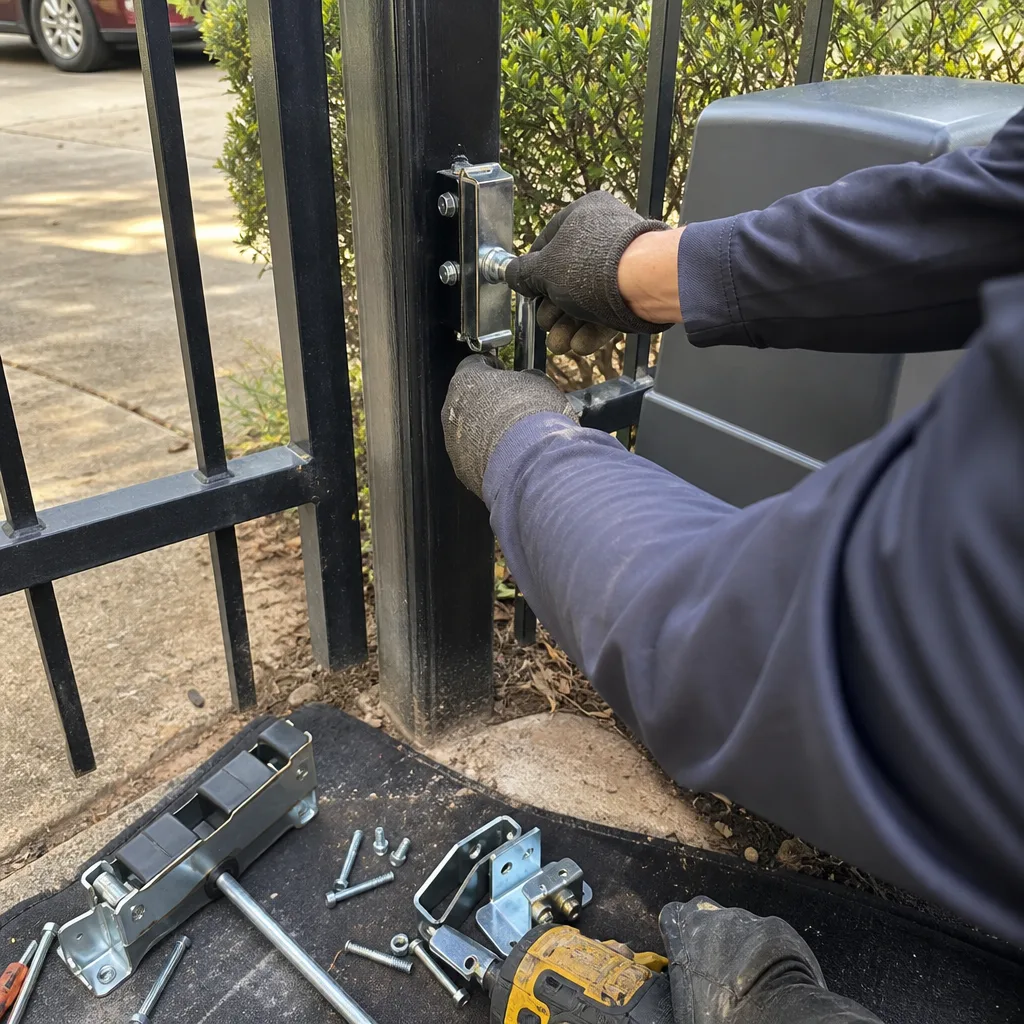
- Spring: Post-Heave and the Limit-Switch Drift That Warns You Early
- Summer: Why Your Gate Times Out at 100°F But Works at 75°F
- Fall Dry Season: Thermal Contraction and Track Friction
- Winter Ice Events: What To Do After a Coppell Sleet Storm
- How to Keep a One-Page Seasonal Gate Log
- Common Mistakes to Avoid
- When to Call a Professional
- Frequently Asked Questions
 Before
 After
AfterSpring: Post-Heave and the Limit-Switch Drift That Warns You Early
Coppell sits on expansive clay. When the January and February rains saturate that clay, it swells. When it swells, it moves. A gate post set in concrete can shift a quarter inch without anyone noticing. The gate still opens. It still closes. But that quarter inch changes the geometry of the whole swing path.
Here’s what we see in Coppell every March and April: the gate leaf now travels two or three degrees further than it did in December. The limit switch, which tells the operator where the gate should stop, is now being hit harder or missed entirely. The operator compensates by over-traveling, then the safety circuit trips, then the gate reverses mid-cycle. The homeowner calls us and says the gate “started acting weird.” The truth is it started acting weird weeks earlier, in the soil.
What to check in spring:
- Limit-switch drift: Watch your gate close. Does it slam into the closed post and bounce back? Does it stop an inch short of the latch? Either one is drift, and drift means something moved.
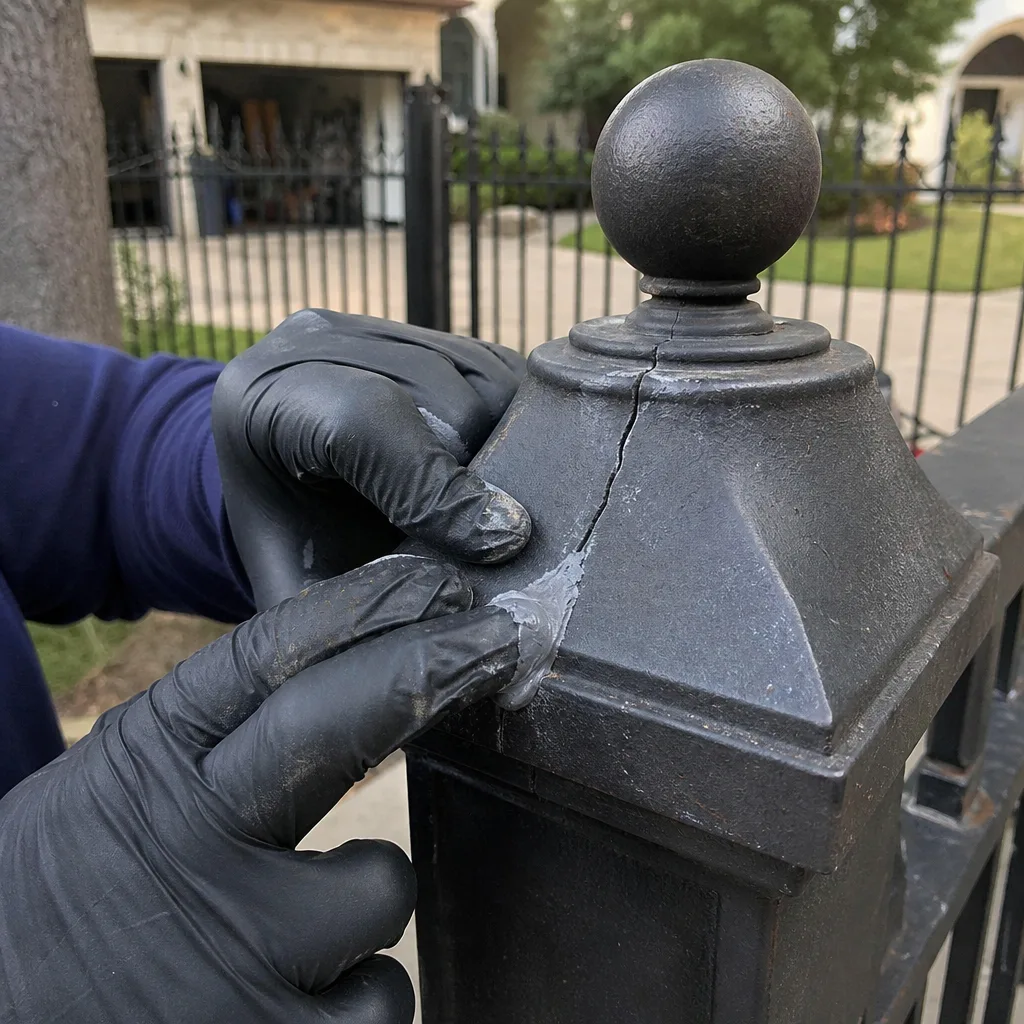
- Hinge weld cracks: Inspect every weld point with a flashlight. Coppell’s clay expansion puts lateral load on hinge welds in a way sandier soil doesn’t. A hairline crack in March becomes a full separation by June.
- Post-base gap: Look where the post meets the concrete. A visible gap wider than a quarter inch means the post has already moved. The fix now is shimming and re-anchoring. The fix later is a new post.
- Gate leaf level: Hold a level against the top rail. If it’s off more than a degree, the post has moved, even if you can’t see it yet.
Spring is also when rain exposure tests your gate’s ground wire. Coppell’s electrical code requires proper grounding for gate operators, and a wet season exposes any connection that’s been corroding quietly. If your gate trips its GFCI outlet after a rain, that’s not a nuisance. That’s a ground fault telling you moisture has found a path it shouldn’t have.
Most spring issues we service in Coppell run between $85 and $250: a limit switch reset, a hinge re-weld, a bracket replacement. The same problem ignored until summer becomes a $600 to $1,400 operator replacement when the motor burns out trying to compensate for the geometry change.
Summer: Why Your Gate Times Out at 100°F But Works at 75°F
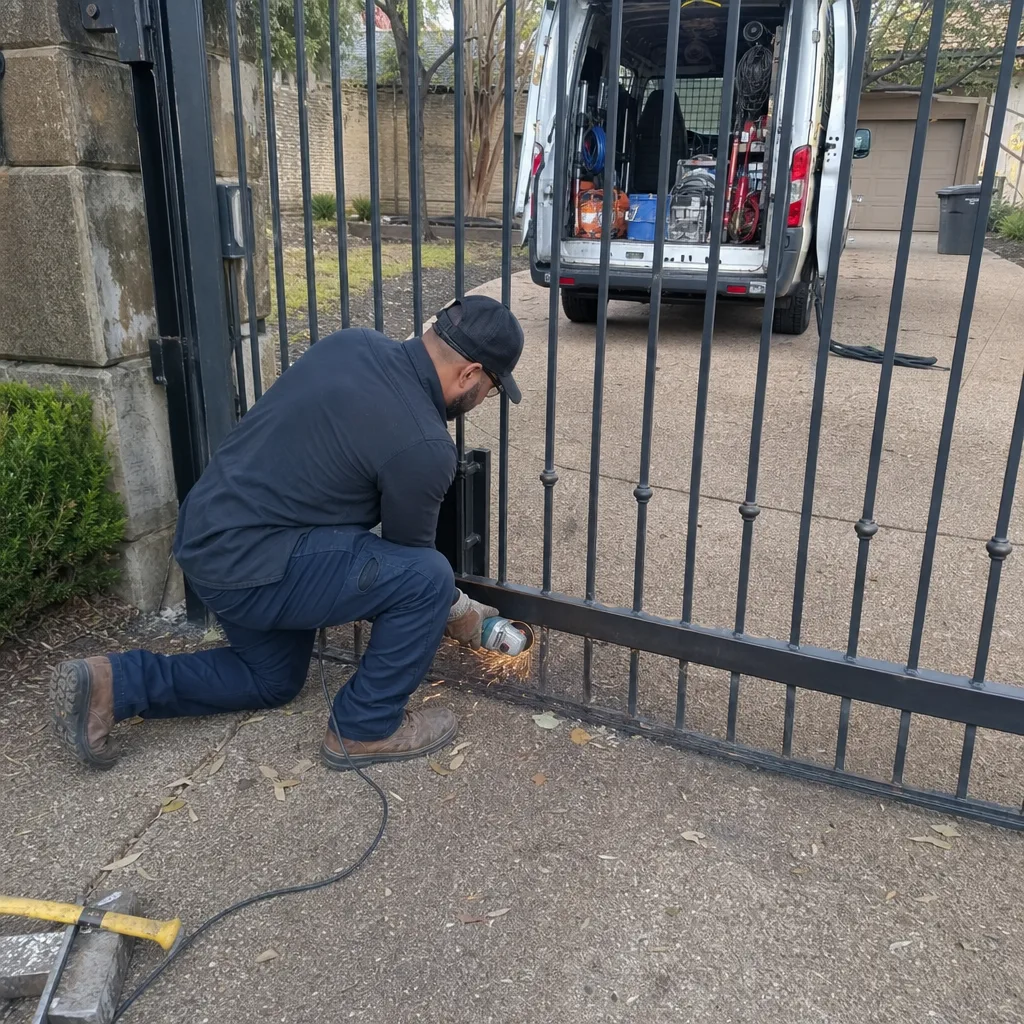
Every gate operator has a duty cycle: the percentage of time it can run before the motor’s thermal protection kicks in. In April, when it’s 75°F, a swing gate cycle takes eight seconds and the motor sheds heat quickly. In August, when it’s 100°F in Coppell and the operator housing sits in direct sun, the same motor starts a cycle already at 40°F above ambient. It doesn’t shed heat. It accumulates it.
This is why a gate that works flawlessly all spring suddenly “times out” in July. The thermal cutoff inside the motor trips, the gate stops mid-travel, and after ten minutes it works again. The homeowner thinks it’s an intermittent electrical fault. It’s not. It’s a motor being asked to run beyond its duty cycle in Texas heat.
What to check in summer:
- Cycle frequency: Count how many times the gate cycles in a single afternoon. If it’s more than twenty, you’re pushing a residential operator past its designed duty cycle in July conditions.
- Operator temperature: Place a hand on the operator housing after a cycle. If it’s too hot to keep your hand on for five seconds, the motor is over 140°F internally. That’s the edge of thermal shutdown.
- Battery backup condition: Heat kills sealed lead-acid batteries faster than cold does. If your operator has a backup battery and it’s more than three years old, July is when it fails, not winter.
- Photo-eye alignment: Sun glare at certain angles in summer can blind a photo-eye just like an obstruction can. If your gate reverses for no reason between 4pm and 7pm, check where the sun sits relative to the beam.
If the operator is a FAAC, BFT, or Linear unit, the thermal behavior is predictable: most residential operators are rated for a 20% duty cycle at 75°F, and that derates to roughly 12% at 100°F. We’ve replaced enough thermally-failed motors in Coppell to know the pattern: the homeowner added a second vehicle, the gate cycles doubled, and the summer heat finished what the cycle count started.
The fix isn’t always a new motor. Sometimes it’s a ventilation improvement in the operator housing, sometimes it’s a capacitor replacement, sometimes it’s moving the operator out of direct afternoon sun. The point is to solve the heat problem, not just swap the part that failed from it.
Fall Dry Season: Thermal Contraction and Track Friction
Coppell’s late September and October are typically dry. The clay that swelled in spring shrinks. Ambient temperatures swing 25 to 30 degrees between night and afternoon. Steel and aluminum contract at different rates. All of this shows up first in slide gate tracks.
An aluminum track system installed in April has a certain roller clearance. By October, the track has contracted enough that the rollers bind. The gate still moves, but the operator is drawing more amps to do it. You can hear it: a grinding quality, a slowdown mid-travel, a hum that wasn’t there in May.
What to check in fall:
- Roller clearance: On a slide gate, check the gap between the roller and the track at three points: both ends and center. If it varies by more than an eighth of an inch, the track has moved with the soil.
- Chain or belt tension: Dry season contraction tightens chains. An over-tightened chain puts axial load on the operator’s drive shaft. The bearing fails, not the chain.
- Hinge lubrication: Swing gate hinges dry out in low-humidity conditions. Use a dry graphite lubricant, not oil. Oil attracts dust and becomes a grinding paste within weeks.
- Weld stress points: Walk the entire gate frame with a flashlight. Look at every weld joint. Fall’s temperature swings flex metal joints that have been stable all summer.
Fall is also the season to clean your track, not just inspect it. Coppell’s dry autumn means dust, leaves, and acorns accumulate in the track channel. A quarter inch of debris under a slide gate v-wheel adds measurable resistance. It’s the difference between an operator drawing 3 amps and drawing 5 amps. Nobody notices until the capacitor fails.
We recommend a fall track cleaning and tension check as the single most cost-effective preventive visit a Coppell homeowner can make. It costs less than a dinner out and it catches the friction problem before it becomes a motor problem.
Winter Ice Events: What To Do After a Coppell Sleet Storm
Coppell gets a sleet or ice event roughly every other year. The pattern is familiar: freezing rain overnight, a thin glaze on every surface by morning, then a thaw by afternoon. What that glaze does to gate hardware is specific and repeatable.
When ice forms on a swing gate’s hinge pins, it adds weight and stiffness. The operator pushes anyway. The force that would normally be absorbed by the gate’s momentum now loads directly into the hinge welds and the operator’s gear train. Something gives. Usually it’s not the ice.
What to do after a Coppell ice event:
- Do not force the gate. If it’s frozen shut, leave it. Forcing it against ice load is how hinge welds get snapped and gear teeth get sheared.
- Do not use rock salt or bagged de-icer anywhere near gate hardware. Sodium chloride accelerates corrosion on steel welds, hinge pins, and aluminum frames. Coppell’s ice events are short enough that you rarely need chemical de-icing for a gate. If you must, use a calcium magnesium acetate product labeled for metal compatibility, and rinse the hardware with plain water after the thaw.
- Knock the ice off gently. Use a rubber mallet or the side of your fist. Hit the gate leaf at the bottom edge, working upward. The ice usually releases in sheets.
- Check the hinge pins and weld points after the thaw. Look for fresh paint cracks, which indicate the metal moved under load. Look for shiny metal at the hinge pin, which indicates the pin itself deformed.
- Run the gate through two full cycles. Listen. A click, a grind, a hesitation. Any of those after an ice event means something was stressed past its elastic limit and now has a crack or a bend.
The operators we see fail after winter aren’t the ones that got wet. They’re the ones that got forced. A Viking or Linear slide operator that stalls against a frozen track for fifteen seconds will trip its thermal protection. Force it twice more and the capacitor is done. Let the thaw happen. Then run the gate.
How to Keep a One-Page Seasonal Gate Log
The most valuable thing a homeowner can hand any technician is a record of what the gate did and when. Not a narrative. A log. One page, four entries per year, tied to weather events rather than dates.
Here’s the format we recommend, and it’s the format we use ourselves when diagnosing a gate that’s been in service more than a few years:
Your one-page gate log should have four sections:
- Spring / after heavy rain: Note the date, total rainfall that week, whether the limits drifted, whether the post-gap changed, and any hinge crack observations. One line each.
- Summer / first 100°F week: Note the date, the number of cycles that day, whether the gate timed out, and whether the operator housing felt hot to the touch.
- Fall / first dry, cool week: Note the date, track condition, chain or belt tension feel, and any change in cycle speed or sound.
- Winter / after each ice event: Note the date, whether the gate was frozen, whether you forced it (be honest), and what you observed on the post-thaw cycle.
Each entry should take sixty seconds. The value compounds. When a technician arrives at a Coppell home with two years of these notes, diagnosis time drops from an hour to fifteen minutes. For more guides & resources on keeping your gate running, see our blog. That’s the difference between a $120 service call and a $300 diagnostic hunt. Under Clause 4 of our Haven Standard, we leave a photo record on every visit; you logging what you observed between visits makes that record twice as useful.
Keep the log in the operator housing, in a ziplock bag, taped inside the cover. Future you will be glad it’s there. So will any technician who opens that housing.
Common Mistakes to Avoid
- Lubricating everything with WD-40: WD-40 is a solvent, not a lubricant. It strips existing grease and leaves metal dry. On gate hinges, use dry graphite. On chains, use a chain-specific lubricant. On rollers, a silicone spray. The wrong product does more damage than none.
- Forcing an ice-bound gate: Every Coppell ice event produces at least one broken gear train in a gate operator. The ice releases on its own by afternoon. Forcing it converts a weather event into a $700 repair.
- Ignoring a gate that bounces on close: A gate that hits the closed post and bounces back isn’t closing properly. It’s over-traveling. The limit switch needs a reset. If you wait, the over-travel hammers the gear train until something fails.
- Using salt to melt ice on the gate track: Sodium chloride accelerates pitting on steel weld points. After three or four salted winters, the weld is compromised. In Coppell, where ice events last less than a day, salt is never the right answer for a gate.
- DIYing the springs: A swing gate with a broken tension spring still carries several hundred pounds of stored energy in its geometry. Releasing that spring without the right tools and training is how homeowners get seriously hurt. This is not a “watch a video and give it a try” job.
- Replacing the operator when the problem is the gate: If your gate is binding because the post moved, a new operator will bind too. You’ll pay $1,200 and have the same problem in two months. Diagnose the gate geometry first. Then replace the motor if the motor is actually the problem.
- Not tightening the post-base anchors annually: Coppell’s clay moves. Anchor bolts loosen. A loose post accelerates every other failure mode. Once a year, put a wrench on the anchor nuts. If they turn without resistance, they were already loose.
When to Call a Professional
Call a professional when the problem is structural, electrical, or repeated. A limit switch that drifts every month after resetting means the post is moving, and that’s a foundation-level problem. A gate that trips a GFCI outlet after rain means you have a ground fault, and that’s a safety issue, not a nuisance. A chain that keeps loosening after every adjustment means the sprocket is worn or the shaft is bent. None of these are homeowner-fixable without making the underlying problem worse. If you’re in Coppell and want a written diagnosis before anything is repaired, Vance Gate Repair does free estimates on all gate repair work in Coppell. Call (817) 674-6552 and Adrian or a team member will walk you through what you’re seeing.
Frequently Asked Questions
Most seasonal gate maintenance visits in Coppell run between $85 and $200, depending on what’s found. That covers a full inspection, limit-switch verification, track cleaning, tension check, and photo documentation. If a repair is needed during the visit, you get the written price before any work starts. Call (817) 674-6552 for an exact quote on your gate.
Yes, most gate repairs in Coppell are completed same-day. We dispatch technicians with common parts for all nine major operator brands on the truck, so there’s rarely a second trip. For a same-day assessment, call (817) 674-6552 and describe what the gate is doing. A live person answers, any hour.
In Coppell’s summer, that’s almost always thermal shutdown of the operator motor. The motor accumulates heat through the day, and by mid-afternoon its internal temperature exceeds the thermal cutoff. The gate stops mid-travel and works again after cooling. It’s a duty-cycle problem or a ventilation problem, and it usually doesn’t require a new motor.
Yes, once a year, ideally before summer. A working gate can have a moving post, a corroding hinge weld, or a failing capacitor that hasn’t shown symptoms yet. The $120 preventive visit in spring is the cheapest gate payment you’ll make all year. The alternative is discovering the problem when the gate strands your car in the driveway.
A full gate installation includes the gate frame and leaf, posts set below the frost line, hinges, latch, the operator if you’re adding automation, photo-eyes, safety edges where required, and a full wiring run with ground. In Coppell, we recommend post footings set 30 inches deep minimum due to clay movement. You get the written price before any work starts. Call (817) 674-6552 and we’ll measure and price it. Learn more about gate installation in Coppell.
We service all major brands found on Coppell properties: FAAC, BFT, Linear, LiftMaster, Viking, Ghost Controls, DoorKing, Elite, and Mighty Mule. We don’t steer you toward a replacement just to sell a new motor. If your existing operator can be repaired, that’s what we do. See our full gate motor and opener service page for Coppell.
The Bottom Line
Coppell’s gate problems follow a seasonal pattern driven by clay soil, summer heat, and occasional ice. Spring brings post-heave and limit-switch drift. Summer brings thermal shutdown. Fall brings track contraction and friction. Winter brings ice-load stress on hinges and gear trains. If you check the right things in the right season and keep a one-page log, you’ll catch most failures at the $85 to $250 adjustment stage. Ignore the seasons and you’ll pay at the replacement stage. Four entries a year, sixty seconds each. That’s the whole system.
Written by Adrian Vance, Owner at Vance Gate Repair Coppell, serving Coppell since 2014.